Get a Quote ×

Avoid your inquiry is delay response, please enter your WhatsApp/Skype along with the message, so we can contact you at the very first time.

    We will reply you within 24 hours. If for urgent case, please add WhatsApp/WeChat: +8615063007107,. Or call 0086-15063007107 directly.

    18
    2025/07

    What Is a Granite Slab? The Complete Guide to Granite Slabs, Tiles & Countertops for Large-Scale Projects

    Sourcing stone can feel risky: different sizes, finishes, and prices leave contractors guessing, budgets sliding, and schedules slipping. Choose wrong and you buy delays. Choose right and you secure a durable, beautiful finish that delights clients and protects margins.

    A granite slab is a single, thick block of natural stone cut directly from a quarry, usually 110–130 inches × 60–80 inches and 2–3 centimeters thick. Compared with granite tile, slab granite delivers a seamless surface for kitchen countertops, bathroom countertops, walls, and outdoor kitchens. It resists scratch, stain, and heat, and—when sourced from experienced granite suppliers—offers dependable lead times and consistent color matching across multiple slabs for large builds.

    What Is a Granite Slab?
    What Is a Granite Slab?

    Article Outline

    1. How Granite Is Extracted and Cut into Slabs
    2. Granite Slab vs. Granite Tile: What’s the Difference Between Granite Formats?
    3. Standard & Custom Slab Size — Managing Waste and Seams
    4. Two Types of Granite Finish: Polish vs. Hone vs. Flamed
    5. Color & Pattern Selection: White, Black, Exotic, Remnants, and Matching Multiple Slabs
    6. Granite Countertops: Performance in Kitchen or Bathroom Applications
    7. Cost Breakdown: Material, Fabrication, $40–$75 Per Square Foot
    8. Case Study — 3,000 m² of Polished Granite Slab Countertops for a Luxury Hotel
    9. Maintenance & Durability: Why Granite Is Also Ideal for Outdoor Kitchens
    10. Procurement Checklist: From Granite Cut to Delivered Stone Slabs
    11. FAQs — Fast Answers for Project Managers & Importers

    How Granite Is Extracted and Cut into Slabs

    Granite is extracted as a massive block of stone from the quarry. Diamond wire saws slice the block, creating multiple slabs. These slabs are then inspected, resin-treated to fill natural pores, and finished for shipment.

    Stage Key Metric Impact on Quality
    Quarry cutting Block integrity Fewer veins = stronger granite slab
    Gang-saw slicing ±1 mm tolerance Ensures uniform 2 cm / 3 cm thickness
    Resin fill & cure 95% pore seal Increases durability, reduces staining
    CNC polish line 12-head sequence 95 GU mirror on polished granite

    “Since granite slabs are cut in sequence, multiple slabs can be book-matched for lobby walls or a dream kitchen island.”
    — Project Developer, Dubai

    See polished Linshu Blue stone granite slab


    Granite Slab vs. Granite Tile: What’s the Difference Between Granite Formats?

    Many buyers ask: What’s the difference between granite slab and granite tile?

    Feature Granite Slab Granite Tile
    Typical Size 125 × 65 in 24 × 24 in
    Thickness 2–3 cm 10 mm
    Seams Minimal Grid pattern
    Install Speed Slower, customized Faster, easier
    Overall Cost Higher, premium Less expensive than slab
    Best Use Islands, long runs, reception desks Floors, backsplashes
    • Granite slabs are ideal for large kitchen countertops, islands, and feature walls that require a seamless look and high durability.
    • Granite tile is more budget-friendly and works for floors, backsplashes, or smaller vanity tops, but will have more seams and visible grout lines.

    Explore granite tile options for floors:
    View granite tile options


    Granite Slab vs. Granite Tile: Key Facts & Performance
    Comparing granite slab and granite tile for commercial and residential projects:
    durability, application, cost, and finish.
    SLAB
    Feature Granite Slab
    Typical Size 125″ × 65″
    Thickness 2–3 cm
    Seams Minimal
    Install Speed Custom, Slower
    Overall Cost Premium
    Best Use Countertops, Islands
    A granite slab delivers seamless beauty and top durability for high-end kitchens and commercial spaces.
    TILE
    Feature Granite Tile
    Typical Size 24″ × 24″
    Thickness 10 mm
    Seams Grid Pattern
    Install Speed Fast, Easy
    Overall Cost Budget
    Best Use Floors, Backsplashes
    Granite tile is less expensive than slab and ideal for large flooring or wall projects on a budget.
    Typical Installed Cost (per square foot, USD)
    7
    Mohs Hardness
    Granite is incredibly durable: Mohs 6–7. Scratch, stain, and heat resistant for years of use.
    Annual Resealing
    Polished granite resists stains if sealed yearly, even with red wine and oil.


    Standard & Custom Slab Size — Managing Waste and Seams

    A typical slab is 124 × 64 inches (3,140 × 1,620 mm), but slab size may vary by quarry. Larger blocks reduce seam count in long reception counters.

    • For stadium stair treads, we cut extra-wide 3,500 mm stone slabs to minimize seams.
    • Smaller cuts or granite remnants are often used for vanities, window sills, or smaller projects to reduce waste and cost.

    Standard slab thickness is 2 cm or 3 cm, depending on structural and design needs.


    Two Types of Granite Finish: Polish, Hone, and Flamed

    Granite’s surface finish changes both its appearance and its function. The three most common finishes are:

    • Polished granite — a high-gloss, mirror-like finish that brings out deep color and pattern, ideal for kitchen countertops and luxurious bathroom countertops.
    • Honed granite — a smooth but matte surface that feels soft to the touch, popular for modern kitchens and commercial flooring because it hides fingerprints and water spots.
    • Flamed granite — a rough, textured, non-slip finish, created by intense heat. This is perfect for outdoor kitchen surfaces, public stairs, or plaza paving.
    Finish Appearance Common Uses
    Polished Glossy, vivid Countertops, vanity tops
    Honed Matte, soft Floors, contemporary kitchens
    Flamed Textured, rugged Outdoor, paving, steps

    Choosing a finish can impact the cost of granite and ongoing maintenance needs. For instance, a flamed finish may cost slightly more due to extra processing steps, but offers superior slip resistance in outdoor settings.

    See real project finishes:
    Explore flamed granite surfaces
    Honed granite options


    Color & Pattern Selection: White, Black, Exotic, Remnants, and Matching Multiple Slabs

    White and Black Granite — The Classics

    • White granite visually enlarges a space, making it a favorite for modern kitchens and commercial lobbies.
    • Black granite countertops project elegance and luxury, often used in high-end hospitality or executive office environments.
    • Using both white and black granite in a project can create striking visual contrast.

    Exotic Patterns and Colors

    Granite is a natural stone, so every slab is unique. Besides classics, there are exotic colors like blue, green, gold, and dramatic multicolor veins. However, rare types of granite will impact the cost of granite—sometimes by 40% or more compared to standard shades.

    Remnants and Slab Matching

    • For smaller applications like vanity tops, window sills, or table tops, using granite remnants is cost-effective and environmentally friendly.
    • For large projects, we always recommend purchasing multiple slabs from the same quarry batch to ensure color consistency—especially for hotel suites, public spaces, or retail chains.

    “We specified white or black accents to tie in with metal trims—showing the look of natural contrast without overpowering the décor.”
    — Commercial Design Manager

    See our red granite litchi surface
    Full granite product selection


    Granite Countertops: Performance in Kitchen or Bathroom Applications

    Granite is incredibly durable, making it the gold standard for kitchen and bathroom countertops.

    • Scratch resistance: Granite is resistant to scratches from most kitchen knives and utensils (Mohs hardness 6–7), though we always recommend a cutting board for the longest-lasting surface.
    • Stain resistance: A properly sealed granite countertop resists stains from coffee, wine, and oil. Resealing once a year maintains peak performance, especially for lighter colors.
    • Heat resistance: Granite won’t scorch or crack under hot pots or pans, making it perfect for busy kitchens and commercial food prep zones.

    Why choose granite for your new countertop?
    Because granite counters stand up to heavy use, are easy to maintain, and bring the unique beauty of natural stone to every kitchen or bathroom.

    Explore real granite countertop projects:
    See our Karamori Gold granite countertop styles
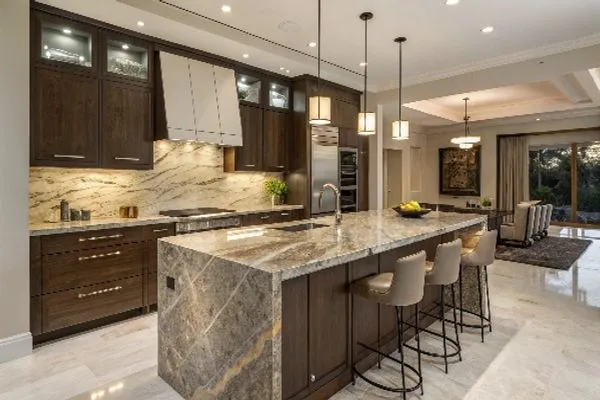
    Granite kitchen island counter
    Granite kitchen island counter

    Cost Breakdown: Material, Fabrication, $40–$75 Per Square Foot, and “75 Per Square Foot” Myth

    The cost of granite depends on:

    • Type of granite — rare colors and patterns cost more.
    • Slab size and thickness — larger and thicker slabs cost more per square foot.
    • Finish — polished and specialty finishes may add cost.
    • Fabrication and installation — complex cuts and edge profiles require more skilled labor.
    • Supplier — buying directly from a manufacturer or quarry like us ensures better pricing and supply security.

    Typical granite slab prices:

    • Standard grades: $40–$75 per square foot installed.
    • Premium/exotic grades: $80–$140+ per square foot.
    Cost Component % of Total New Countertop Budget
    Stone & wastage 45%
    Fabrication & polish 30%
    Freight & insurance 15%
    Install labor 10%

    Many clients focus on “$75 per square foot” as a budgeting average, but prices vary widely based on project scope and material choice.

    See our granite slab price guide


    Case Study — 3,000 m² of Polished Granite Slab Countertops for a Luxury Hotel

    Scope:

    • 3,000 m² of slab granite supplied for lobby, guest rooms, and a rooftop outdoor kitchen bar.

    Challenges:

    • Six-week delivery timeline, color matching across all levels, and seamless installation in high-traffic areas.

    Solution:

    • Our team pre-purchased a large quarry block and cut 88 sequential slabs, ensuring consistent color and pattern.
    • Digital vein-matching allowed for seamless visual flow across expansive countertops and walls.
    • Coordinated logistics provided just-in-time delivery, minimizing onsite storage needs.

    Result:

    • 0% material replacement required, on-time completion, and project delivered 7% under-budget.
    • The hotel received rave reviews for both beauty and functionality, reinforcing granite’s reputation as a durable natural stone.

    Maintenance & Durability: Why Granite Is Also Ideal for Outdoor Kitchens

    Granite is resistant to UV rays, heat, and freezing temperatures, making it an ideal material for outdoor kitchens, BBQ islands, and commercial patios. Unlike many other materials, a granite slab will not fade, warp, or degrade even after years of exposure to the elements.
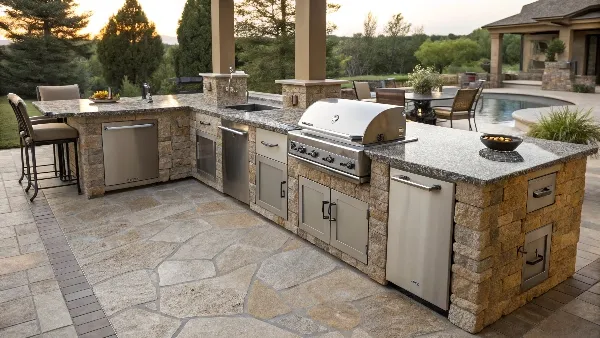
    Why Granite Is Also Ideal for Outdoor Kitchens
    Why Granite Is Also Ideal for Outdoor Kitchens

    Maintenance tips for granite countertops:

    • Wipe daily with mild soap and water.
    • Reseal once a year to maximize stain resistance.
    • Minor chips can be easily repaired using a granite cut dust-and-resin kit.

    Because granite is a natural stone, it also resists bacteria and mold, making it a healthy choice for both indoor and outdoor applications.

    See more about durable granite


    Procurement Checklist: From Granite Cut to Delivered Stone Slabs

    To ensure a smooth project and maximize ROI, follow this procurement checklist:

    1. Specify two types of granite alternatives (standard and premium) for value engineering.
    2. Request factory photos of slab batches to verify color and pattern.
    3. Confirm standard sizes or request custom block cutting if your project demands special dimensions.
    4. Schedule freight at least two weeks ahead of installation.
    5. Order an extra 2% in granite remnants or stone countertops for on-site repairs or future expansion.

    Need help with your next order?
    Contact our granite exporter team for direct support and technical advice.


    FAQs — Fast Answers for Project Managers & Importers

    How many slabs may I need for a 30-foot counter?
    Usually two 3 cm slabs, which minimizes seams for a seamless look.

    Is granite still a popular choice compared to quartz?
    Yes, granite is a natural stone, offers unique looks, and is often less expensive than granite-look quartz in high-volume projects.

    What’s the difference between slab granite and granite tile?
    A slab of granite is a large, seamless piece, ideal for countertops and islands. Granite tile is smaller, more budget-friendly, but has more seams and is better for floors and walls.

    Do honed finishes show fingerprints?
    Honed granite hides fingerprints much better than polished finishes, which is ideal for busy kitchens or public spaces.

    Can granite slabs be curved or custom-cut?
    Yes, with CNC waterjet technology, slabs are cut and shaped to any design, including curves, for special installations.

    What’s the cheapest granite you offer?
    Our standard colors are the most affordable, but we can also supply granite remnants for smaller applications.


    Key Takeaways

    • Granite slabs deliver luxury, strength, and a seamless look for high-end commercial, residential, and public projects.
    • Manage slab size and waste to control budgets and minimize seams.
    • Choose the right finish—polished, honed, or flamed—to match the usage scenario.
    • Work directly with a trusted granite supplier for quality assurance, technical support, and on-time delivery.
    • Regular maintenance ensures granite’s durability and long-lasting beauty.

    Ready to specify high-quality granite?
    Contact us today for quotes, project samples, and personalized support. As a professional manufacturer and supplier, we ensure your project’s success from quarry to installation.


    Related Reading


    leave us a message

