Avoid your inquiry is delay response, please enter your WhatsApp/Skype along with the message, so we can contact you at the very first time.
We will reply you within 24 hours. If for urgent case, please add WhatsApp/WeChat: +8615063007107,. Or call 0086-15063007107 directly.
Granite paving seems costly at first, yet owners fear cracks and fading even more.
Yes. Granite delivers outstanding strength, weather‑proof color, and a non‑porous face that rejects stains, giving any paved area decades of service and high resale value.
Granite’s record on city squares and busy plazas proves its worth. Keep reading to learn the facts before you sign the next purchase order.
Project managers worry that rain, salt, or sudden cold will ruin polished stone.
Absolutely. Correctly cut and sealed granite handles sun, snow, and daily loads without bowing or flaking. Drainage and joint design keep each slab level for decades.
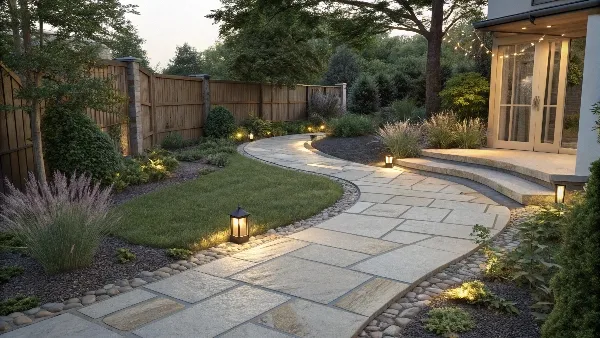
I flame‑treat every paving slab in my Qingdao factory. Heat pops tiny quartz grains and raises a rough “orange peel” texture. That grip meets slip‑resistance rules from Sydney to Stockholm. After cooling, I run each piece through an automatic calibrator to trim thickness to ±1 mm; this stops hollow spots in mortar that could later crack.
| Property | Granite (Flamed) | Concrete Paver |
|---|---|---|
| Water absorption | 0.2–0.5 % | 5–10 % |
| Freeze‑thaw cycles | >150 | 30–50 |
| Flexural strength | 10–25 MPa | 3–5 MPa |
Low absorption means there is almost no room for ice to grow. In Montreal a client replaced salt‑damaged concrete with my Sesame Grey slabs in 2012. Twelve harsh winters later the surface is still flat and clean. He only rewaxed the joints once.
With these steps my Nordic distributors cut warranty claims to near zero while winning bids that specify a 50‑year life‑cycle.
Engineers often ask me for a single strength figure, yet real strength spans several tests.
Granite outperforms normal concrete in compression, bending, and wear, keeping its polish long after concrete crumbles.
| Test Method | Granite (Average) | C30 Concrete |
|---|---|---|
| Compressive | 120–150 MPa | 30–35 MPa |
| Flexural | 12–25 MPa | 3–5 MPa |
| Mohs hardness | 6–7 | 4–5 |
| Abrasion loss | <0.3 mm | 3–4 mm |
A four‑fold jump in compressive strength lets granite carry heavy forklifts on warehouse aprons that would crush standard concrete units. Hard quartz and feldspar crystals resist scratching by sand or steel toes, so the surface still shines after years of foot traffic.
My client in Doha replaced a fountain deck covered by faded concrete tiles. We delivered 2 mm tolerance Rosa Beta granite modules, pre‑numbered for quick layout. The final cost was only 12 % higher than new concrete, yet the maintenance team now spends nothing on annual sealing or repainting.
Longevity sells a material, but vague “long life” claims do not satisfy auditors.
Properly installed granite paving can exceed fifty, even one‑hundred years, with only routine washing and joint resealing.
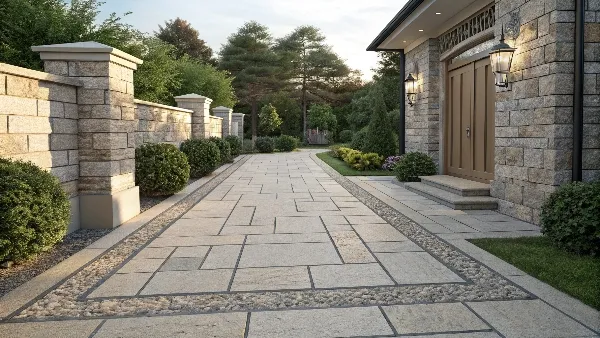
Lisbon’s Rossio Square uses basalt and granite cubes first laid in 1848. The same stones still carry cars and festivals every day. An Austrian client copied that cube format for a ski‑resort plaza in 2010. After fifteen freeze‑thaw seasons, measured surface wear is less than 0.1 mm.
| Task | Interval | Reason |
|---|---|---|
| Neutral soap wash | Monthly | Remove oil and dust |
| Inspect joints | Yearly | Stop vegetation early |
| Reseal joints | 5 years | Restore flexible bond |
| Surface seal (high traffic) | 8 years | Boost stain barrier |
| Replace cracked slab | As needed (rare) | Keep visual uniformity |
Even if a forklift drops a pallet and chips one stone, a single slab swap restores the whole area because granite colors stay stable. Clients in Dubai note that their marble malls need polishing every night, yet their outdoor granite only needs a quick hose wash—no closing, no noise, no extra staff.
Some owners recall a chipped countertop and assume slabs break easily.
A 30 mm exterior granite slab tested in my lab carries over 160 kN—roughly the weight of twelve mid‑size cars—before fracture.
| Thickness | Use Area | Safe Uniform Load |
|---|---|---|
| 20 mm | Interior corridors | 4 kN/m² |
| 30 mm | Public plazas | 7 kN/m² |
| 50 mm | Drive lanes | 15 kN/m² |
My Siemens‑controlled press logs flexural results for every batch. I include these sheets in each export file, letting architects clear code checks without delay. A U.S. hospital project cut approval time from four weeks to nine days because all test data sat ready.
No material is perfect. Honest talk builds trust faster than glossy sales slides.
Granite costs more up front and weighs nearly twice as much as concrete, so freight, handling, and labor must be planned with care.
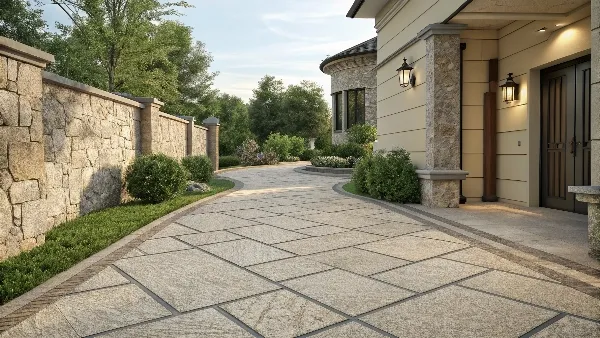
| Challenge | Impact | My Mitigation |
|---|---|---|
| Higher unit price | Raises material spend | Quarry partnerships and in‑house cutting cut middlemen margins |
| Heavy density (≈2 700 kg/m³) | More fuel and crane time | Optimize panel size to fill containers and supply lifting eyes |
| Skilled laying crew needed | Labor cost | Pre‑cut modules, QR video guides, and on‑site WhatsApp support |
| Permanent color | Harder to change later | Offer 15 shades and free small samples so designers decide early |
A Korean mall needed 5 000 m² of Sakura Red. By water‑jet cutting stair treads and risers to final shape in my plant, site labor fell 30 %. Even after paying extra freight, total spend matched local concrete bids, yet maintenance forecasts dropped by 70 % over twenty years.
Granite’s higher first cost fades when you see its century‑long life, low upkeep, and timeless beauty.

 English
  French
  German
  Russian
  Arabic
