Avoid your inquiry is delay response, please enter your WhatsApp/Skype along with the message, so we can contact you at the very first time.
We will reply you within 24 hours. If for urgent case, please add WhatsApp/WeChat: +8615063007107,. Or call 0086-15063007107 directly.
Big vision, tight budget? The boulder line on a landscape quote can jump fast—delivery, rigging, and access push numbers up. Here’s the simple way to buy the right landscape boulder at the right price.
Short answer (2025 cost): Most buyers see price per unit fall in these bands: $120–$350 per ton, $50–$160 per cubic yard, or $3–$2,300 per boulder depending on boulder size, stone type, and placement. Installation and trucking add more.
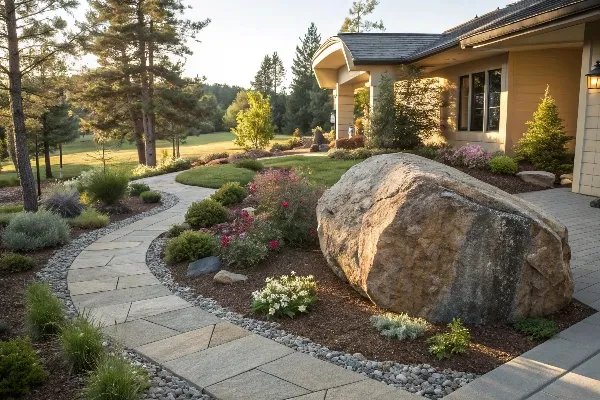
As a professional stone manufacturer and supplier, we support contractors, project developers, importers, and wholesalers with bulk procurement, custom fabrication, and end-to-end logistics for residential and commercial landscaping projects—so your plan, schedule, and budget stay on track.
Across the U.S., suppliers quote landscape boulders by the ton on average for mixed loads, with a typical 2025 range of $120–$350 per ton for common local stone. You’ll see premium mixes higher in fast-growing markets or where trucking is tight, and a few listings still show 350 per ton for rare colors.
For piece pricing, the cost of landscape boulders depends on geometry and show-face. A small accent can cost as little as a few dollars, while showpieces with special shape or color run into the thousands. Remember, the actual cost you’ll pay is driven by availability, access, and schedule.
Many landscape supply stores sell a range of sizes. Use the unit that matches your scope:
Most supply stores can quote any of the three. Ask for a quote detailing the cost with material, delivery fees, and equipment listed so you can compare apples to apples.
Three things swing price most:
Tip: When comparing vendors, check lead times, minimum order, and whether you’re buying sorted stone or a grab-bag mix.
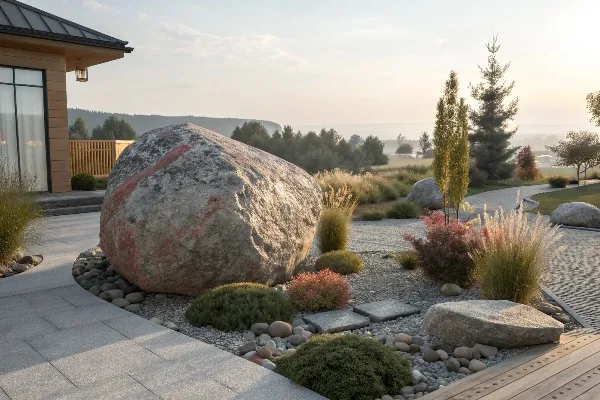
You can get close with a quick calculator:
Example: 2.5 × 2.0 × 1.5 ft granite ≈ 7.5 ft³ × 175 = ~1,312 lb ≈ 0.66 ton. That’s easy to price per ton.
If a landscape boulder weighs 0.6–1.0 ton, you’ll likely need a compact loader. Stones weighing 2+ tons may need a crane and better access planning.
Installing landscape boulders is more than “drop and go.” Crews excavate a base, set and level, backfill, and protect surfaces. Plan for equipment time and installation labor.
Typical landscaping companies charge equipment plus people. In many regions, you’ll see 50 per hour per operator or laborer, then add lift rigging and staging. Some crane services show 250 per pick minimums depending on distance and setup.
For detailed proposals, ask your vendor to separate material, staging, machine hours, crew hours, and disposal. That transparency helps you compare bids and control risk.
Freight lines are a real component of the cost of the boulders. Confirm driveway width, slopes, soft turf, and overhead lines. Tight turns are challenging for large machines, and crane picks require safe lift points on the boulders. When boulders are delivered, note where the truck can offload without damage.
When you order large landscape boulders, the combination of weight, time windows, and escorts can push boulder delivery costs higher. That’s why planning access early saves money and stress.
For a bold entry, a deep charcoal focal piece like Hina Black landscape rock anchors planting beds and hardscape lines. When a wall or vertical edge is part of your concept, tie the look together with China Black wall stone for clean transitions. Need warmer texture behind granite accents? Consider a stacked-stone backdrop such as Taihang Gold stacked stone wall.
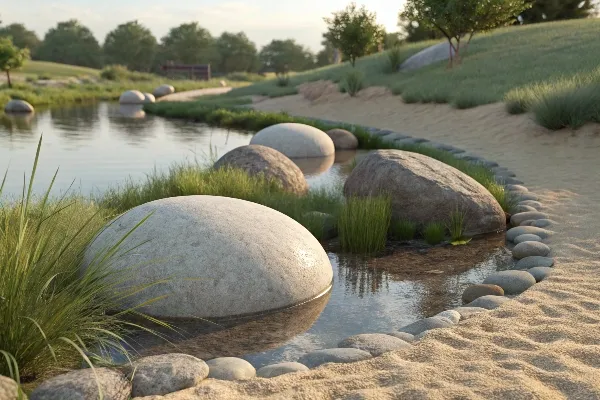
Below are planning ranges you can tune with your vendor. They reflect estimates for landscape materials and install time, not a binding bid.
| Unit / Scenario | Typical 2025 Price | Notes |
|---|---|---|
| Mixed local stone — material, ton on average | $120–$350 | Local availability from the quarry pulls low; rare shapes push high. |
| Premium color/shape — material, ton | $250–$600 | Limited stock and special sorting. |
| Mixed small/medium — cubic yard | $50–$160 | Useful when filling space on a budget. |
| Statement piece — per boulder (36–48″) | $600–$2,300 | Crane and rigging likely for boulders over 36 inches; boulders larger than 48 nearly always need a crane. |
| Install (equipment + crew) | Project specific | Varies by access; line-item machine hours + labor. |
If you’re adding gravel under and around the rock, budget 2.00 per square foot as a reference for decorative cover.
A developer needed five 3–4 ft accents on a hillside. We sourced within 40 miles to control fuel and time. Staging happened curbside; a compact track loader set each rock in one pass. The approach showed how landscape boulders require both design intent and logistics—and kept the cost around the original target.
To finish the paths between clusters, we paired the accents with China Black stepping stones for clear wayfinding and better footing.
DIY installation is realistic for small kits and edging where stones weigh 40 to 50 lb—bags and bundles that weigh 40 to 50 pounds are manageable with basic tools. That’s the sweet spot for smaller landscaping improvements.
For bigger pieces, bring in pros. A designer near you and a qualified installer will protect site elements and sequence work. If you’re comparing bids, ask two vendors for estimates for landscape boulders and full scope, including machine type and risk controls.
If you’re on a timeline, pallets help. A full pallet often comes pre-sorted by size and color, with clear coverage notes and a minimum order for freight. Box stores (think Home Depot) sometimes list kits with small to medium pieces, useful for tight schedules.
Consider multiples of mid-size instead of one giant rock. Smaller boulders work aesthetically in clusters, place faster, and usually cost less. Many vendors explicitly price smaller bundles, and some will price their landscape boulders at a discount when a contractor orders mixed sizes.
When repetition across phases matters, browse our granite products catalog to match color and texture across orders, or explore broader palettes and finishes under landscape stone.
A single anchor landscape boulder can reset the space; a trio can guide flow like stepping notes. Use angular rock for steps and lines; rounded for water and play zones. Landscape boulders can be used as seat-height features, as transitions into walls, or as safety cues at corners in large landscape entries.
Start with a sketch and sizes. Confirm stock by stone type and color, then set delivery and staging. Mark utilities. Decide on embed depth (bury a third of height for a natural look). For accessibility or ADA edges, plan continuous borders or gentle rises. Choose whether you’re installing landscape boulders before irrigation heads or after planting—sequence matters.
“Please provide a quote detailing the cost for the attached plan. I need material per ton (with piece counts), placement equipment, crew rates, delivery fees, and schedule windows. Note if there’s a minimum order or crane requirement. Include alternates for smaller boulders and any close color substitutes available this week.”
How much do landscape boulders cost in 2025?
Most mixed loads land near $120–$350 per ton, with premium color/shape higher. Piece pricing ranges from a few dollars to a few thousand based on geometry and finish. Use your vendor’s current stock for the best 2025 cost.
Is buying by the ton cheaper than by the piece?
Often. Bulk yards keep consistent inventory and may discount mixed lots. If you need a perfect show-face, piece pricing is worth it. Ask for landscape boulders by the ton plus one or two hand-picked accents.
What size reads well from the street?
A single 3–4 ft rock reads powerfully. Note that boulders over 36 inches usually need machines, and boulders larger than 48 almost always require a crane.
What drives totals more than anything else?
Access and trucking. The high cost of transporting heavy rock across a metro area adds up, especially if you cost of transporting them across multiple zones at peak times.
Can I mix boulders with other materials to save?
Yes. Many projects use decorative gravel at about 2.00 per square foot as a base and accent around stones to reduce piece count.
Where do boulders work best?
As seating, steps, water features, and anchors at entries—plus transitions into walls, steps, and bed edges. That’s why we often pair accents with China Black wall stone or cluster them with China Black stepping stones.
If you need consistent color across phases or multiple sites, we’ll stage and label lots in advance. We’re ready to help you select, schedule, and set boulders for your yard—or for your campus, park, or boulevard—on time and on budget.

 English
  French
  German
  Russian
  Arabic
