Avoid your inquiry is delay response, please enter your WhatsApp/Skype along with the message, so we can contact you at the very first time.
We will reply you within 24 hours. If for urgent case, please add WhatsApp/WeChat: +8615063007107,. Or call 0086-15063007107 directly.
You want to use granite tiles in wet areas. But you worry about water damage. Many people face this same problem. They think granite is fully waterproof. This is not true.
Granite tiles are not waterproof. This fact surprises many builders and homeowners. Granite looks solid and strong. But it has tiny holes called pores.
Porcelain tiles have a glaze coating. This coating acts like a shield. Water cannot get through.
Ceramic tiles also have protective glazes. These glazes make them truly waterproof.
Granite tiles are different. They come from nature. No factory adds a waterproof coating. The stone has natural pores that let water in.
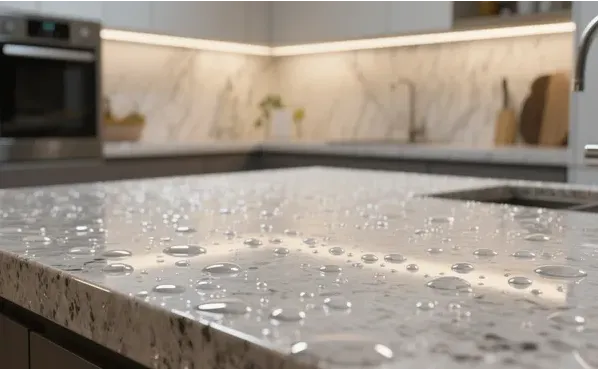
Professional stone testing shows granite absorption rates:
Even “low porosity” granite still absorbs water. Compare this to:
The problems start small. Then they get bigger. Here is what happens to unsealed granite tiles:
Industry data shows common failure patterns:
| Location | Time to Damage | Main Problem | Repair Cost |
|---|---|---|---|
| Shower floors | 6-18 months | Mold and staining | High |
| Pool decks | 1-2 years | Freeze damage | Very high |
| Kitchen backsplash | 2-3 years | Grease stains | Medium |
| Bathroom walls | 1-3 years | Water stains | Medium |
You can make granite tiles water-resistant. But you must seal them properly. Here is how:
Impregnating sealers work best. They soak into the granite pores. They create a barrier inside the stone.
Topical sealers sit on top. They can peel off. Avoid these for wet areas.
Penetrating sealers go deep into the stone. They last longer than topical types.
DIY sealing works for simple jobs. Kitchen countertops and dry areas are good for DIY.
Professional sealing is better for:
With advanced production facilities covering 40,000 square meters, manufacturers like Tideway ensure proper sealing recommendations come with their granite stone products .
Shower floors are the worst place for granite. Constant water exposure breaks down sealers fast.
Pool surrounds face chemical damage. Chlorine attacks granite sealers.
Outdoor patios in cold climates suffer freeze-thaw damage.
Kitchen countertops work well if sealed properly. Spills get wiped up quickly.
Bathroom vanity tops are okay with good ventilation.
Indoor floors in dry areas pose little risk.

Kitchen backsplashes behind the stove stay mostly dry.
Fireplace surrounds have no water exposure.
Interior walls in living areas are very safe.
| Material | Waterproof? | Needs Sealing? | Best For | Maintenance |
|---|---|---|---|---|
| Granite tiles | No | Yes | Dry areas, sealed wet areas | High |
| Porcelain tiles | Yes | No | All wet areas | Low |
| Ceramic tiles | Yes | No | Most wet areas | Low |
| Quartz slabs | Yes | No | Countertops | Medium |
| Marble tiles | No | Yes | Dry areas only | Very high |
Porcelain panels offer the look of granite without the water problems. Large-format porcelain panels can mimic granite flooring perfectly.
Modern manufacturing creates porcelain that looks like natural stone. But it stays waterproof forever.
No granite is truly waterproof. Even the densest granite absorbs some water. Even the best sealer wears off over time.
Water-resistant is the right term. Sealed granite resists water well. But it is not waterproof like porcelain.
Quality control matters for granite water resistance. Professional stone suppliers with advanced technology ensure proper selection and preparation.
Modern granite processing includes:
Proper substrate preparation prevents water problems. The surface under granite must be waterproof too.
Correct adhesive selection matters in wet areas. Use waterproof thin-set mortar.
Grout sealing is as important as stone sealing. Grout absorbs more water than granite.
Water bead test: Drop water on the granite. If it soaks in quickly, reseal.
Dark spot test: Wet areas that stay dark need resealing.
Professional testing: Use electronic moisture meters for accuracy.
Do use:
Don’t use:
| Area Type | Sealing Frequency | Signs to Reseal |
|---|---|---|
| Kitchen countertops | 1-2 years | Water spots, stains |
| Bathroom vanities | 6-12 months | Dark wet spots |
| Shower areas | 3-6 months | Mold, discoloration |
| Floor tiles | 1-3 years | Dull appearance |
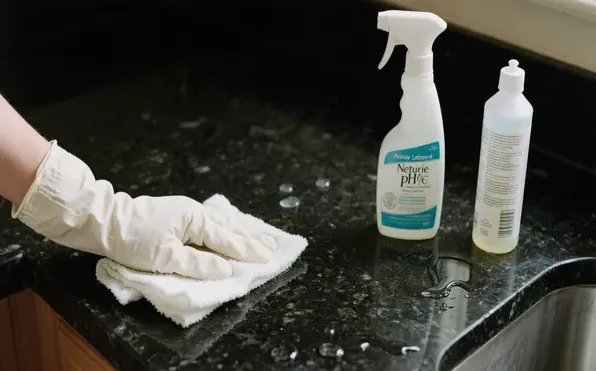
Prevention costs much less than repair. Smart buyers invest in proper sealing from day one.
Established stone companies with decades of experience understand these water resistance challenges. Since 2001, manufacturers like Tideway have evolved into formidable stone enterprises serving five continents .
Their comprehensive approach includes:
Quality granite suppliers provide detailed water resistance data with their products. They test absorption rates and recommend appropriate sealers for each granite type .
Large-format porcelain panels solve the waterproof problem completely. They look like natural granite but need no sealing.
Digital printing technology creates realistic granite patterns on porcelain surfaces.
Quartz surfaces contain real granite pieces in a waterproof resin matrix.
Engineered stones combine natural beauty with modern water resistance.
Granite in dry areas combined with porcelain in wet zones gives you both natural beauty and practical performance.
Granite tiles are not waterproof. They are naturally porous and absorb water.
Sealing makes granite water-resistant but not waterproof. Sealers wear off over time.
High-risk wet areas like shower floors should use truly waterproof materials instead.
Proper maintenance with regular resealing prevents most water damage problems.
Quality suppliers provide technical support and testing data to help you choose correctly.
Total cost of ownership includes ongoing sealing and maintenance, not just initial price.
The bottom line: Granite can work in wet areas with proper sealing and maintenance. But porcelain offers better long-term performance in constantly wet locations. Choose based on your specific needs, budget, and maintenance preferences.
When you need reliable stone products with honest technical guidance, work with experienced manufacturers who understand these real-world performance requirements. Their expertise helps you make the right choice for each application.
The Science of Stone and Water
| Material | Waterproof | For Wet Areas | Maintenance |
|---|---|---|---|
| Porcelain Tile | ✓ Yes | ✓ Yes | Low |
| Ceramic Tile | ✓ Yes | ✓ Yes | Low |
| Granite (Sealed) | Partial | ✗ No | Medium |
| Natural Marble | Partial | ✗ No | High |

 English
  French
  German
  Russian
  Arabic
