Avoid your inquiry is delay response, please enter your WhatsApp/Skype along with the message, so we can contact you at the very first time.
We will reply you within 24 hours. If for urgent case, please add WhatsApp/WeChat: +8615063007107,. Or call 0086-15063007107 directly.
Choosing a countertop material is hard. You want a surface that looks stunning, resists damage, and lasts. Granite delivers proven performance for busy kitchens without losing its natural beauty.
Yes—granite is a good stone for kitchen countertops. As natural stone, it’s hard, heat resistant, and elegant. A properly sealed slab stands up to daily scratch and stain risks, offers a wide range of colors, and can be fabricated to match any kitchen design. With basic care, granite countertops can last for decades.
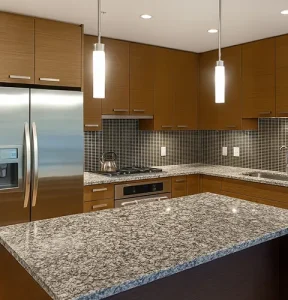
Is Granite a Good Stone for Kitchen Countertops?
Granite is a natural stone formed under immense heat and pressure, which is why granite is a durable choice for a kitchen countertop. On the Mohs scale it’s typically 6–7, so everyday utensils are less likely to scratch the surface. Proper fabrication turns a stone slab into a smooth, strong countertop surface that handles daily prep, cooking and entertaining, and cleanup with ease.
Because granite is a porous igneous rock, we recommend sealing granite during installation and re-sealing on a regular schedule. A quality stone sealer forms a barrier that helps the surface of the granite resist stain from oil, wine, and coffee. With that simple step, countertops can last for decades in busy homes and commercial kitchens alike.
Tip for contractors: If you prefer the natural look and need consistency across units, choose bundles from the same slab of granite to keep veining and color and pattern aligned across longer runs of kitchen counters.
Useful internal resource: Explore a polished kitchen-grade granite example on our granite countertop product page for finish and edge ideas.
— Read: Karamori Gold polished granite for countertops
This is the classic comparison: granite and quartz. Granite is a natural material quarried as a stone slab; quartz is an engineered product. Engineered quartz blends natural quartz aggregates with resins to create an engineered stone countertop surface with very low porosity. Granite needs periodic seal maintenance; the quartz surface does not.
Comparing granite and quartz comes down to priorities:
See finishes and factory capacity:
— Browse granite slab inventory and finishes: Factory display – granite supplier
— Full granite wholesale catalog: Granite products category
Pricing varies by quarry, color, thickness, finish, and logistics. For project budgeting, the cost of granite often falls in broad bands per square foot:
| Grade | Typical Thickness | Typical Uses | Estimated Price* (per square foot) |
|---|---|---|---|
| Entry | 2 cm | Multi-unit kitchens, value builds | $35–$55 |
| Mid | 3 cm | Custom homes, retail, restaurants | $55–$85 |
| Premium/Exotic | 3 cm | Feature islands, show kitchens | $85–$150+ |
*Regional freight, wastage, cutouts, and edging affect the price of granite. Always request a project-specific quote.
If you’re procuring for a block of apartments or a retail rollout, bulk selection from bundled lots keeps tone and veining harmonious while improving yield—important when the choice for busy installations is speed and consistency.
Useful internal resource:
— See a kitchen-ready granite slab for kitchen in “Pearl Blue”: Pearl Blue – slab details
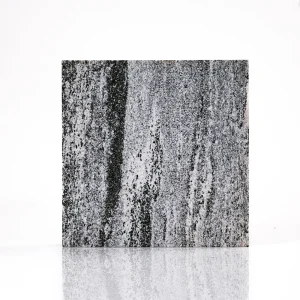
How much does a granite slab cost per square foot?
Let’s be honest about the cons of granite countertops. Unsealed granite can stain because of its micro-pores, and aggressive impacts can scratch or chip edges. The remedy is straightforward: a penetrating sealer (applied on schedule) and sensible care. Wipe a spill soon after it happens, use cutting boards for heavy chopping, and avoid dropping cast-iron on edges.
When sealing granite properly, most features of granite—density, crystallinity, and interlocked grains—make it very resistant to many household chemicals. That’s why it’s a popular choice for homeowners and commercial specifiers who want a long-lived surface.
Useful internal resource:
— Consider textured finishes that hide wear: Shidao Red flamed granite
Frequency depends on stone porosity, finish, and use. Many stone countertops do well with annual sealing; dark, dense stones can go longer. Test with a few water drops: if they darken the area quickly, re-apply stone sealer. Sealing supports durability and helps keep your countertops looking new.
For multi-unit builds, we provide a maintenance sheet so each homeowner or tenant knows the cycle. That way, new granite countertops leave your jobsite protected and easy to maintain from day one—a great choice for warranty clarity.
Yes. Matching granite backsplashes create a continuous, hygienic kitchen countertop surface with fewer seams. Long runs of kitchen countertops look clean and upscale, especially when the wall slab is cut from the same bundle as the counter. This “book-matched” approach amplifies the elegance of granite in modern kitchen design.
On commercial jobs, full-height splash panels reduce grout maintenance behind equipment. They’re also safe for food zones when cleaned properly—ideal for kitchen remodel projects in cafés and open-kitchen restaurants.
Useful internal resource:
— See polished and litchi (bush-hammered) finishes: Polished Linshu Blue (slab) and Linshu Blue litchi surface
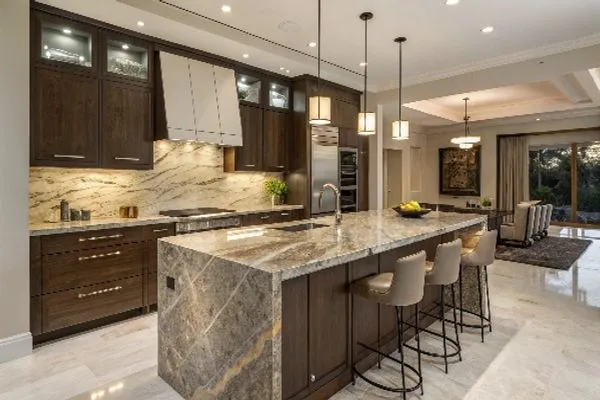
Are granite backsplashes and long kitchen counters a good idea?
For stone vs engineered surfaces, here’s a quick view:
Comparison at a glance
| Property | Granite | Quartz (engineered) | Marble |
|---|---|---|---|
| Heat handling | Excellent | Good | Good |
| Porosity | Low–moderate | Very low | Moderate |
| Etching from acids | Minimal | Minimal | Possible |
| Looks | Unique color and pattern | Uniform | Classic veining |
| Maintenance | Periodic seal | Minimal | Periodic seal |
Useful internal resource:
— Explore our marble catalog for alternative stone materials: Luxury marble series
Start by choosing a stone that complements cabinets and flooring. Granite comes in subtle grays, warm golds, and dramatic blacks; dark granite can hide crumbs and etches, while lighter tones reflect more light for smaller spaces. For open-plan spaces, consider the island as the visual anchor and pick a stone slab with movement that suits the room’s rhythm.
Bring samples on-site: lighting shifts the perceived color and pattern. For chains and multi-site developers, we help lock a “control sample” so every site gets the same tone and gloss.
Useful internal resource:
— Project-friendly wall and paving companions: Granite products for wholesale
Fabrication begins by nesting your layout (sink cutouts, edge profiles, seams) to maximize yield from each granite slab. CNC cutting and waterjet tooling ensure precision, while edge polishing builds the final countertop finish line. Dry-fit mockups in the shop reduce on-site surprises.
On site, a solid substrate, level cabinets, and correct fasteners matter as much as the stone. Our crews template carefully so overhangs and waterfall sides align. The result is a seamless countertop material that reads “custom,” not “assembled.”
Useful internal resource:
— Company overview for procurement teams: Granite exporter — About us
Everyday care is simple: mild soap, soft cloth, and prompt cleanup after a spill. Avoid harsh abrasives, skip outdoor-use sealants, and don’t place red-hot pans directly on any countertop (even granite)—use trivets to preserve the finish.
Annual inspection for caulk lines, a quick wipe test for porosity, and re-application of a quality sealer are the essentials that keep your countertops in like-new condition. Follow this routine and granite countertops are a popular long-term choice for kitchens.
Quartzite countertops are metamorphic stone surfaces that often look like granite but can be even harder—an excellent pick for heavy-use bars or pastry stations. They bridge the gap between granite and quartz, giving you natural stone character with strong performance. Always test actual samples; some stones sold as “quartzite” are dolomitic marble blends, which behave differently.
For project estimators, the budget tension isn’t just vs granite countertops choose/avoid—it’s the whole package: stone selection, fabrication, transport, site access, and install windows. Freight and offloading for 3 cm islands can dominate costs on high floors; plan cranes and delivery slots early.
We help contractors schedule around MEP trades and casework. From bundled selections to crate labeling by unit, these small things speed punch lists and shorten the path to “turnover.”
When the spec calls for “premium look; practical care,” granite is often the great choice.
Sealing frequency (typical)
Granite (light)  : ████ Annual
Granite (dark)   : ███  18–24 months
Quartz (engineered): █  Rare (follow OEM)
Marble           : ████ Annual
This simple rhythm keeps performance predictable across portfolios.
We’re a professional stone manufacturer and supplier with the capacity to support bulk procurement, consistent bundles, and tight schedules. Our team fabricates to spec (edges, overhangs, waterfall ends), palletizes intelligently, and ships globally. We provide takeoff support, VE options (like quartz or granite and marble alternatives), and on-call tech guidance. If your kitchen rollout needs dozens or hundreds of tops, we align inventory and reserve matching lots so sites install without mismatches.
Is granite safe for food prep?
Yes. Once sealed and cleaned, it creates a hygienic countertop surface that’s safe for food. Use boards for cutting to protect edges and tools.
Will my granite stain?
Unsealed surfaces can stain. That’s why we recommend a penetrating stone sealer and timely wipe-ups after a spill.
Does granite scratch easily?
It’s tough, but any stone can scratch with enough force. Use boards and avoid dragging cast-iron or grit across the surface.
How does granite handle heat compared to quartz?
Granite is very heat resistant. A hot pan on quartz can risk binder damage, so always use trivets.
What thickness should I choose?
Most kitchen projects use 3 cm for islands and main runs; 2 cm works for cost-sensitive multi-unit builds with proper support.
Is granite still in style?
Absolutely. Granite countertops offer the elegance of granite with fresh edges and finishes; they remain a popular choice for homeowners and designers.

 English
  French
  German
  Russian
  Arabic
