Avoid your inquiry is delay response, please enter your WhatsApp/Skype along with the message, so we can contact you at the very first time.
We will reply you within 24 hours. If for urgent case, please add WhatsApp/WeChat: +8615063007107,. Or call 0086-15063007107 directly.
Choosing a stone slab is hard—so many looks, so many trade-offs.
Pick wrong and you risk stains, chips, or a style that dates fast.
Use this clear, practical guide to match the right natural stone to your project and budget—confidently.
What is a natural stone slab, and why choose one for countertops?
A natural stone slab is a thick, cut sheet of rock—such as granite, marble, or quartzite—sawn and finished for surfaces. You get real-world durability, one-of-a-kind veining, and the timeless elegance that only nature can deliver. It’s perfect for countertops, backsplashes, feature walls, and floors.
A slab starts life in a quarry. Blocks are sliced with multi-wire saws into large sheets, then kiln-dried, resin-treated, and finished. That finish may be polished (mirror shine), honed (matte), or textured. The end result: a stone slab with structural depth, real allure, and movement that engineered materials can’t fake.
For a hands-on feel, browse a real granite slab example and notice how lighting changes color and sparkle. See a polished Linshu Blue page here: granite slab.
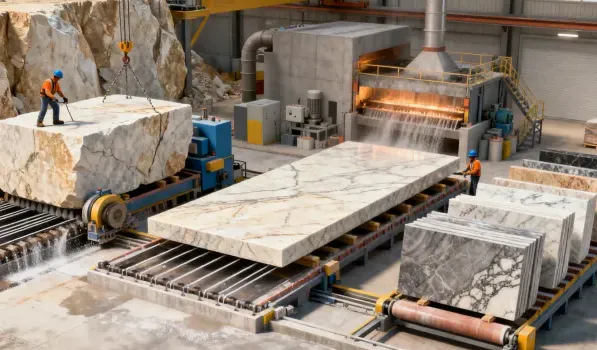
What a Natural Stone Slab Is
Granite wears busy kitchens well; marble excels where drama and soft age matter; quartzite blends both worlds with crystalline strength and vibrant hues. In short:
Compare these materials in a curated category of marble looks to understand pattern types before you choose: visit Luxury Marble collections. Explore marble collections.
Names signal look and lineage:
Designers also reach for smoky bardiglio, soft grigio marble, and crisp bianco families to tune light and mood. For inspiration on how these stones resolve at sink runs and splash returns, see a marble kitchen countertop application page. See kitchen marble ideas.
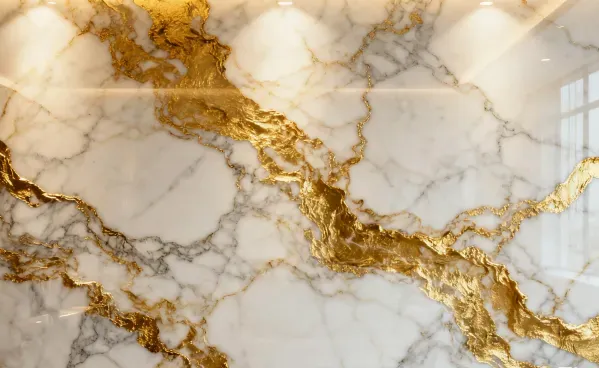
Calacatta
Each natural stone family has a job it does best:
Color hunters should also meet amazonite quartzite and the blue quartzite slab family—tropical oceans frozen in stone. If you’re thinking bathroom accents or a feature wall panel, skim this marble tile bathroom and wall surface page for layout cues. Marble tile bathroom ideas.
Finish changes everything. Polished feels formal; hone softens glare; leathered adds grip and shadow. Edge details (eased, ogee, miter) alter thickness perception, while bookmatch sets two mirrored slabs together for butterfly visuals—ideal on reception feature walls or a linear fireplace cladding.
If you’d like to see real-world wall textures, scan a project-style page of decorative wall stone to feel proportion and joint rhythm before committing. Decorative wall stone ideas.
Supply regions shape palette. Brazilian quarries yield electric blues and greens: think azul families and statement pieces like azul bahia granite. Italian benches deliver the mythic whites and greys; North American sites give durable neutrals; Middle Eastern benches supply dense taupes.
Whites range from bianco rhino to creamy ivories; golds may appear as a radiant gold marble slab. For warm granite colors suited to bars and kitchen countertop islands, see this golden series page and imagine how lighter cabinets set it off. Granite countertop inspiration.
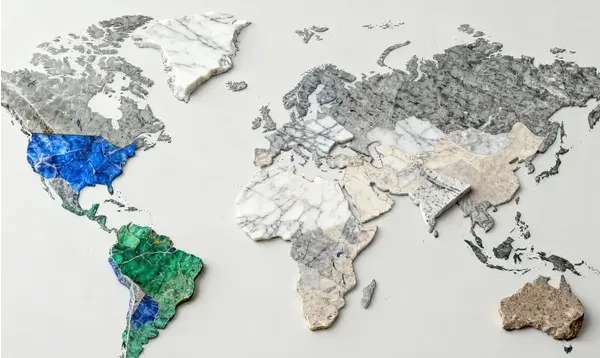
Color Stories & Origins
Standard thickness is 20 mm or 30 mm; jumbo sheets vary by quarry. Confirm your cutlist and seam plan with your fabricator at templating. Remember: granite is an igneous rock (born of cooled magma), while marble is a metamorphic rock (recrystallized under heat/pressure). Some stones are more porous than others, affecting sealers and maintenance cycles.
If you’re comparing surface options across a variety of materials, this factory overview helps you see how benches, edges, and machinery affect outcomes. Meet the granite supplier’s factory display.
Approximate specs & uses
|
Stone type |
Mohs hardness* |
Typical finish |
Best for |
Notes |
|
Granite |
~6–7 |
Polished, leathered |
High-use floors and kitchen countertops |
Heat-tough, varied patterns |
|
Marble |
~3–4 |
Polished, honed |
Vanities, show kitchens |
Softer; patinas with acids |
|
Quartzite |
~7 |
Polished, honed |
Luxury kitchens |
Bright colors, crisp crystals |
|
Limestone |
~3–4 |
Honed |
Lobbies, galleries |
Warm tonal field |
|
Travertine |
~3–4 |
Tumbled |
Terraces, spa decks |
Voids add texture |
|
Slate |
~3–4 |
Natural cleft |
Stairs, roofs |
Fine-grained stability |
|
Onyx |
~3 |
Polished |
Backlit bars |
Translucent jewel look |
|
Soapstone |
~1–2 |
Honed |
Chef zones |
Dark, repairable |
*Generalized ranges. See the USGS Mohs overview and Natural Stone Institute on sealing.
Seal as needed, wipe spills, and use boards. Stone offers low embodied aesthetic cost per year because it survives fashion cycles and the test of time. Select stones also outlast synthetic patterns, keeping resale high.
If you plan to refinish heavy-use tops later, many granites and quartzites can be re-polished. For a look at different surface textures and how they age, check a granite wholesale category—notice variety and density by color. See granite wholesale options.
How do I pick the right stone for busy kitchens?
Choose granite or quartzite. They’re harder and handle heat and abrasion. Pick medium patterning to hide crumbs and etches. Start with darker neutrals or fine speckles; they’re forgiving.
Does marble always stain?
No. Sealed marble resists casual spills. It can etch with acids, which many owners accept as living patina—similar to leather aging. Honed finishes mask micro-marks.
Is quartz the same as quartzite?
No. Quartz (engineered) is man-made with pigments and resin; quartzite (natural) comes from sandstone fused in nature. Quartzite tends to be harder and brighter in crystals.
What thickness should I buy?
30 mm if budget allows (fewer seams, stiffer spans). 20 mm works well with sturdy under-supports or mitered edges for a thick look.
Will stone feel cold?
At room temperature it conducts heat away from your hand, so it feels cool. In kitchens, this helps pastry work; in baths, radiant heat under stone tile or slabs adds comfort.
Can I use marble in the bathroom?
Yes. Choose honed or light-polished finishes, seal properly, and ventilate. Marble can be a forever surface in a bathroom used with basic care.
1) Boutique Restaurant Bar
The client wanted drama under low, warm lighting. We specified calacatta gold with tight seam control and a bold book-matched face on a wall niche. The staff reports nightly compliments, and easy wipe-downs keep service moving.
2) Office Lobby Upgrade
Large panels of white granite frame an entry fireplace to anchor the brand in stone. Visitors see depth and sparkle from afar. Traffic patterns stay tidy; the surface still looks new after winter grit.
3) Family Kitchen Refresh
They wanted stone for kitchen countertops but worried about stains. We tested samples and chose a mid-tone granite with a leathered finish—grippy, soft sheen, hides smudges. The island kitchen countertop is now the homework and baking zone.
For warm golds and textured options similar to snapshot #3, leaf through a specific color line here: granite kitchen countertop ideas.
Want a sense of how subtle textures look across large areas? Browse a related page with consistent, repeatable finishes and formats for planning. See granite flooring & floor tile looks.
Ask for current pricing by color and finish, plus availability. Stones with higher yield from a bench cost less to fabricate. Request small off-cut pieces to test backsplashes grout colors, cabinet paints, and lighting—day and night.
See how a single product family can appear across uses—slabs, steps, and floors—then estimate your own yield. Granite floor tile and slab variants.
Define use and traffic. Heavy cooking? Choose resilient granite or quartzite.
Pick pattern scale. Busier surfaces hide wear; open veining reads sculptural.
Confirm finish. Polished pops; honed mutes; leather adds touch.
Template early. Align seams, edges, and cutouts with the cabinetry plan.
Seal and schedule care. Routine reseal keeps stains at bay for many stones.
To compare multiple colors and finishes side-by-side, skim a product group page—note how names map to surfaces. Browse polished, flamed, and honed granite.
Hardness & care (visual “chart”)
Onyx |■■ | Rare, backlight
Marble |■■■■ | Needs care; patinas
Limestone |■■■■ | Warm, soft sheen
Travertine|■■■■ | Textured; porous fills
Slate |■■■■ | Stable cleft
Soapstone |■ | Soft; easy repair
Granite |■■■■■■■ | Workhorse surface
Quartzite |■■■■■■■ | Bright, crisp, tough
Weights & sizes (typical)
|
Thickness |
Approx. weight (kg/m²) |
Notes |
|
20 mm |
~54 |
Lightest standard slab |
|
30 mm |
~81 |
Stiff; fewer seams |
We source, test, and finish slabs daily; our team helps curate choices for your space and timeline. Because we maintain an extensive inventory, lead-times are predictable and colors are consistent across large orders—exactly what commercial design projects need.
For a close-up of a “sparkling blue” granite used on both slabs and paving, scan an adjacent product post to study grain and polish. Pearl/blue-tone granite example.
A collection of natural stone slabs offers versatility that engineered surfaces can’t match. Patterns vary, evolve with light, and feel “alive.” When specified well, these premium natural stone slabs keep their value, are perfect for countertops and walls, and channel the timeless allure of natural stone with quiet elegance.
As a professional stone manufacturer and supplier, we help you find the ideal stone quickly—from bold Italian whites to rugged field-tuned surfaces—then coordinate approvals with your GC and millwork. Our goal is simple: give you a versatile stone that will serve, delight, and endure.
One sentence to remember: choose the perfect stone for your use, finish it right, and it will pass the test of time—project after project.
including marble, quartzite, granite, travertine, onyx, soapstone, limestone, slate; classic families like calacatta, carrara, arabescato; special mentions—azul bahia granite, bianco rhino, beaumaniere—and methods like bookmatch. You also saw how origin (e.g., brazilian benches) shapes palette, why thickness matters, and how finishes like hone change feel.
Note on scope
This guide aims to be practical and neutral. It reflects first-hand shop-floor practice—templating, edge builds, sealer tests—and recognized references above. If you’d like specs tailored to your drawings, we can help you review thickness, finish, and color yield based on your schedule and volume.

 English
  French
  German
  Russian
  Arabic
