Avoid your inquiry is delay response, please enter your WhatsApp/Skype along with the message, so we can contact you at the very first time.
We will reply you within 24 hours. If for urgent case, please add WhatsApp/WeChat: +8615063007107,. Or call 0086-15063007107 directly.
I see many buyers freeze at this choice. A wrong finish can cause slips, glare, or stains. The right one looks good, feels safe, and lasts.
Honed granite is better for grip and a calm matte look. Polished granite is better for stain resistance, color depth, and fast cleaning. I match finish to traffic, light, and use.
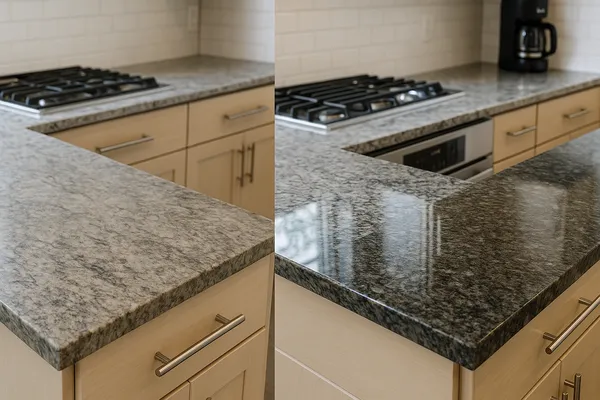
I will keep things simple and practical. I will show where each finish wins. I will share site lessons and lab facts so you can decide with confidence.
Wet floors make owners nervous. Gloss can look like glass. No one wants a fall near a door.
Polished granite can be slippery when wet. Honed surfaces give more traction. I check moisture, slope, cleaning plan, and local slip rules before I choose a finish.
I look at the coefficient of friction (COF). Higher numbers mean more grip. Many projects target a wet COF around 0.42 or higher with standard tests. Results change with stone type, finish depth, and cleaners. Shoes also matter a lot. A glossy floor can pass a test if the micro-texture is strong and the cleaner leaves no residue.
I once mocked up a hotel entry with two finishes of the same gray granite. Under downlights, polished looked stunning. But rain made the first two meters slick. The honed strip at the threshold felt safe, even with wet soles. We kept polished deeper inside and used honed at the doors. Guests never noticed the change, but the facility team thanked me after the first storm. That small layout choice cut risk without killing the look.
Here is a simple view I use on site:
|
Finish |
Typical dry COF* |
Typical wet COF* |
Common use |
Notes |
|
Polished |
0.45–0.60 |
0.20–0.35 |
Walls, counters, low-risk floors |
Deep gloss; wet zones can be slick |
|
Honed |
0.50–0.70 |
0.35–0.50 |
Entries, bathrooms, busy floors |
More micro-texture, better grip |
|
Flamed/Brushed |
0.60–0.80 |
0.45–0.65 |
Exterior steps, pool edges |
Best traction; rustic look |
*Ranges vary by stone, finish, sealer, and cleaner.
Good design reduces risk. Mats catch grit and water. Slopes move water to drains. Neutral cleaners keep micro-texture open. Oily soaps leave film and lower COF. I like a quick on-site pendulum or tribometer test at door swings and ramps. I prefer data over guesswork.
Budgets are tight. Finish choices change unit price and install time. They also change care costs.
Honed granite often costs a bit more at the slab level. Polished can be cheaper due to demand and fast lines. Total cost also depends on sealer choice, edges, and punch-list time.
Factories run polished passes fast. The market orders more polished slabs, so yields are high. Honed needs tight control of grit sequence to avoid swirl marks and haze. Dark stones show uneven passes. That slows lines and can lift price a little.
On site, honed edges can hide tiny chips, so touch-ups move faster. Polished edges demand a perfect shine, so crews spend more time on buffing and clean-up. If you mix both finishes in one area, crews swap pads and compounds. That costs minutes that add up.
I show buyers the full picture, not just the slab price:
|
Factor |
Polished |
Honed |
Impact on Budget |
|
Material price delta |
Baseline (often lower) |
+0% to +10% typical |
Small, quarry and color matter |
|
Fabrication time |
Faster buffing |
Slightly slower for even matte |
Labor may rise |
|
Sealing cycle |
12–24 months typical |
6–18 months typical |
Honed may need more often |
|
Field blending/repairs |
Gloss match is strict |
Matte hides small blends |
Honed can save rework time |
|
Total installed cost (example) |
$100/m² baseline |
$103–$112/m² |
Minor gap; case by case |
On a mall corridor I managed, honed added about 4% to materials. But we saved two nights of punch-list work. Small edge scuffs vanished after a light matte reblend. The GC told me the net schedule was better with honed. That job taught me to price the whole cycle, not just the slab.
A matte face calms glare. It feels warm to the hand. It looks refined. But it brings trade-offs you must plan for.
Honed granite shows handprints on dark colors and can darken with oils. It often needs more frequent sealing. Cleaners must be neutral to avoid patchy sheen over time.
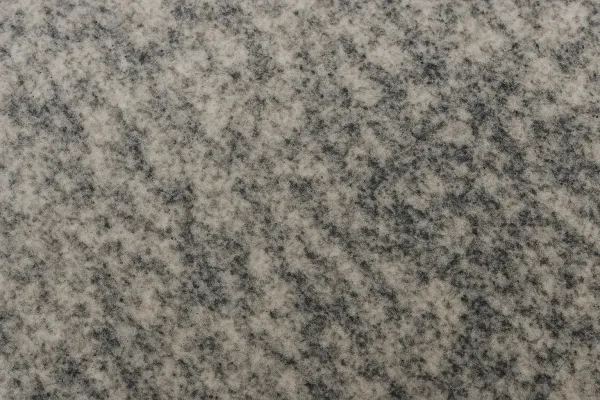
A honed surface has more open micro-texture than a mirror gloss. Penetrating sealer fills many pores, but not all. Oil from hands or food can sit near the top and make a dark spot. The stone is fine, but the look changes until you lift the oil. I keep a small kit for handover training. A one-hour demo saves years of panic calls.
Dark honed slabs, like absolute black, show prints and water rings faster. This is contrast, not damage. A quick wipe with a microfiber cloth clears it. Habits matter. Neutral pH cleaner prevents haze. Acid or alkaline products shift the sheen and create patchy areas over months.
Here is a simple field checklist:
|
Issue |
Why it happens |
Where it shows |
Practical fix |
|
Fingerprints/dark smudges |
Oils sit in texture |
Dark honed counters, vanities |
Microfiber + neutral cleaner; deep clean as needed |
|
Water spots/rings |
Minerals dry on face |
Around sinks, baths |
Wipe dry; use a squeegee |
|
Faster re-sealing |
More open texture |
Kitchens, busy entries |
Test with water bead; reseal 6–18 months |
|
Blotchy appearance |
Uneven honing or sealer |
Panels under raking light |
Strip and reseal evenly; rehone blend if needed |
I once saw a showroom wall look blotchy under tight LED strips. The installer used two brands of sealer. We stripped the wall and resealed in one pass. The color turned rich and even. Since then I insist on a single sealer system for honed work, and I ask for a small sample panel under final lighting before we release the full area.
Some spaces need drama. A polished surface brings light, depth, and clear pattern. It helps sell a room from the door.
Polished granite resists stains better, cleans faster, and makes colors look deeper. It fits kitchens, lobbies, and feature walls. It can raise perceived value with the same stone.
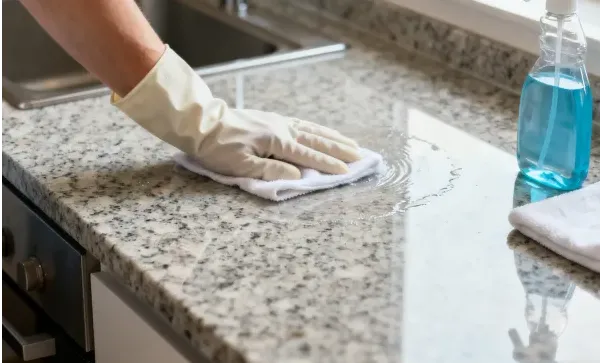
Polishing is a mechanical process that compacts the top layer. The face becomes tight and smooth. Liquids bead up longer. You get more time to wipe. Many common spills never enter. Daily care stays simple. Warm water and a neutral cleaner are enough. No wax is needed. The shine comes from the stone itself.
Gloss pulls out the crystal play in granite. Flecks pop. Veins read clearly. In sales spaces, that first impression matters. I have watched buyers run a hand across a polished island and smile. That small moment helps close deals.
There are limits. Direct sun can cause glare. Cameras pick up reflections. On floors, strong reflections can tire the eye in offices. I reduce glare with layout, rugs, or a softer light plan. In traffic lanes, I may shift to honed or flamed strips while keeping polished in low-risk zones. Mixed finishes can look intentional if we plan transitions well.
A quick view for teams:
|
Benefit |
Where it shines |
Practical impact |
|
Better stain resistance |
Kitchens, bars, family baths |
More time to wipe; fewer deep stains |
|
Faster daily cleaning |
Hotels, rentals, busy homes |
Lower labor minutes per room |
|
Color and pattern pop |
Sales suites, lobbies, show flats |
Strong first impression |
|
Long finish life |
Residential counters, wall cladding |
Decades with basic care |
In a sales gallery in the Middle East, we used polished Angola Black on a curved desk. Pendant lights doubled in the stone like a lake. Visitors noticed. The desk became a photo spot. That polish paid for itself on day one.
Many people think polish is a coating. It is not. It is the stone, shaped by abrasives.
Factory polish can last decades. It does not peel. It can dull in traffic lanes from grit. Sealers wear faster and need regular renewal, often yearly.
Think in layers. The top visual effect is the mechanical polish. It comes from a series of grits up to fine diamonds. That gloss is part of the stone. Only abrasion can remove it. It will lose clarity where sand and shoes act like sandpaper. When that happens, we can rehone and repolish the lanes or the full field. That is predictable work in busy sites.
On top of the stone, we add a penetrating sealer. It sits in the pores and slows liquids. Applied right, it is invisible and does not add shine. It wears with use and cleaners. I test a clean, dry spot with a drop of water. If the stone darkens within a minute, I reseal. In kitchens with kids, that may be every 6–12 months. On wall cladding, it may be years.
Avoid topical “shine” films on floors. They change slip behavior and mark under traffic. Use them only for short events on walls or furniture, and clean them off.
Here is a quick guide I keep for clients:
|
Layer |
What it does |
Typical lifespan |
Maintenance |
|
Mechanical polish |
Creates gloss and depth |
Decades; rework lanes as needed |
Re-polish high-wear zones every 5–15 years |
|
Penetrating sealer |
Slows stains and moisture |
6–24 months, use-dependent |
Reapply after deep clean and dry cure |
|
Topical “shine” sprays |
Temporary sheen only |
Days to weeks |
Avoid on floors; event use only |
I helped a supermarket chain with dark polished checkouts. The lanes dulled in nine months. We set a yearly night shift to powder-hone the tracks and repolish. One shift per store kept the counters bright. The factory polish did not fail. Traffic just took the edge, and we brought it back on schedule.
Choose honed for grip and soft light. Choose polished for rich color and easy care. Match finish to moisture, traffic, and brand goals.

 English
  French
  German
  Russian
  Arabic
