What is the real meaning of stone in landscaping? Stone is a hardscape material. It is used to build things. It solves problems. It also adds beauty and meaning to a space. This article will explain what stone does for a yard. We will look at its design roles. We will explore its symbolic meaning. And we will show you how to choose the right stone for your project.
The Simplest Definition: Stone = The Hardscape “Framework”
Do you have a yard that feels messy? Is it hard to use? This is a common problem. Your yard may lack a strong framework.
In landscape architecture, projects have two parts: hardscape vs softscape. Softscape is the living parts. This includes grass, plants, and soil. Hardscape is the non-living parts. This includes materials like stone, wood, and concrete. The American Society of Landscape Architects (ASLA) sees hardscape as the “bones” of a landscape. It gives a yard its shape and structure. Without it, a garden can feel like a formless, chaotic jungle.
This is where the problem gets worse. An unstructured yard is not just ugly. It is unusable. You can’t set up an outdoor living space. Paths get muddy. Slopes erode. This is the agitation every homeowner feels when their yard works against them.
The solution is to use hardscaping materials to create a functional framework. Stone in landscape design has three key “meanings”:
- Function: What the stone does. Does it hold back soil? Does it create a path?
- Aesthetics: What the stone looks like. Does it feel modern? Does it feel rustic?
- Symbolism: What the stone represents. Does it mean permanence? Does it create a feeling of peace?
Understanding these roles is the first step in creating a beautiful and useful landscape.
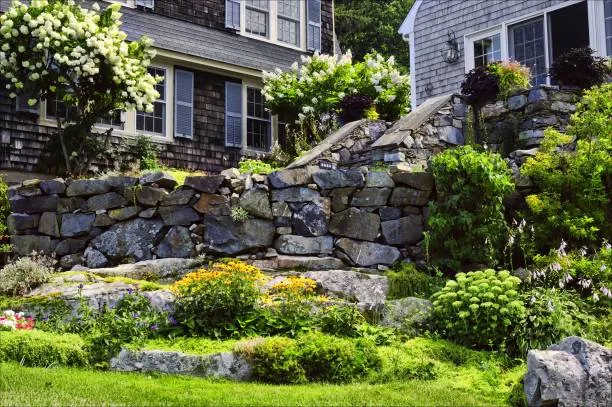
Stone in Landscaping
Functional Meaning of Stone (What It Does for a Landscape)
The most important landscape stone purpose is solving problems. It is a functional tool that makes a yard work better.
Stability + Structure
Your yard is not just for looking at. You want to live in it. But you can’t put a grill on a muddy slope. You can’t walk through thorny bushes.
This is the problem: a lack of usable space. It gets worse when you realize your expensive property is going to waste. The solution is functional stone landscaping. Stone creates flat, stable surfaces.
- Patios and Walkways: A flagstone patio or a stone paver patio creates a solid floor for an outdoor living space. A stone walkway or stepping stones path lets you move through the garden easily and safely.
- Walls and Edging: A retaining wall stone can turn a steep, useless slope into a series of flat, plantable terraces. A dry stack stone wall has a rustic look, while a mortared stone wall is more formal. Stone edging for flower beds keeps mulch in and grass out. A stone seat wall adds permanent seating.
Drainage + Water Control
Does your yard turn into a swamp after it rains? This is a huge problem. Standing water kills plants, attracts mosquitoes, and can even damage your home’s foundation.
It’s frustrating to see your beautiful lawn become a muddy mess. This agitation is a sign that your landscape is failing at a critical job: managing water.
The solution is using stone to control water. Permeable landscaping materials are the key. Because of the gaps between each angular vs rounded rock, stone allows water to flow through. This is called permeable pavement.
- Dry Creek Bed Landscaping: A dry creek bed is a trench lined with river rock landscaping that directs runoff during a storm.
- French Drain Gravel: A French drain is a perforated pipe in a gravel-filled trench that moves water away from foundations.
- Rock Swale Drainage: A swale is a shallow channel that slows and guides water. Using drainage rock landscaping in a swale helps water soak into the ground.
These systems are not just decorative. They are critical infrastructure. Data from the US Environmental Protection Agency (EPA) shows how effective they are. Permeable hardscape systems can reduce stormwater runoff by 25% to 100%. That’s a massive improvement.
| What “stone” is doing in landscaping |
Stat / result (what was measured) |
What it means for design decisions |
Evidence |
| Stormwater control (permeable hardscape) |
Stormwater volume reduction: 25%–100% |
Stone/paver systems can shift a yard from “runoff” to “infiltrate/detain,” depending on base design + soil |
EPA Permeable Pavements BMP (Dec 2021) |
| Water quality improvement |
TSS removal: PICP 67%–81% |
Stone-based permeable systems can materially reduce sediment loads |
EPA Permeable Pavements BMP Table 1 |
TSS = Total Suspended Solids (sediment)
This data proves that stone for landscaping is a powerful tool for stormwater management.
Erosion Control + Slope Protection
If your yard has slopes, you have another problem: erosion. Rain washes away your valuable soil. This makes it hard for plants to grow. It can also create ugly gullies.
Watching your soil wash away is agitating. It feels like your landscape is disappearing before your eyes.
The solution is using stone to protect the soil. Erosion control rock works by slowing down runoff. The water loses energy and drops its sediment.
- Riprap for Landscaping: Riprap is large, angular stone used to protect shorelines and steep slopes.
- Gabion Wall Landscaping: A gabion is a wire cage filled with rock. Gabion walls are excellent for holding back soil on steep hills.
- Rock Mulch: A layer of pea gravel landscaping or crushed stone can act as a stone mulch alternative. It shields the soil from the impact of raindrops. This is a key part of xeriscape rock landscaping.
Durability + Low Maintenance (With Tradeoffs)
Do you spend every spring replacing faded, rotted wood mulch? This is a problem that costs time and money. It’s an agitating chore that never ends.
The solution is natural stone landscaping. Stone is durable. It does not decompose. It is a one-time investment. A granite floor tile path will last for generations. This is what we call low maintenance landscaping rock.
However, there are tradeoffs. Rock mulch benefits include not decomposing, but it can get hot. The heat retention of rock mulch can stress some plants. It also needs landscape fabric under rock to help with weed control with landscape rock. And you still need to do rock bed maintenance to remove leaves and debris.
Design Meaning of Stone (What It Communicates Visually)
Beyond function, stone gives a landscape its personality.
Contrast and Balance
A yard that is only green can feel boring. Stone provides a natural contrast.
- Texture: The rough texture of fieldstone landscaping contrasts with the soft leaves of plants. This is the key contrast between stone and greenery.
- Color: The stone color palette landscaping can be used to complement your house or flowers. A dark basalt makes green leaves pop. A light travertine brightens a shady corner.
- Mass: A large accent boulder provides a sense of weight and gravity. It acts as a stone as landscape focal point. It provides garden balance and contrast.
Scale, Rhythm, and Focal Points
Good landscape architecture uses stone to guide the eye.
- Scale: Stone size selection landscaping is important. Using only small pebbles can feel busy. Using a few large boulder landscaping elements creates a sense of drama.
- Rhythm: Repeating a certain type of stone creates a sense of rhythm and harmony. A path made of stepping stones leads the eye forward.
- Focal Points: A unique stone sculpture garden or a stone feature wall outdoors can create a stunning focal point.
Style Cues
The type of stone you choose sends a strong message about style.
- Modern Minimalist Landscaping Stone: This style uses clean lines and simple materials. Think large-format pavers made of quartzite and beds of uniform gravel/pebbles.
- Rustic Cottage Garden Stone: This style is more informal. It uses irregular flagstone, a cottage garden stone path, and weathered fieldstone walls.
- Mediterranean Garden Gravel: This style often uses light-colored gravel and stone to create a sunny, dry look.
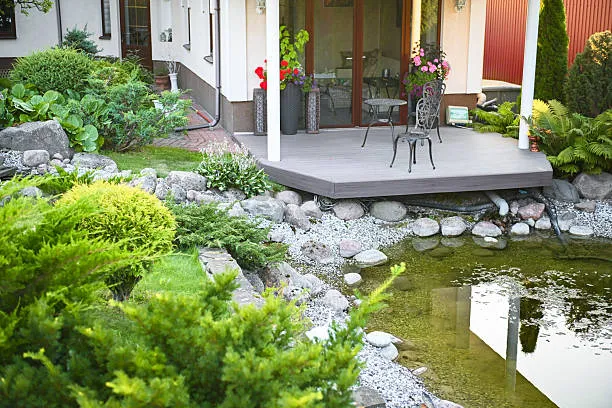
Design Meaning of Stone
Symbolic Meaning of Stone (Why Designers Use It Beyond Function)
Stone has a deeper meaning in many cultures. It tells a story.
Permanence and Grounding
In a world that is always changing, stone is a symbol of permanence. It feels ancient and stable. This is why it is used for monuments and important buildings. A stone entryway feels more significant than a concrete one. The hardscape structure and form give a sense of stability.
Japanese Rock/Zen Garden Symbolism
The most famous example of stone symbolism is the Japanese stone garden, or karesansui.
- Problem: How do you represent a vast natural landscape in a small space?
- Agitation: You want to create a place for quiet thought, but you don’t have mountains and rivers.
- Solution: You use stone and gravel as symbols. In a Zen rock garden meaning is everything.
- Large stones symbolize mountains or islands. The placement is very careful.
- Raked gravel symbolism is often water. The lines represent ripples. A toro, or stone lantern, is often a key feature.
This Japanese Garden tradition shows the deepest meaning of stone in landscaping. It is not just a material; it is a form of art.
Types of Landscaping Stone and the Meaning Each Tends to Convey
Choosing the right stone is about choosing the right message. Here are some common landscape rock types/uses:
- Boulders: Permanence, natural drama. Used for accent boulders in gardens.
- Flagstone: Craft, walkability. Perfect for a flagstone patio. It has a classic, timeless feel.
- River Rock: Softness, natural flow. Ideal for a dry creek bed or as a rock mulch.
- Crushed Stone: Strength, structure. The best choice for a crushed stone base under patios and walkways.
- Decomposed Granite: Relaxed, park-like feel. Great for a decomposed granite path.
- Lava Rock: Bold texture. Gives a desert landscaping rock vibe.
- Decorative stone for landscaping: This broad category includes pebbles and gravels used to create calm, minimalist backgrounds.
How to Choose the Right Stone for Your Yard (Quick Decision Framework)
Feeling overwhelmed? Don’t be. Here is a simple framework.
H3: Start with the “Job”
What is the main function?
- Drainage? You need angular vs rounded rock like crushed stone.
- Foot traffic? You need a durable, flat surface like pavers or flagstone.
- Slope? You need a retaining wall stone or riprap.
- Edging? Stone edging for flower beds is the job.
- Decorative ground cover? Pea gravel or river rock works well.
H3: Then Match Performance Constraints
Think about your climate and budget.
- Durability: Do you need freeze thaw durable stone? Materials like granite and quartzite are excellent choices. This is where working with a professional granite supplier like Tideway is critical. They ensure the stone meets ASTM International standards.
- Safety: For a pool deck or walkway, you need a slip resistant stone surface.
- Availability: Local stone sourcing is more sustainable hardscaping.
- Budget: Bulk landscape stone is cheaper per ton. Check rock landscaping cost factors.
H3: Then Match the Look
Finally, think about aesthetics.
- Color: Match the stone to your house and plants.
- Size: Be consistent. Don’t use too many different sizes.
- Finish: Do you want a sharp, modern look or a soft, weathered look?
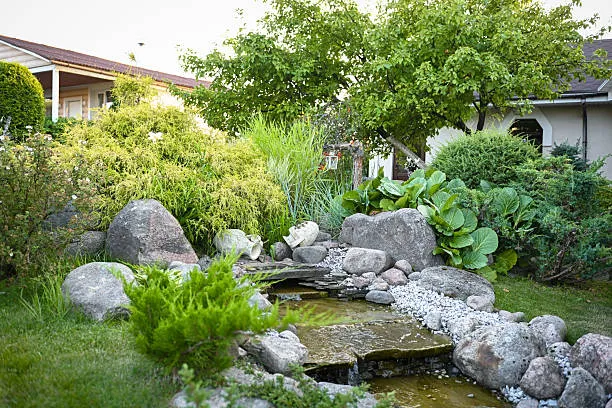
How to Choose the Right Stone for Your Yard
Installation Basics (So the Meaning Doesn’t Fail in Real Life)
A great design can be ruined by poor installation.
- Base Prep: This is the most important step for any path or patio. Landscape stone installation requires proper compaction and base preparation. You must dig out the soil, add a compacted gravel base (usually crushed stone), a leveling layer of sand, and then your pavers.
- Weed Control: Use heavy-duty landscape fabric under rock to stop weeds.
- Drainage: Make sure your patio slopes away from your house. You don’t want to solve one drainage problem by creating another.
Common Mistakes That Ruin the “Meaning” of Stone
- Mixing too many colors/sizes: This creates visual chaos.
- No edging: The rock will spill into your lawn and flower beds.
- Wrong stone for the job: Using round river rock for a patio base will fail. It doesn’t lock together.
- Ignoring heat: Stone and plant pairing is crucial. Use tough, heat-loving plants like succulents with rock mulch.
FAQs
- Is stone considered hardscape or landscaping?
Stone is a hardscape material used within the broader practice of landscaping.
- What’s the difference between landscape rock and gravel?
“Landscape rock” is a general term. “Gravel” usually refers to small, loose stone fragments, like pea gravel or crushed stone.
- Does rock help drainage or can it cause pooling?
It depends on the base. A deep base of crushed stone creates a permeable pavement system that helps drainage. But a thin layer of rock on top of compacted clay soil can make pooling worse.
- Is rock better than mulch around plants?
It depends. Rock is more durable and low-maintenance. But organic mulch is better at keeping soil cool and moist. The UC ANR notes that rocks tend to transfer heat to the soil.
- What do stones represent in a Zen garden?
In a karesansui garden, large stones symbolize mountains and islands, while raked sand or gravel represents water.
- How do I keep weeds out of landscape rock?
Use professional-grade landscape fabric under rock and apply a pre-emergent herbicide in the spring.
- What size stone should I use for a walkway base vs the top layer?
Use ¾-inch crushed stone for the base because it compacts well. For the top layer, you can use a decorative stone like pea gravel or a solid surface like flagstone.
- How much landscape stone do I need?
A simple rule is that one ton of stone will cover about 100 square feet at a depth of 2 inches.
By understanding the function, design, and symbolism of stone, you can unlock its true meaning. It is more than just a rock. It is the foundation of a beautiful, durable, and valuable landscape. A paver patio can recover 95% of its cost at resale and delivers a 9.9 out of 10 Joy Score, according to the National Association of Realtors. That proves that good stone work is an investment in both your property and your happiness.

 English
  French
  German
  Russian
  Arabic
