Avoid your inquiry is delay response, please enter your WhatsApp/Skype along with the message, so we can contact you at the very first time.
We will reply you within 24 hours. If for urgent case, please add WhatsApp/WeChat: +8615063007107,. Or call 0086-15063007107 directly.
Bad stone choices can make a great landscape look messy, drain poorly, and cost more to maintain. That hurts even more on large commercial jobs. The fix is simple: match the rock type to the use, the traffic, the style, and the site conditions.
The best stone for landscaping depends on the job. Granite is often the best all-around choice for long-term durability in large landscaping projects. Gravel works well for drainage and budget control. River rock is ideal for decorative zones and water features. Flagstone suits patios and walkways. The right answer depends on function, finish, and supply reliability.
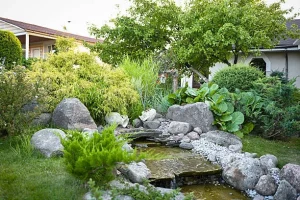
Why does the best landscape stone depend on the project?
Is granite the best landscape rock for large landscaping projects?
When should you use gravel, pea gravel, or crushed stone?
Are river rock and pebble good for landscape design?
Is flagstone the right choice for a patio or walkway?
When does a boulder become a focal point in the landscape?
Should you choose lava rock, mulch, or ground cover?
How do paver systems compare with natural stone?
What types of landscaping rocks work best for drainage and edging?
How do you choose a reliable stone yard or supplier?
The biggest mistake I see is treating every landscape area the same. A patio has different needs than a driveway edge. A walkway needs different performance than a garden bed. A retaining wall, a dry creek bed, and decorative garden borders all ask different things from stone. That is why the best rock for your yard depends first on use, not color. University landscape guidance makes the same point: paths, patios, and driveways are different hardscape features with different functions and material needs.
In real commercial and residential work, I look at five things first: drainage, traffic, finish, maintenance, and supply consistency. Once those are clear, the right rock type becomes easier to choose. This is true in small home gardens, but it matters even more in large landscaping projects where poor material choices affect cost, lead time, and long-term performance.
For many contractors and developers, granite is the best landscaping rock overall because it combines strength, weather resistance, and a premium look. The Natural Stone Institute notes that granite has long been used for exterior paving and curbs because of its strength, abrasion resistance, and weathering durability. That makes it a strong popular choice for public works, plazas, entries, garden paving, and high-traffic landscape zones.
From a supply side, granite is also practical. A serious project buyer does not only need beautiful material. They need bulk availability, stable color, repeatable processing, and dependable shipping. Taide’s website presents the company as a professional stone manufacturer and supplier with major reserves of golden and white granite, two large quarries, and a large stockyard, which supports the kind of long-term bulk procurement large buyers usually care about.
Gravel is one of the smartest materials in the types of landscape toolbox because it solves two problems at once: it controls cost and improves drainage. EPA guidance explains that permeable surfaces and underlying soil and gravel layers help rainwater soak in and reduce runoff. That is a big reason gravel stays important in both simple gardens and large development work.
Not all gravel is the same. Pea gravel has a softer look and is often more comfortable underfoot. Crushed stone usually locks together better because of its angular shape. If I need a casual path, a decorative sitting area, or a softer edge around planting, I may lean toward pea gravel. If I need more structure, I look at crushed stone or sharper types of gravel.
This is where many buyers go wrong. They choose by appearance only. But in practice, rock and gravel behave differently. Rounded material moves more. Angular material grips more. So when you are deciding between smaller rocks and angular stones, always ask how much movement the surface must resist. That one question can save a lot of rework.
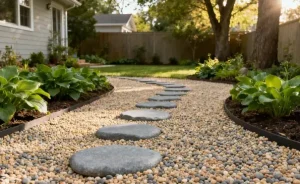
Yes, but mostly in the right zones. River rock and pebble surfaces shine when the goal is a softer, decorative landscape with a more natural flow. They work especially well around a water feature, in a dry creek bed, near planting beds, or as accent bands along a walkway. Florida’s gardening guidance notes that informal paths often use flagstone, stepping stones, shells, gravel, or other more organic materials rather than rigid formal paving.
I like smooth river rocks when the project wants movement, contrast, and a relaxed tone. They bring a natural look that sharp-cut pavers cannot fully copy. They are also useful when you want decorative accents around a feature without making the area feel too hard or too built. That is why river rock is a common choice in hotel entries, villa gardens, and upscale commercial planting zones.
Still, I do not recommend rounded stones for every job. In active walking zones, they can shift too much. For a primary path, I would rather use stable paving with pebble or river rock on the side, not under the main step line. That balance gives you beauty without losing function.
Flagstone is one of the best answers when a client wants a relaxed patio, a curved walkway, or garden pathways that feel informal and warm. UF/IFAS guidance notes that flagstone, stepping stones, and gravel help create a more natural or organic style in the landscape. That fits exactly how I use it.
A flagstone surface works well when the design does not need strict modular lines. It is great for a patio, a side path, a transition zone between lawn and planting, or a quiet sitting area. You can also use flagstone stepping stones in grass or gravel to create softer movement through the site. That makes it useful for both premium homes and boutique hospitality work.
Where I become more careful is commercial furniture areas or heavy service zones. Because flagstone can be irregular, it is not always the best paver answer where tables, wheeled carts, or exact joint control matter. In those cases, I may still use natural stone, but I prefer cut modules or granite pavers.
A boulder is not just a big rock. In good landscape design, it is a visual anchor. The right boulder size can turn empty ground into a strong composition. It can mark an entry, frame a planting zone, soften a building corner, or become the center of a rock garden. That is why large rocks and larger stones are so often used as permanent landscape features. This use of natural stone for outdoor art, benches, fountains, and site features is also highlighted in Natural Stone Institute materials.
I usually use a boulder when flat material alone cannot carry the design. A good boulder can give weight, height, and rhythm to the site. It also pairs well with mulch, gravel, low planting, or using stones in layers. For developers, that matters because one well-placed focal stone can improve the look of an entire frontage without a huge budget increase.
The key is restraint. Too many large stones make the space feel forced. One or three can feel intentional. Ten can feel random. Good using rocks is not about adding more. It is about adding purpose.
This choice depends on maintenance style and visual goal. Lava rock holds color well and can create a bold, clean finish in modern projects. Mulch feels softer and more natural in some planting zones, but it breaks down and needs replenishment. Living ground cover can look great, but it needs more care and water planning. So the best answer is not universal. It depends on site conditions and the owner’s expectations.
In low-maintenance areas, lava rock can be useful around feature planting, utility zones, and modern beds where a crisp finish matters. In softer family gardens or shaded zones, mulch may still be better. In some projects, the strongest answer is not one material but a mix: stone at the edge, mulch in the garden bed, and paving where movement happens. That layered approach usually produces a cleaner landscape and lower maintenance headaches.
I also look at heat, plant style, and brand image. A resort courtyard, a corporate entry, and a home garden do not need the same finish. That is why good material selection is not only technical. It is also visual and commercial.
A modular paver system gives predictable size, easier layout control, and a neat visual rhythm. That is useful in large landscaping projects where speed and repeatability matter. EPA and FHWA guidance on permeable and interlocking systems also shows why paver-based systems stay important where runoff control and base design matter.
But natural stone still has something modular systems cannot fully copy: authenticity. Real stone has visual depth, natural variation, and stronger material identity. For premium commercial work, that matters. When a buyer wants the project to feel permanent, high-value, and distinctive, real stone often wins. That is why a lot of developers still choose granite or other stone types over simple concrete alternatives.
My rule is simple:
| Need | Better Option |
|---|---|
| Tight budget and fast layout | Modular paver |
| Premium look and long-term image | Natural stone |
| Heavy-use public paving | Granite paver or dense natural stone |
| Informal path | Flagstone or gravel |
| Decorative water-edge zone | River rock or pebble |
For pure drainage, I usually start with gravel or sharper crushed materials. EPA guidance is clear that permeable surfaces supported by gravel and soil layers help water move and reduce runoff. That makes them strong options near downspouts, swales, and infiltration-led rock projects.
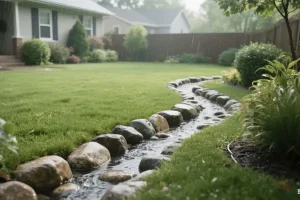
For edging, it depends on the style. Landscape stones cut into strips can make a strong clean border. A line of pebble or river rock can soften the change between lawn or garden and hardscape. Large stones can define outer edges in a more rustic way. If the design includes garden walls or a retaining wall, the edge should visually connect to those elements too.
Here is a practical guide:
| Area | Best rock |
|---|---|
| Drainage strip | Gravel or crushed stone |
| Dry creek bed | River rock + larger rocks |
| Patio edge | Cut stone or paver border |
| Garden borders | Pebble, river rock, or stone edging |
| Statement entry | Boulder + decorative accents |
This is the part many articles skip. The best stone yard is not simply the cheapest one. It is the supplier that can keep color, finish, packaging, lead time, and communication under control. For importers, contractors, and wholesalers, that matters as much as the stone itself. A delayed batch or mismatched finish can damage the entire job.
Taide’s site and external supplier listings emphasize large stock, quarry access, stone processing capability, and categories such as golden granite, white granite, black granite, and red granite. That is the profile serious B2B buyers usually want to see before they commit to bulk orders or long-term supply. You can reinforce that in the article with a natural reference to your about page or your news center to support buyer confidence.
From my side, I always suggest asking six things before you buy:
If the answer is yes, you are not just buying stone. You are building a safer supply chain.
| Use area | Best rock | Why it works |
|---|---|---|
| Main public landscape | Granite | Strength, durability, premium look |
| Decorative planting zone | River rock | Soft visual flow, natural texture |
| Budget path | Gravel | Lower cost, strong drainage |
| Informal garden path | Flagstone | Organic layout, warm look |
| Statement zone | Boulder | Strong focal point |
| Modern accent bed | Lava rock | Clean visual contrast |
| Water-led feature | Pebble + river rock | Soft edges and natural appearance |
What kind of stone is best for landscaping?
For most long-term projects, granite is the best all-around choice because it is durable, weather-resistant, and suitable for paving and high-traffic exterior use. But the best stone still depends on whether you need drainage, decoration, or structural performance.
What is the difference between river rock and gravel?
River rock is usually smoother and more decorative. Gravel is often smaller, more functional, and better for paths or drainage zones. Rounded material looks softer, while angular material usually stays in place better.
Is flagstone good for patios?
Yes. Flagstone is a strong choice for a patio when you want a natural, informal style. It is especially useful in garden settings and relaxed outdoor spaces.
Is lava rock better than mulch?
Not always. Lava rock lasts longer and needs less replacement, while mulch feels softer and may suit some planting styles better. The better choice depends on maintenance goals and appearance.
What are the best landscaping rocks for drainage?
Gravel and crushed materials are usually the best first options for drainage because water can move through permeable systems supported by gravel layers underneath.
How do I choose a good stone supplier?
Choose a supplier with stable material reserves, consistent finishes, custom processing ability, and strong response speed. On larger jobs, supply reliability is just as important as the stone itself.
Granite is often the best all-around stone for long-life landscape work.
Gravel is excellent for cost control and drainage.
River rock works best in decorative areas, water-edge zones, and softer designs.
Flagstone is ideal for an informal patio or walkway.
A boulder can create a strong focal point when used with purpose.
Lava rock, mulch, and living cover each solve different problems.
The best rock for your yard depends on use, movement, maintenance, and visual style.
In large landscaping projects, supplier strength matters just as much as stone type.
Reliable stock, custom fabrication, and fast support are what turn a good stone source into a true project partner.

 English
  French
  German
  Russian
  Arabic
