Avoid your inquiry is delay response, please enter your WhatsApp/Skype along with the message, so we can contact you at the very first time.
We will reply you within 24 hours. If for urgent case, please add WhatsApp/WeChat: +8615063007107,. Or call 0086-15063007107 directly.
A beautiful garden can fail fast when the wrong paving material cracks, stains, or turns slippery after rain. That problem gets worse on large jobs, where one poor stone choice affects budget, schedule, and long-term maintenance.
The best stone for garden paving depends on how the area will be used. For a relaxed patio, limestone and flagstone are often strong choices. For a busy walkway or driveway edge, denser stone pavers usually perform better. Gravel works well where drainage and lower cost matter, while concrete pavers or porcelain paver systems suit projects that need tight sizing and a more uniform finish.
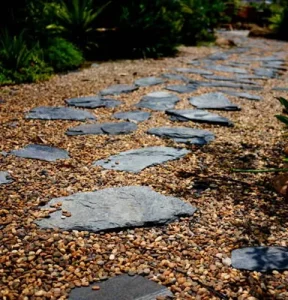
Why does the best stone depend on the landscape, patio, and walkway use?
Which natural stone paver works best for a garden patio?
Is limestone a smart choice for outdoor paving?
When should you use flagstone for a natural look?
Are bluestone and slate better for modern landscaping ideas?
Should you choose gravel, pea gravel, or crushed stone?
How do concrete pavers and porcelain paver options compare with real stone?
What slab size, texture, and finish feel best underfoot?
How do you choose the right stone for patios, walkways, and driveway edges?
Why does supplier capability matter in a large landscaping project?
The first thing I tell buyers is simple: there is no single best type of stone for every job. A stone patio for outdoor dining has different needs than a garden pathway, a driveway apron, or a decorative garden bed border. In hardscape design, patios and walkways serve different functions, so the surface should match the traffic, drainage, finish, and visual goal.
In real projects, the best choice for landscaping is usually the material that balances durability, texture, drainage, fabrication tolerance, and supply reliability. That is why experienced contractors do not choose only by color. They look at how the slab will be cut, how the paving slabs will be laid, how the joints will perform, and how the material will age in an outdoor space exposed to weather and foot traffic.
As a professional stone supplier, we see this on bulk orders all the time: the winning paving project is rarely the one with the cheapest paver. It is the one where the right stone, finish, and installation method were matched to the site from day one. Taide Stone presents itself as a manufacturer integrating quarrying, processing, and sales, and its about page highlights large raw-material reserves for major projects, which is exactly the kind of supply stability large buyers usually need.
For many premium projects, natural stone pavers are the best material for patios because they bring a natural look, lasting value, and visual depth that poured concrete often cannot match. A good natural stone patio also feels more refined in home and garden environments, especially when the design includes planting zones, water features, or a focal point such as a fire pit or sculpture. Natural stone remains one of the core surface choices used across patios and walkways in hardscape design.
That said, “natural stone” is a broad family. Granite, limestone, slate, bluestone, and flagstone all behave a little differently. If you want a clean, structured patio layout, calibrated stone pavers or cut patio slabs are often better. If you want a softer, more organic garden design, irregular flagstone or stepping stones may suit the space more naturally.
For buyers comparing finishes and colors, a useful starting point is a full stone products catalog and a closer look at a supplier’s large-project stone factory background. On Taide’s site, the main product families include golden granite, white granite, sesame black granite, and cherry red granite, all of which fit different landscaping ideas and finish preferences.
Yes, limestone can be a very smart paving material when the project calls for a calm, elegant surface with softer color movement. It is especially popular for a patio, courtyard, or outdoor living space where buyers want a lighter tone and a more timeless style. The Natural Stone Institute notes that limestone has broad architectural use and an earthy appeal, which helps explain why it remains a frequent natural stone option in design-led projects.
I usually recommend limestone pavers when the brief calls for a clean surface, a comfortable underfoot feel, and a classic finish that works with plants, timber, or brick or stone combinations. Limestone pavers also fit well in backyard landscaping where the goal is to create a calm transition between the house, patio slabs, garden walls, and soft planting.
Where buyers need a more commercial answer, the question becomes less about beauty and more about service conditions. Light limestone can look beautiful natural stone in the right place, but you still need correct base prep, slope, and maintenance planning. If your project requires heavy loading, very dark staining risk, or constant movement of furniture and equipment, another type of stone may be a better choice for patios. Regular cleaning should also be stone-safe; the Natural Stone Institute recommends neutral cleaner, stone soap, or mild dish detergent with warm water.
Flagstone is often the right answer when the design goal is a relaxed, organic pathway or stone patio that feels connected to planting and soil rather than sharply separated from it. It is especially strong in a cottage garden, informal landscape, or gravel garden plan where the paving should look placed by hand, not mass-produced.
The biggest advantage of flagstone is visual freedom. You can pave with irregular pieces to create a more natural look, or you can combine flagstone with gravel, pea gravel, river rock, or garden bed planting to soften the edge of the hardscape. This works very well for garden pathways, side yards, and transition zones between patios and walkways. Gravel paths are commonly built with pea gravel or similar small gravel, and WaterWise notes that rounded stones are often more comfortable to walk on than crushed versions.
Still, flagstone is not automatically the best answer for every landscaping project. If the surface is too irregular, tables and chairs may wobble, and an uneven surface can be less practical for carts or frequent delivery traffic. That is why I often suggest flagstone for feature zones, low-speed movement areas, or pathway sections rather than every hard-use patio or driveway condition.
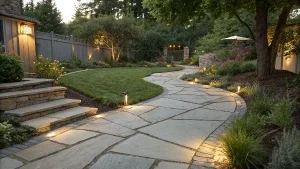
Bluestone is a strong choice when buyers want a more architectural look. The Natural Stone Institute has highlighted bluestone as suitable for many exterior applications, which aligns with how designers use it in premium patio and walkway work. In practice, bluestone suits projects that want crisp lines, cooler tone, and a more structured visual language than warm limestone or rustic flagstone.
Slate is different. The Natural Stone Institute notes that slate can be processed into thin sheets while maintaining serviceable strength and rigidity. That helps explain why slate is valued when a project wants strong texture, clear layering, and darker stones with more dramatic visual character.
For modern outdoor paving, I usually compare these two in simple terms:
| Material | Best Use | Visual Style | Main Strength | Watch Point |
|---|---|---|---|---|
| Bluestone | Patio, walkway, entrance court | Clean, cool, refined | Premium look for structured layouts | Usually higher budget |
| Slate | Garden paving, accent zones, walls | Strong texture, darker stones | Distinctive surface character | Shade variation can be stronger |
| Limestone | Patio slabs, courtyard, poolside style zones | Soft, warm, calm | Timeless look and easy pairing | Needs correct maintenance plan |
| Flagstone | Pathway, informal patio, stepping stones | Natural, rustic, irregular | Organic layout freedom | Less ideal for highly precise furniture layouts |
| Gravel / pea gravel | Pathway, drainage zones, gravel garden | Relaxed, permeable | Lower cost and easy drainage | Movement underfoot |
| Concrete pavers / porcelain slabs | Uniform paver fields | Consistent, modular | Tight sizing and repeatability | Less “real stone” character |
This comparison reflects common hardscape use, outdoor paving performance logic, and the drainage advantages of permeable systems described by EPA and FHWA sources.
If the goal is lower cost, faster installation, and better water movement, gravel can be a very practical material. EPA guidance on permeable pavement explains why permeable systems matter: they let rainwater move through the surface and help reduce runoff. That same principle is why gravel remains a smart landscape solution for many garden pathways and low-load seating areas.
Pea gravel is popular because it looks softer and feels better underfoot than sharper crushed stone. WaterWise specifically notes that non-crushed gravel has more rounded stones and is often more comfortable to walk on. For a pathway through a garden bed or a relaxed gravel garden dining nook, that matters.
Crushed stone, on the other hand, usually locks together more firmly, so it can be the better base or surface when the job needs more stability. I often use a simple rule: use pea gravel when appearance and comfort lead, use crushed stone when firmness and structure lead. For many projects, the best answer is a hybrid system with a compacted base, gravel infill, and solid stepping stones to create a cleaner pathway through the landscape.
Concrete pavers are often chosen because they offer modular sizing, predictable thickness, and faster layout planning. For a large commercial patio or walkway, that uniformity can help reduce labor variation. The Federal Highway Administration’s permeable interlocking concrete pavement guidance also shows why interlocking systems remain important in drainage-sensitive projects.
Porcelain paver and porcelain slabs systems appeal to buyers who want a very clean, contemporary surface with tight size control. They can work well in outdoor dining areas or design-forward projects where visual consistency matters more than the random movement of real stone.
But real stone still wins when clients want authenticity, natural variation, and stronger brand perception in premium landscape work. This is the key difference in the “stone or precast” and “stone or brick” debate. If the project values a beautiful natural stone identity, stone pavers often justify the higher material cost through visual impact, resale impression, and a more durable design story. If the project values strict modularity and repeatable installation, concrete pavers or a porcelain paver system may be the practical material.
Buyers often focus too much on color and not enough on slab format. Yet slab size affects everything: the pace of the pattern, the number of joints, the feel underfoot, and the ease of maintenance. A large slab can make a patio feel more open and modern. Smaller paving slabs can feel more traditional and can be easier to adapt around curves, planters, and retaining wall corners. The Natural Stone Institute’s horizontal surface guidance also distinguishes stone products by thickness and format, which matters in planning.
Texture matters just as much. A polished finish may not suit every outdoor space. For garden paving, buyers often want a finish that is easy to clean but still offers grip. That is especially true around water features, outdoor dining zones, and areas that connect to a driveway or main walkway. On stone surfaces, maintenance should stay gentle and stone-safe; again, Natural Stone Institute care guidance recommends neutral cleaner or mild dish detergent with warm water.
From a design view, I usually tell clients to think in three layers: visual scale, walking comfort, and cleaning reality. A paving stone can look perfect in a sample board and still fail in everyday use if the joints are too wide, the texture is too rough, or the module does not fit the garden design. The right stone is the one that performs well at full project scale, not just in a showroom sample.
Here is the practical buying checklist I use for contractors and importers:
Another good filter is to ask what failure would hurt most. If staining is the concern, choose the finish and maintenance plan first. If movement is the concern, choose the base system first. If supply speed is the concern, choose the supplier first. This is why choosing the right stone is never only a color decision. It is a full procurement decision.
A quick rule of thumb:
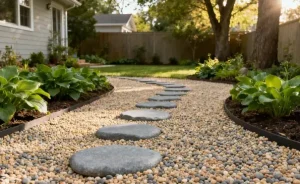
Pea gravel
For wholesalers, importers, and developers, the stone itself is only half the decision. The other half is whether the supplier can hold quality, keep delivery stable, and fabricate consistently across batches. Taide’s public company profiles describe it as a manufacturer-supplier with integrated quarrying, processing, and sales, while its about page highlights two quarries and large standing material reserves. Those are exactly the indicators large buyers watch when evaluating long-term supply partners.
This matters even more in multi-phase landscaping projects. A delayed batch, mismatched finish, or color drift can damage the whole schedule. In my experience, contractors would rather pay a fair price for a reliable supplier than save a little upfront and lose weeks later. For that reason, I always encourage buyers to review not only the stone paver itself, but also the supplier’s raw block access, processing scope, packaging discipline, and response speed.
If your target market is bulk procurement, custom fabrication, and long-term partnership, then your article should make that promise clear: we do not just sell landscaping stones; we support the full landscaping project from selection to supply. That positioning fits the buyer profile in your brief and also aligns with Taide’s public presentation as a long-term stone manufacturer for project supply.
If you need a fast answer, use this chart:
| Project Need | Best First Option | Why |
|---|---|---|
| Warm, elegant patio | Limestone | Soft visual tone and classic patio appeal |
| Rustic garden paving | Flagstone | Natural pattern and relaxed texture |
| Modern premium walkway | Bluestone | Structured appearance and strong visual value |
| Dark, textured accent zone | Slate | Strong surface character |
| Budget-friendly pathway | Pea gravel | Good drainage and lower cost |
| Uniform large-scale install | Concrete pavers | Repeatable sizing and modular layout |
| Premium branding and real stone value | Natural stone pavers | Authenticity and long-term visual quality |
This chart is a buying shortcut, not a substitute for project-specific review. Base design, climate, jointing, finish, and delivery capability still matter.
What is the best stone for garden paving?
For most premium garden paving work, the best answer is dense natural stone matched to the site use. Limestone works well for a calm patio, flagstone for a natural pathway, and bluestone for a more architectural patio or walkway. Gravel can also be a smart choice where drainage is a priority.
Is gravel better than stone pavers?
Not always. Gravel is more permeable and often lower in cost, but stone pavers usually feel more stable, cleaner, and more premium. Gravel is best when drainage, relaxed style, and budget matter most.
Are limestone pavers good for patios?
Yes. Limestone pavers are a strong material for patios when buyers want a lighter, elegant finish and the project includes proper installation and care planning.
What is the difference between flagstone and bluestone?
Flagstone usually refers more to the format and natural pattern style, while bluestone is a specific commercial stone category often chosen for a more structured premium look. In design terms, flagstone feels more relaxed and bluestone feels more architectural.
Are concrete pavers or natural stone better for a landscaping project?
Concrete pavers are often better for tight tolerances, uniform modules, and controlled budgets. Natural stone is often better when the project wants a real stone finish, stronger visual identity, and long-term premium value.
How do I keep a stone patio easy to clean?
Use stone-safe cleaning methods. The Natural Stone Institute recommends neutral cleaner, stone soap, or mild dish detergent with warm water, followed by a proper rinse. That is a safer routine than aggressive cleaners for many stone surfaces.
The best type of stone depends on use, not just color.
Limestone is a smart choice for a warm, elegant patio.
Flagstone suits garden paving with a natural look and irregular layout.
Bluestone fits premium, modern patio and walkway work.
Slate adds texture and works well with darker stones.
Gravel and pea gravel are practical for drainage-led garden pathways.
Concrete pavers and porcelain slabs win on uniformity, while real stone wins on character.
Supplier capability matters just as much as the paving material in large commercial or wholesale landscaping projects.
Choosing the right stone means matching texture, slab format, durability, base design, and delivery reliability to the full project.

 English
  French
  German
  Russian
  Arabic
