Avoid your inquiry is delay response, please enter your WhatsApp/Skype along with the message, so we can contact you at the very first time.
We will reply you within 24 hours. If for urgent case, please add WhatsApp/WeChat: +8615063007107,. Or call 0086-15063007107 directly.
Choosing the wrong landscape rock can make a project look messy, drain poorly, or cost more to maintain. Some stone works for a walkway, some for a driveway, and some only for visual accents. The solution is to match the right decorative stone to the job.
The most common rocks used as decorative stone in landscaping are gravel, river rock, crushed stone, pea gravel, lava rock, flagstone, granite, limestone, pebbles, beach pebbles, and boulders. Each rock type offers a different look, drainage performance, texture, size, and maintenance level, so the best choice depends on whether the project is a garden bed, patio, dry creek bed, retaining wall, walkway, driveway, or decorative landscape feature. NC State Extension notes that landscape design should respond to drainage, grade, and site conditions, while Natural Stone Institute resources show that different stone varieties vary significantly in composition, absorption, and performance.
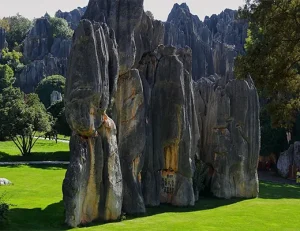
Garden Landscape Stones
What rock is used as decorative stone in landscaping?
Why is landscape rock so popular in modern outdoor space design?
Which types of gravel work best for decorative landscape projects?
When should you choose river rock, pebble, or beach pebbles?
Is crushed stone better than decorative gravel for drainage and driveways?
Where do lava rock, granite, and limestone fit in landscape design?
Why is flagstone a popular choice for patios and walkways?
How are boulders and large rocks used as focal points and retaining walls?
Decorative rock vs mulch: which works better in a garden bed or raised garden?
How should contractors and wholesalers choose stone for large projects?
Many kinds of rock are used as decorative stone in landscaping. The most common choices include gravel, river rock, pebble, lava rock, crushed stone, granite, limestone, flagstone, and larger boulder materials. These stones are used for decorative purposes because they are durable, available in a variety of colors, and useful in different parts of a landscape project. Natural Stone Institute identifies common commercial stone groups such as granite, sandstone and quartzite, slate, travertine, and limestone, which helps explain why the market offers so many visually different landscaping stones.
The right type of rock depends on function. If you need a stable walkway, compactable gravel or flagstone may work better. If you want a dry creek bed, river rock and rounded stones often create a natural look. If you need a bold visual anchor, a boulder or groups of larger stones can create focal points. If you need a low-maintenance filler for a garden bed, decorative gravel, pebbles, or lava rock are common choices. NC State Extension’s landscape design guidance emphasizes that drainage, grading, and water movement should shape material selection, not appearance alone.
For contractors, project developers, importers, and wholesalers, the question is usually not just “what looks good?” It is also “what installs well, lasts well, and ships well in bulk?” As a professional stone manufacturer and supplier, we look at decorative landscape material from both sides: visual value and project performance.
Landscape rock is popular because it combines function and appearance. It can improve drainage, reduce maintenance, define a walkway, protect soil, and strengthen curb appeal at the same time. Unlike organic mulch, stone does not decompose quickly. That makes it attractive for projects that want a long-lasting finish. University of Illinois Extension notes that rock mulch weathers slowly and is long-lasting, though it does not provide permanent weed control and should still be chosen carefully.
Rock also fits many styles. A formal commercial property may use decorative gravel and sharp-edged granite chips for a clean, modern look. A resort or residential landscape may prefer rounded river rock, beach pebbles, and larger rocks for a softer, natural look. A zen garden may use small stones or carefully selected gravel to create a calm visual field. A public plaza may use flagstone or cut paver stone for durability and pedestrian safety. Because stone can be used across so many settings, it remains one of the most flexible hardscape materials in landscape design.
For large-scale buyers, another reason is consistency. Stone is sold by the ton, by the cubic yard, or by pallet, which makes estimating easier. That matters in urban infrastructure, mixed-use developments, hotel projects, and large landscaping projects where supply timing and color consistency can affect the full schedule.
There are many types of gravel, and each works differently. Pea gravel is one of the most familiar options. It is made of small rounded stones and is often used in paths, informal patios, and drainage zones. Because the stones are smooth, it looks soft and natural, but it can shift under heavy foot traffic unless installed correctly. Other decorative gravel products use angular stone, which tends to lock together better. In gravel gardening, extension horticulture sources note that gravel-based gardens work especially well in sunny, dry sites where low-maintenance planting is the goal.
A simple way to think about it is:
| Gravel Type | Best Use | Main Character |
|---|---|---|
| Pea gravel | Paths, patios, decorative beds | Rounded, softer underfoot |
| Crushed gravel | Driveway, base layers, drainage | Angular, compacts better |
| Decorative gravel | Garden bed, accent zones | Chosen more for color/appearance |
| Drain rock | Water flow zones, trench filling | Designed for drainage function |
For contractors and wholesalers, gravel is attractive because it is versatile, cost-effective, and easy to source in volume. But the choice should still match the application. A driveway needs a different rock type than a raised garden or decorative border.
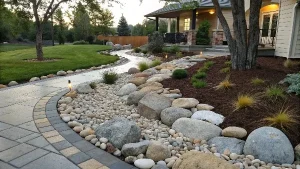
River rock is one of the most common decorative stones used in landscaping. It is known for rounded shapes, smooth surfaces, and a natural water-worn look. That makes it a strong choice for a dry creek bed, drainage edge, water features, garden borders, and naturalistic planting designs. In practice, rounded stones create a softer appearance than crushed material, which is why designers often use them where visual calm matters more than compaction.
A pebble or decorative pebble is usually smaller than a big river cobble and is often used for finer detail. Beach pebbles and especially mexican beach pebbles are popular in high-end decorative landscape work because of their smooth finish and darker, more polished color. They can elevate a front entrance, modern courtyard, or premium patio edge quickly. They also work well around water features and plant groupings when a clean, premium look is the goal.
The trade-off is movement and cost. Rounded stones generally do not lock together like angular crushed stone, so they are better for display and drainage than for structural walking or driving surfaces. For that reason, river rock is often ideal for decorative swales and dry creek beds, while crushed products may be better for load-bearing surfaces.
For many functional jobs, crushed stone is better than rounded decorative gravel. Crushed material has angular faces, so pieces lock together more easily. That helps create a more stable base for a driveway, paver sub-base, service road, or utility access path. Geology.com notes that granite and dark trap rock materials are commonly used in crushed stone production and are valued where durable aggregate is needed.
For drainage, both can work, but in different ways. Rounded river rock lets water pass through easily because the spaces between stones stay open. Crushed stone can also support water movement while being more stable under load. So the better material depends on the balance between appearance and structure. If the project needs a decorative swale or visible channel, river rock may be more attractive. If it needs a base below pavers or a strong driveway section, crushed stone is usually a better choice. NC State Extension stresses that solving wet areas often requires coordinated design choices such as grading, drainage systems, and raised beds, so the stone should fit the water problem instead of only the style.
For commercial buyers, the question is often about performance under traffic, drainage, and cost per ton. That is why many projects combine both: crushed stone below, decorative gravel or river rock above.
Lava rock is a popular option because it is lightweight, porous, and bold in color. It is often used in xeriscape planting, around succulents, in fire features, and as a long-lasting inorganic mulch. Because of its porous texture, it can support drainage and visual contrast, especially in hot-climate projects. Public guides on lava rock use consistently note its drainage benefits and strong decorative value in garden beds and planters.
Granite is one of the most widely used natural stone materials. Geology.com describes granite as a coarse-grained igneous rock and notes its use in paving stone, curbing, stair treads, and other construction applications. That makes granite rock especially useful for paving, edging, curb work, stronger walkway zones, and modern decorative aggregate. Granite is available in a wide variety of colors, which also helps designers coordinate it with architecture.
Limestone is another important type of stone, especially in paving and building stone work. Natural Stone Institute notes that limestone is calcium-carbonate based and that its absorption and acid sensitivity vary by variety, which means selection matters depending on how exposed the material will be. In decorative landscape applications, limestone is often used for garden walls, edging, pavers, and cut stone details where a softer, lighter visual tone is desired.
Flagstone is a popular choice because it offers a natural look, broad slab form, and strong performance in patios and paths. A natural paving guide explains that natural stone paving products offer a wide range of properties and visual characteristics, which is why flagstone remains one of the most versatile exterior surfacing materials.
Unlike loose gravel, flagstone creates a flatter walking surface. That makes it useful for a walkway, outdoor seating zone, stepping stones, or full patio build. Its irregular shape also gives projects a handcrafted appearance, which many commercial and residential buyers want. Different types of flagstone can include sandstone, slate, quartzite, and limestone-based materials, depending on the quarry and finish.
Flagstone is especially useful where the designer wants both beauty and practical access. A loose decorative pebble path may look elegant, but a properly set flagstone path is usually more stable for steady foot traffic. That is why it appears so often in premium landscape design, hospitality developments, and courtyard work.
A boulder changes the scale of a landscape. Small stones and decorative gravel create texture, but large rocks and larger stones create structure. They are often used as focal points, slope anchors, natural seating edges, and accents in a rock garden or dry landscape layout. In landscape design, these big elements help define space and make flat sites feel more intentional. NC State Extension’s design framework emphasizes the importance of strong organizing elements and responses to grade and landform, which is exactly where boulders work well.
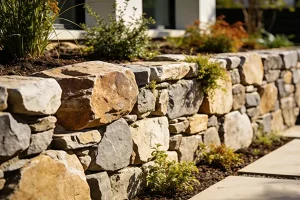
Boulders can also support practical goals. In some projects they are used along slopes for erosion control, around utility edges, or as part of a retaining wall or garden wall concept. They are not always the cheapest option to move and install, but they add strong visual value and often improve site character immediately. In commercial property development, a well-placed group of boulders can improve curb appeal and make a landscape feel more permanent and premium.
For bulk buyers, the main questions are size range, weight, quarry consistency, and transport method. Large boulder supply needs a dependable supplier, especially when the project requires matching material across many phases.
This is one of the most common design questions. Mulch and decorative rock both have value, but they are not the same. University of Illinois Extension notes that stone mulch is long-lasting, but weed control is not permanent and weed seeds still blow in over time. Virginia Tech and other extension guidance on mulching also emphasize that mulch’s role depends on landscape purpose and plant needs.
In a garden bed, decorative stone works best where a low-maintenance, clean, dry look is the goal and where plants are suited to a rocky setting. In a raised garden or planting zone that needs regular soil improvement, organic mulch may be better because rock does not break down into the soil. In a raised garden beds project with irrigation, decorative stone can still work around the edges, paths, or as accent bands, while organic mulch protects root zones.
A practical rule is this:
For contractors, project developers, importers, and wholesalers, stone selection should start with application, not only color. Ask five basic questions first:
Then match the material:
| Project Need | Better Stone Direction |
|---|---|
| Premium decorative beds | beach pebbles, river rock, decorative pebbles |
| Strong path or driveway base | crushed stone, granite aggregate |
| Dry creek bed and drainage | river rock, mixed rounded stones |
| Patio / stepping area | flagstone, paver-compatible stone |
| Xeriscape / heat zones | lava rock, granite gravel |
| Retaining wall / focal points | boulder, large rocks, cut limestone or granite |
As a professional stone manufacturer and supplier, we focus on what B2B buyers care about most: consistent material quality, bulk availability, custom fabrication, delivery speed, and technical support. A good stone partner helps you choose the right rock type for design, logistics, and long-term performance.
What rock is most commonly used as decorative stone?
The most common decorative landscape rock types are gravel, river rock, crushed stone, lava rock, pebbles, flagstone, granite, limestone, and boulders. The best one depends on the project’s design, drainage, and traffic needs.
Is gravel the same as decorative stone?
Not exactly. Gravel is one broad category of small loose rock. Decorative stone includes gravel, but also includes river rock, pebbles, flagstone, boulders, and other landscaping stones used mainly for appearance or combined function and appearance.
What rock is best for drainage in landscaping?
River rock and crushed stone are both widely used for drainage. Rounded river rock allows water to pass easily, while crushed stone usually creates a more stable surface under load. The better choice depends on whether appearance or compaction matters more.
Is lava rock good for landscaping?
Yes. Lava rock is a popular choice for decorative landscape use because it is porous, lightweight, and visually bold. It is often used in xeriscape, mulch replacement, and fire feature areas.
Is flagstone a decorative stone?
Yes. Flagstone is a decorative and functional natural stone commonly used for patios, walkways, and stepping stones because it combines natural appearance with a flatter walking surface.
Is rock better than mulch in a garden bed?
It depends on the goal. Rock lasts longer and can look cleaner, but mulch is often better when plants need soil improvement and root protection. Extension guidance notes that rock mulch is durable, but it does not permanently stop weeds.
The most common rocks used as decorative stone are gravel, river rock, crushed stone, lava rock, granite, limestone, flagstone, pebbles, and boulders.
Use the stone type based on function first: drainage, traffic, edging, patio surfacing, or visual accent.
Rounded stones usually create a softer natural look, while crushed materials often perform better under compaction and load.
Flagstone works especially well for patios and walkways because it offers a flatter, more stable surface than loose gravel.
Lava rock is a strong decorative option for drainage, xeriscape, and heat-tolerant design.
Rock is long-lasting, but it does not eliminate weed management forever.
For large projects, buyers should evaluate stone by application, color consistency, logistics, bulk availability, and technical support—not appearance alone.

 English
  French
  German
  Russian
  Arabic
