Avoid your inquiry is delay response, please enter your WhatsApp/Skype along with the message, so we can contact you at the very first time.
We will reply you within 24 hours. If for urgent case, please add WhatsApp/WeChat: +8615063007107,. Or call 0086-15063007107 directly.
Most landscape plans fail because the wrong stone is chosen. Costs creep up, weeds return, and paths rut. As a professional stone manufacturer and supplier, we help you avoid costly mistakes—choosing durable landscape rock that fits your landscaping project, budget, and timeline.
The best stone depends on where you’ll use it and the performance you expect. For paths and patios, pick hard igneous stones like granite or flagstone. For dry creek beds and drainage, choose river rock. For mulch alternatives in flower beds, use pea gravel. For retaining wall strength, select angular crushed stone or block. This ultimate guide explains how to match each rock type to your landscape needs.
As a factory-direct producer, we supply bulk quantities, custom finishes, and technical support for complex landscape builds—public plazas, garden pathways, civic plazas, walkway networks, and commercial patio spaces. Below is a practical field manual to help you choose the best stone for every area of your landscape.
Selecting stone starts with location and load. Consider foot load, water, maintenance, and style. For high foot traffic paths or a walkway, go dense (e.g., granite, flagstone). For decorative landscape accents and water feature basins, smooth river rock performs well, allowing water to move without clogging. For structural needs—edging and retaining wall cores—use angular crushed stone for interlock and good drainage.
Quick rule of thumb:
We manufacture and finish stones to spec (thickness, surface, edge treatments) so contractors can meet code and schedule on large landscape projects.
Explore durable heat-treated textures like flamed granite for slip resistance on wet landscape steps and patio zones.
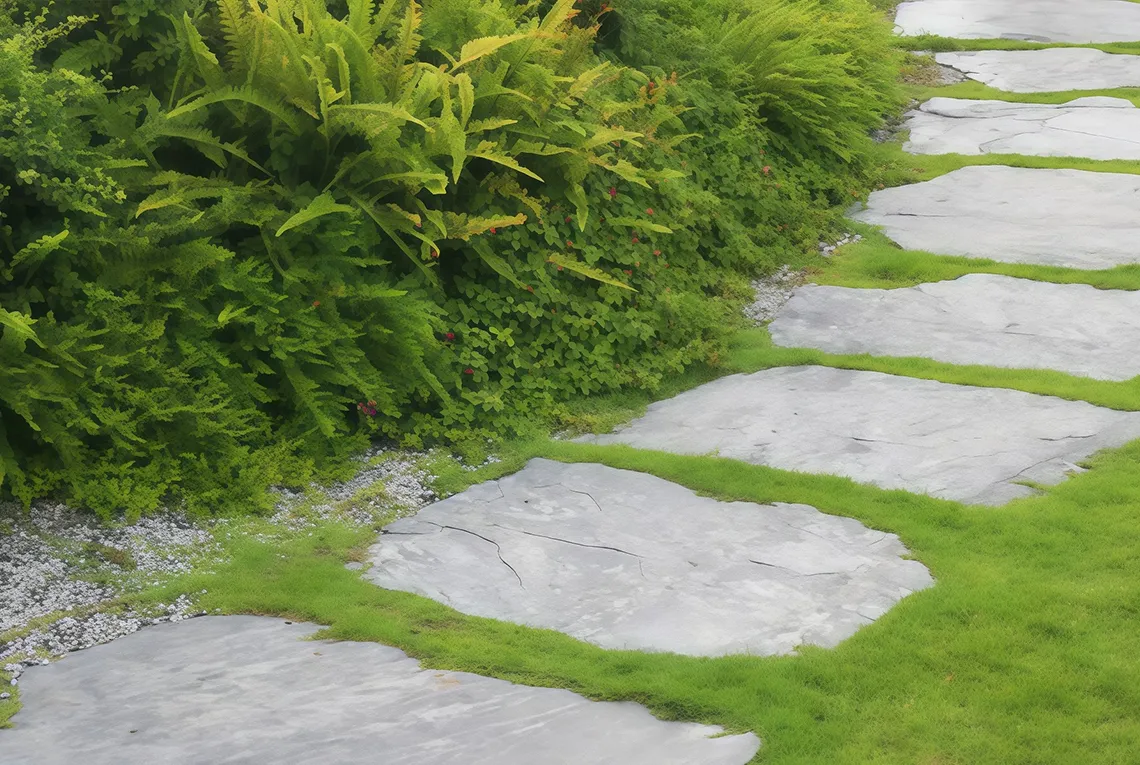
How do I choose the right stone for different areas of your landscape?
Different types of landscaping rocks solve different problems.
For heavy-duty grades or boulder accents, see our granite paving block selections used in civic landscape plazas.
River rock has smooth, rounded stones that stay cool and resist compaction—ideal for water feature basins, swales, and creek beds. It’s stable while allowing water to flow. Pea gravel is smaller (often the size of a pea) and forms a softer surface for garden bed borders, edge accents, and seating areas.
Choose river rock for flow paths and splash zones. Choose pea gravel for ground cover and comfort. Crushed gravel or pea can also be mixed for better lock-up.
Browse smooth black tones that many spec as a decorative stone for garden accents in modern landscape beds.
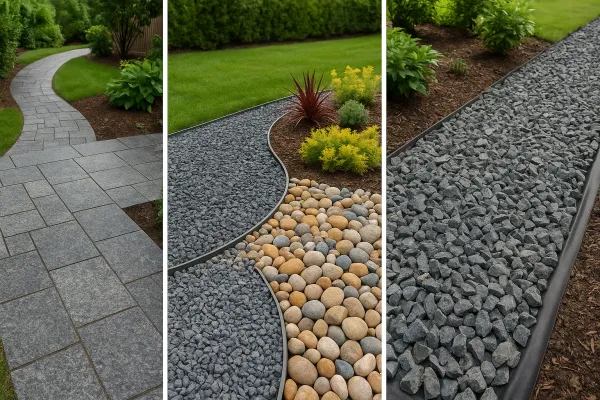
River rock vs. pea gravel
For a durable walkway or patio, use layered construction: a compacted sub-base of crushed stone, bedding sand or screenings, then surfacing with flagstone, sawn granite, or dense pavers. This handles foot traffic and keeps surfaces even.
See rugged basalt-style treads we supply as garden stone for path steps and landings.
Walls fail when the base is wrong. Use angular crushed stone (not rounded river rock) for interlock and good drainage behind the wall. Backfill with free-draining aggregates, include a pipe where needed, and finish with a clean edge. Cap with dense stones (e.g., granite) for durability.
Field tip: For tall walls, consult an engineer. We cut capstones to spec so installations align with your landscape grade lines and load calculations.
Color sets tone; finish sets friction. Slate and flagstone present earth warms and a variety of colors; granite spans cool greys to deep blues and reds.
For modern walls and borders, many spec a dense landscape stone with deep tones for contrast.
If you want color drama with low weight, lava rock adds strong contrast in xeriscapes and low-water landscape beds. For softer, beach-like textures, pebble mixes create calming, rounded patterns—great near seating areas or as garden borders. Use rocks like lava rock or polished pebble to enhance your outdoor space without heavy structural work.
Design note: Decorative stones are accents; combine with landscaping materials such as steel or stone edging for crisp lines.
Stone “mulch” (e.g., pea gravel) lasts longer than wood. It won’t rot or blow away easily and offers better pest control in arid landscape climates. In humid zones or around delicate shrubs, organic mulch may still be preferable. Many clients use landscaping gravel in hot strips (between driveway and sidewalk) to cut heat and weeds.
Install a breathable landscape fabric beneath stone to block weed seeds while allowing moisture exchange.
See pale options often used as white landscape stone to reflect heat in urban landscape islands.
Large rocks and boulders serve as focal points and anchor landscape features. Place larger stones at terrain transitions, corners, or entries. Always set boulders partly below grade so they look native. You can use large boulders flanked by smaller rocks and pebble bands to tie spaces together.
Pro tip: We pre-select boulder sets by color and texture to help you find the perfect match for your landscape theme and areas of your landscape needing emphasis.
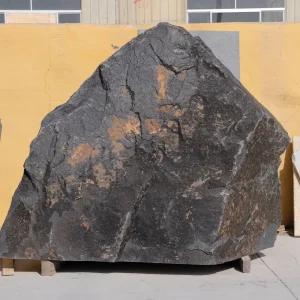
Large rocks and boulders
For driveway aprons and heavy turning zones, pick dense stones—granite setts or thick pavers—over a robust base. Angular crushed stone creates a stable, draining sub-base under the wearing course. This reduces pumping and ruts in wet seasons.
Many municipal specs call for hard igneous units similar to our granite paving block lines for civic landscape streetscapes.
Visit a stone yard with drawings and square footage. Discuss thickness, module sizes, and slip-resistance. Your landscape supply partner and manufacturer (that’s us) can stage deliveries to phases, label pallets to zones, and cut specials (ramps, copings, radius pieces) so crews stay productive across the landscape.
Bring site photos and a color board. We’ll provide stones for your project that match adjacent materials, plus samples of natural stone finishes.
Explore more decorative accents and walls in our landscape stone collections for cohesive palettes.
Stone outlasts many finishes. Dense stones reduce long-term spend compared to frequent mulch refreshes. Sealing may help in oily zones (near grills or parking). Rinsing rocks for your landscape once a season keeps colors crisp. With proper base prep and edge control, installed stone can perform for decades and still support future landscaping ideas.
| Stone (rock type) | Best ways to use | Pros | Considerations |
|---|---|---|---|
| Flagstone | walkway, patio, garden paths | Natural joints; flexible layouts | Needs solid base; joint plants |
| Granite | Pavers, steps, caps | Very durable; sawn accuracy | Heavier; pro tools to cut |
| River rock | Swales, water feature, dry creek beds | Moves water; low maintenance | Not for bases (too rounded) |
| Pea gravel | ground cover, around beds | Cool underfoot; long-lived | Migrates—use edging |
| Crushed stone | Bases, backfill, retaining wall | Locks in place; drains well | Dusty; compact in lifts |
| Lava rock | Accent beds, xeric landscape | Light; bold color | Brittle; wind-prone |
| Slate | Paths, borders | Rich tone; cleft texture | Softer than granite |
“Choose performance first, style second. When function drives the selection, style remains intact for years.” — Our project team
A developer rebuilt a civic square that sees thousands of steps daily. We supplied calibrated granite pavers for plazas, river rock for linear drainage swales, and flagstone in seating nooks to soften the geometry. The mix controlled runoff while inviting people to stay. The landscape team reported near-zero callbacks.
(Ask for current quotes by thickness and finish; bulk orders reduce shipping per ton for large landscape builds.)
What stone option is the most versatile for a mixed-use landscape?
Granite. It adapts to steps, caps, plazas, and edges. Angular bases of crushed stone beneath it handle loads and drainage. Stones like flagstone and slate can complement granite where a softer texture is desired.
Can I replace mulch with gravel in flower beds?
Yes. Many clients use landscaping pea gravel as a long-term mulch in flower beds. It suppresses weeds and won’t rot. Add landscape fabric underneath for better control while allowing water to pass.
Are rounded stones like river pebbles good for paths?
Rounded river rock looks great, but it rolls underfoot. For paths with foot traffic, use angular fines or set stepping stones. Keep river rock for water feature basins and creek beds.
What are the best rocks for drainage around downspouts?
Use river rock or coarse angular crushed stone. These rocks are also excellent at protecting the soil around foundations while channeling flow.
How do I choose the right landscaping stone finish?
Think slip resistance and context. Flamed or textured for wet zones; honed or sawn for formality. We can help you choose surface treatments to match the site and help you choose the best blend for your brand and maintenance plan.
Do you supply custom sizes and edges for large commercial jobs?
Yes. As a manufacturer, we cut special modules, radii, and caps for landscape projects. We also stage deliveries so your next project stays on schedule across all areas of your landscape.
This is the ultimate guide worksheet contractors use to cut risk and save install time.
Need samples or a spec review? As your professional stone manufacturer and supplier, we support contractors, developers, importers, and wholesalers with bulk supply, shop drawings, surface testing, and phased delivery—so your landscape gets done right, on time, and on budget.

 English
  French
  German
  Russian
  Arabic
