Avoid your inquiry is delay response, please enter your WhatsApp/Skype along with the message, so we can contact you at the very first time.
We will reply you within 24 hours. If for urgent case, please add WhatsApp/WeChat: +8615063007107,. Or call 0086-15063007107 directly.
You want a floor that lasts. Some tiles chip, stain, and look old fast. Granite looks strong. You need facts, not hype.
With proper installation, sealing, and simple care, granite tile can last 50–100 years or more. In homes it can outlive several remodels. In public spaces it lasts decades if you control grit, moisture, and traffic.
I work with stone every day. I cut, grind, and polish slabs in my factory in Qingdao. My team runs 12 large saws and 14 CNC profiling machines. We finish more than 2,000 square meters a day. I see granite floors from projects I supplied 15 years ago. They still look fresh after a light hone and a new seal. This is why I trust granite when the job needs long life and low drama.
Wet floors worry everyone. A smooth stone can feel like ice. You need traction without losing the clean stone look.
Granite can be safe when you choose the right finish and texture. Honed, flamed, or brushed finishes give grip. A textured tile with quality grout and mats is not slippery in normal use.
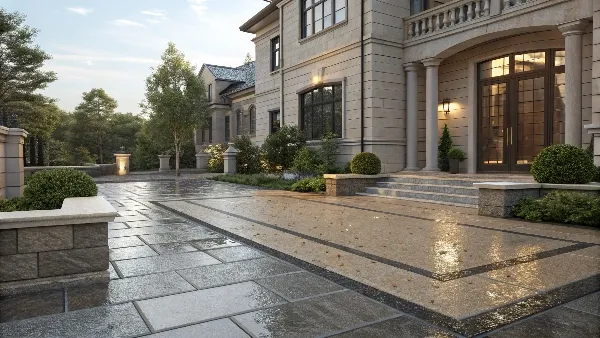
slippery granite tile wet safety
Texture and finish matter most. A mirror-polished granite looks rich, but it has less wet grip. A honed or flamed surface has micro-texture. Water spreads, but your shoe still bites. Grout joints help too. They break water film and add edges. Cleaners also matter. A greasy film turns any floor slick. I use pH-neutral cleaners that do not leave residue. I also remind clients to use entry mats and to wipe spills fast.
| Granite finish | Typical feel | Wet grip | Best places |
| Polished | Mirror smooth | Low | Dry foyers, feature walls, borders |
| Honed | Satin smooth | Medium | Kitchens, living rooms, light-wet zones |
| Brushed/Antiqued | Soft texture | Medium–High | Family entries, commercial lobbies |
| Flamed/Thermal | Gritty texture | High | Outdoors, pool surrounds, heavy-wet zones |
Regular care keeps grip stable. I tell clients to clean with a neutral cleaner and microfiber. No wax. No oily soaps. Add clear silicone beads or anti-slip strips on ramps if needed. In one hotel project in Dubai, we used a flamed granite at the main entry and a honed finish deeper inside. Even in a brief rain, guests walked safely. The team cleans daily. The floor still looks new and sure-footed. If you want the polish look in a wet area, test first. Ask for a traction test report from your installer. A small mockup tells the truth.
You see great photos of both. Sales reps push different points. You want a clear choice that fits your work and your space.
Pick granite for heat, UV, and outdoor use. Pick quartz for a uniform look and easy indoor care. For busy kitchens with hot pans, I choose granite. For showrooms with perfect color match, I use quartz.
Granite is natural stone. It forms under heat and pressure. It has crystal grains and veins that no two tiles can repeat. Quartz is engineered stone. It mixes quartz sand with resin and pigments. It cures in a press. It looks uniform and comes in many colors. This difference drives performance. Resin in quartz can mark under high heat. Sunlight can fade some pigments. Granite does not mind heat or sun, but it has natural pores. It needs sealing on a schedule.
| Factor | Granite tile | Quartz tile |
| Look | Natural, unique | Uniform, predictable |
| Heat resistance | Very high | Good, but avoid hot pans |
| UV/outdoor use | Excellent | Not ideal outdoors |
| Maintenance | Seal every 12–18 months | No sealing, simple cleaning |
| Scratch resistance | High | High |
| Edge repairs | Can be re-honed | Factory finish preferred |
| Price range | Mid to high | Mid to high |
| Sustainability | Natural stone, long life | Engineered, stable quality |
When David, a general contractor in Australia, asked me for lobby floors that face sun and sand, I said granite. We chose a honed grey with dark specks. It hides dust well. It takes sun. It cleans fast. When Emma, a real estate developer in the UAE, wanted a penthouse kitchen with a tight color theme, we used light quartz for the countertop and matched it with honed granite tiles on the floor. She got uniform tops and a tough, sun-safe floor. Your choice can be mixed too. Use quartz on walls for color match, granite on floors for long life.
Bathrooms stay damp. Soap builds up. You need beauty and easy care. You cannot risk slip or stains.
Yes. Granite tile works well in bathrooms when you choose a textured finish, seal on schedule, and design for drainage and ventilation. Honed or brushed floors are my standard.
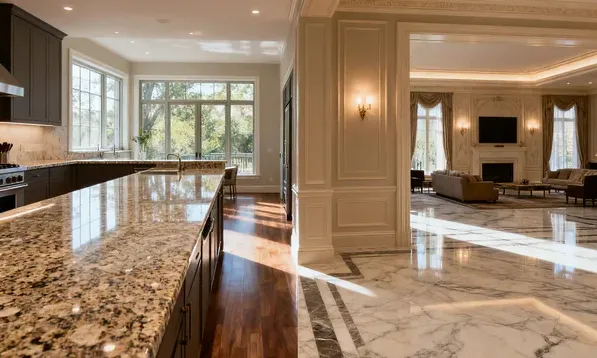
granite tile bathroom design
I start with layout. Water needs a path. I use proper slopes to the drain. I keep tile sizes sensible so the slope looks clean. I choose a honed or brushed finish on the floor. It gives grip and a soft light. I seal all stone after install and again after grout cures. I avoid harsh cleaners. A neutral shower cleaner keeps soap scum down. Good airflow matters more than people think. I add a fan on a timer. Dry air keeps joints clean and reduces darkening near drains.
| Area | Recommended finish | Grout joint | Sealer cycle | Notes |
| Shower floor | Honed or flamed mosaic | 2–3 mm | 12 months | Small tiles follow slope and add grip |
| Shower walls | Honed or polished | 1.5–2 mm | 18 months | Polished is fine on walls |
| Main floor | Honed or brushed | 2–3 mm | 12–18 months | Use mats at tub and vanity |
| Vanity splash | Polished or honed | 1.5–2 mm | 18–24 months | Wipe toothpaste and cosmetics fast |
I once redid a hotel suite where glossy stone had turned slick. We changed the shower floor to a flamed granite mosaic and honed the main floor. The look stayed upscale. Slip risk dropped. Housekeeping time went down because the new cleaner left no film. Expect the same at home. Keep a squeegee in the shower. Run the fan after each use. Seal when water no longer beads. These simple steps keep bathrooms fresh without special products.
Both look beautiful. You hear strong opinions. You need a direct answer that fits use, budget, and care.
Granite is tougher and needs less care. Marble is softer and needs more care but gives classic luxury. For heavy traffic and kitchens, I choose granite. For formal rooms, marble can shine.
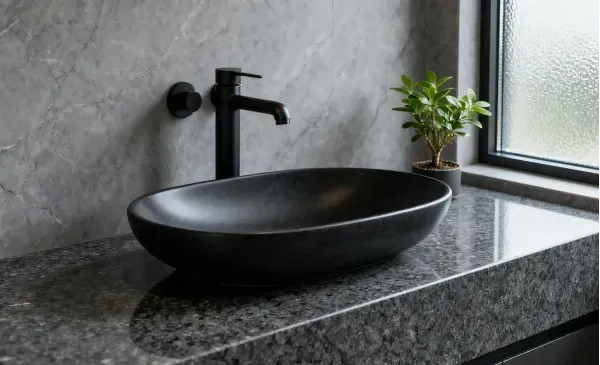
granite vs marble flooring
Granite is harder. On the Mohs scale it sits around 6–7. Marble is around 3–4. That gap shows up in real life. Chairs scrape. Sand blows in. Heels click. Granite shrugs off most of it. Marble can mark and etch from acids like lemon juice. Sealing helps both, yet it does not stop acid etch on marble. If you want a low-care floor in a busy family space, granite wins. If you want a quiet sitting room with a rich glow, marble can be perfect with the right rules.
| Property | Granite tile | Marble tile |
| Hardness (approx) | 6–7 Mohs | 3–4 Mohs |
| Stain resistance | High when sealed | Moderate when sealed |
| Acid etch | Rare | Common without care |
| Scratch resistance | High | Moderate |
| Visual style | Granular, speckled, bold | Veined, classic, soft glow |
| Best uses | Kitchens, halls, outdoors | Formal living, bathrooms with care |
| Care level | Low to moderate | Moderate to high |
I guide clients by room. Kitchens, mudrooms, and outdoor patios do best with honed or brushed granite. It hides wear and keeps grip. Dining rooms and formal entries can wear marble if you accept a patina. Some owners love that aged look. Others do not. In high-rise lobbies I often mix both. I use granite in traffic zones and marble as wall cladding or inlays. This keeps maintenance simple and still delivers a premium feel. If budget is tight, granite often gives the best long-term value because it avoids surprise refinishing.
Choose finish first, then stone. Match texture to use. Granite lasts long with simple care. Quartz suits uniform looks. Marble is luxury with rules.

 English
  French
  German
  Russian
  Arabic
