Avoid your inquiry is delay response, please enter your WhatsApp/Skype along with the message, so we can contact you at the very first time.
We will reply you within 24 hours. If for urgent case, please add WhatsApp/WeChat: +8615063007107,. Or call 0086-15063007107 directly.
I know stone choices can feel risky. Budgets are tight. Designs must last. Natural marble looks timeless. I explain it in clear steps so you can choose well.
Natural marble is real stone from the earth. Heat and pressure change old limestone into strong, veined rock. Quarries cut blocks. Factories saw and polish slabs or tiles. Every piece is unique.
You want beauty and trust. You want clear numbers and low risk. I break the topic into simple parts. Then I show how I control cost, quality, and time.
Sticker shock is common. The slab looks perfect. The first quote does not. Price has many parts. I show how to shape those parts and keep the look.
Marble cost depends on origin, grade, thickness, sizes, finish, fabrication, waste, and freight. With smart specs and timing, natural marble can fit a wider range of budgets.
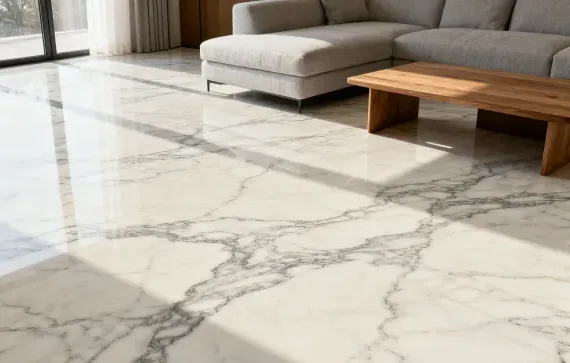
I treat cost like a chain. The quarry sells a block. Yield depends on cracks and shape. Cutting and polishing take time and power. Edge work, cutouts, and textures add more time. Crating and shipping add weight fees. I lower cost when I reduce waste, align sizes with slab yield, and keep work simple. I also order in phases so I can approve lots before full cutting.
| Driver | Why it adds cost | How I lower it |
| Origin and quarry | Scarcity, distance, export fees | Choose stable, nearby quarries with steady output |
| Grade selection | Stricter look rules reduce yield | Use commercial grade in low eye-level zones |
| Thickness (20 vs 30 mm) | More stone and weight | Use 20 mm with proper substrate |
| Module size | Big pieces waste more slab | Match tile size to common slab yield |
| Finish choice | Extra passes for mirror polish | Use honed or leathered in traffic areas |
| Fabrication | Fancy edges and many cutouts | Keep edges simple, plan cutouts early |
| Logistics | Heavy crates and long routes | Full-container packing and smart routing |
I start with the drawing and the room use. I map traffic lanes and water zones. I pick a finish that hides micro-wear. I set a module that matches average slab yield. I ask for dry lay photos. I approve vein flow and lot codes. I keep 3 to 5 percent spares. In one hotel lobby, I switched to a honed finish and a modular pattern. We cut cost by double digits and met a tight opening date. The look stayed calm and high-end. The owner thanked us on handover day because the floor looked rich, the budget held, and the schedule did not slip.
Marble is beautiful, but it needs care. It can stain, etch, or scratch if you choose the wrong finish or use harsh cleaners. I plan for that up front.
Marble is porous and reacts with acid. Citrus, wine, or strong cleaners can dull the surface. Sand can scratch. Good specs, sealing, and training prevent most problems.
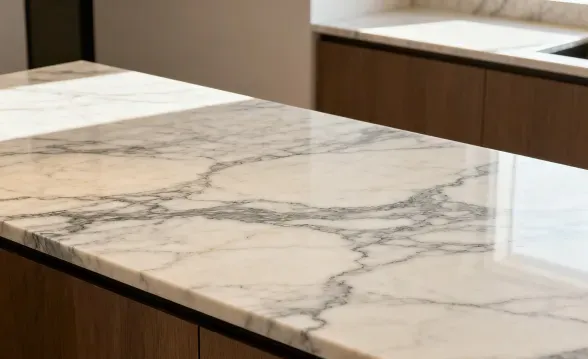
I begin with use cases. Kitchens see lemon juice and oil. Bars see wine and vinegar. Baths see soaps and hard water. Lobbies see grit. I use honed or leathered in those areas. I seal with a proven product. I teach the cleaning team to use pH-neutral soap and soft pads. Most failures come from wrong chemicals or tools, not the stone itself.
| Issue | What you see | Why it happens | What I specify |
| Etching | Dull rings or spots | Acid reacts with calcite | Honed finish, trays, neutral cleaners |
| Staining | Dark or oily marks | Liquids enter pores | Quality sealer, fast wipe-up |
| Scratching | Fine lines in paths | Grit acts like sandpaper | Entry mats, daily dust control |
| Slippery when wet | Falls in wet rooms | Polished finish + water | Honed texture, rugs where needed |
| Lippage | Uneven tile edges | Poor substrate or rushed install | Flat screed, leveling clips, trained crew |
| Chips and cracks | Edge damage | Impact or weak bedding | Edge guards, correct mortar bed |
| Color mismatch | Patchy zones | Mixed lots or random layout | Dry lay by zone, vein-matched plans |
I keep the rules simple. Match finish to use. Seal well, then reseal on a realistic cycle. Teach staff to test new cleaners in a corner. Use soft pads. Wipe spills fast. In a busy restaurant project, the designer wanted mirror polish at the bar. I explained the lemon and wine risk. We chose a honed finish with a robust sealer and a short care card taped inside the cabinet. Staff followed it. Years later the top still looks calm. It has a soft patina, not damage. Guests see beauty, not maintenance.
The path to the right stone can look complex. There are quarries, factories, slab yards, and fabricators. Each path has trade-offs. I guide buyers through them.
You can buy from quarries, processors, wholesalers, fabricators, or trusted exporters. The best path depends on size, timing, and how much control you need over lots and veins.
Large jobs need lot control and steady supply. Boutique jobs need fast pick-and-pack. I review output records, block photos, and test data. I ask for dry lay rooms, not just single tile shots. I confirm labels and crate maps that match the drawings. I plan delivery waves to match install, not to fill a random date on a calendar.
| Channel | Pros | Cons | When I choose it |
| Quarry direct | Best visibility and raw price | Higher MOQs, more planning | Big jobs with early design lock |
| Processor / factory | Strong control of finish | Needs clear specs and QC | Medium to large orders with match needs |
| Wholesaler / slab yard | Fast choice, local pickup | Mixed lots, higher margins | Small jobs or urgent timelines |
| Fabricator-led | One stop from template to fit | Narrow quarry selection | Homes and boutique retail |
| Exporter / integrator | Bundles stone + docs + freight | Must vet capacity and QC | Multi-material or multi-site rollouts |
I use a simple checklist. First, pick the quarry and variety. Second, agree on finish with site samples. Third, approve the lot with dry lay photos of full rooms. Fourth, confirm crate maps and labels. Fifth, plan delivery waves that follow the install sequence. Sixth, keep spares on hand. On one coastal high-rise, we phased deliveries by floor. The crew installed from labeled crates that matched each floor’s plan. There were no random colors or vein flips. We finished on time. The developer said the calm look helped units sell faster.
Many buyers want the marble look without the shock. “Cheap” is not a bad word if you know what drives it. I focus on supply, yield, and simple work.
The least costly marbles are common varieties from stable quarries. Honed finish, 20 mm thickness, standard edges, and modular tile sizes reduce price without harming the design.
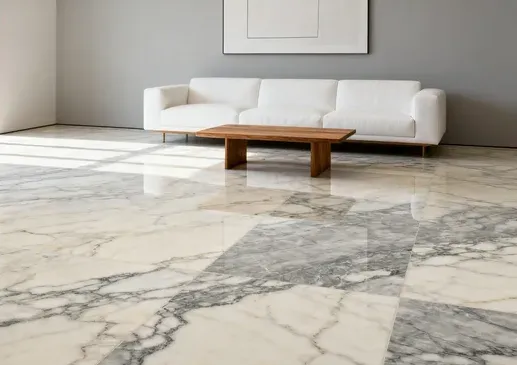
Abundance matters. A quarry that yields steady, uniform stone can price lower. Nearby sources save freight. Commercial grade costs less than premium. Slight variation is not a flaw in many spaces. It adds life. Honed finish needs fewer passes than mirror polish. Thin slabs weigh less and cost less to ship. Standard edges are faster to cut and safer to handle.
| Option | Where it fits | Watch-outs |
| Common white or gray (commercial grade) | Large floors and walls | Control lots; dry lay by room |
| Beige and cream marbles | Lobbies, corridors, stairs | Pick non-slip finish for traffic |
| Honed surface | Kitchens, baths, entries | Seal well; teach neutral cleaners |
| 20 mm slabs | Vanities, wall cladding | Ensure stiff, flat substrate |
| Simple edges (eased or pencil) | Most tops | Avoid fussy profiles that chip |
| Modular tiles (e.g., 600×600) | Wide floor areas | Align pattern to cut waste |
I start with the feeling you want. If you want a quiet, modern space, a common gray or beige in honed finish looks great and costs less. I align tile size with slab yield. I place joints where the eye accepts them. I avoid over-tight miters in risky spots. I pick a finish that hides micro-wear so maintenance stays simple. I still demand good packing, clear labels, and strong crates. In a tight-budget apartment project, we chose a common gray, honed, in a modular tile. We ran a strict dry lay. The rooms looked calm and clean. The developer saved money and sold out quickly. Owners liked the real stone feel and the warm tone. No one asked if it was the “cheapest” marble. They just liked how it lived.
I see three common errors. First, choosing mirror polish in wet or busy zones. It looks great on day one and then shows every mark. Second, picking jumbo pieces that waste slab. The offcuts go in the bin, and you pay for them. Third, skipping lot approval. Mixed tones and vein directions break the calm. Fixing that on site costs more than the stone. I prevent these with honest talks, clear samples, and a simple approval path that anyone on the team can follow.
Natural marble rewards simple plans. Pick the right finish. Approve lots with dry lays. Match sizes to yield. Train care. Then the stone stays beautiful.

 English
  French
  German
  Russian
  Arabic
