Avoid your inquiry is delay response, please enter your WhatsApp/Skype along with the message, so we can contact you at the very first time.
We will reply you within 24 hours. If for urgent case, please add WhatsApp/WeChat: +8615063007107,. Or call 0086-15063007107 directly.
Granite looks beautiful, but many contractors and developers worry it may be slippery—especially in wet or high-traffic areas.
A wrong surface choice can cause safety risks, complaints, and costly rework in commercial and public projects.
Understanding granite’s surface finishes, textures, and slip resistance helps you use granite slabs safely and confidently.
Granite slabs are not inherently slippery, but their slip resistance depends on surface finish, texture, sealing, and whether the area is dry or wet. Polished granite can become slippery when wet, while honed, flamed, or textured granite offers much better slip resistance for floors, paving, and wet areas.
As a professional stone manufacturer and supplier, we work closely with contractors, project developers, importers, and wholesalers on large-scale construction, landscaping, and urban infrastructure projects. Granite is one of the most requested materials—but also one of the most misunderstood when it comes to safety.
This guide shares first-hand stone production and project experience to help you decide when granite is the right choice, how to reduce slipping risks, and how to specify the correct granite surface for your project.
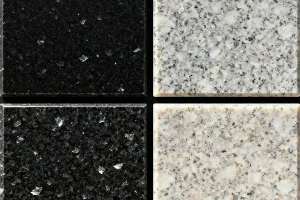
pupular granite colors
In this guide, we’ll cover:
The properties of granite and why it behaves differently underfoot
Which granite finishes are slippery and which are slip-resistant
Granite floors vs countertops: different risks, different solutions
How sealing, texture, and maintenance affect safety
Practical recommendations for commercial, public, and outdoor projects
Granite is an igneous rock formed under extreme heat and pressure. This gives granite exceptional durability, density, and strength—key reasons why granite is a popular choice for floors, paving, and countertops.
However, the properties of granite also mean its surface can be very smooth when finished a certain way. A highly polished surface reduces friction, which is why granite can become slippery, especially when water or other liquid is present.
From a stone supplier’s perspective, it’s important to understand that granite is a natural stone, and its slip behavior depends more on finish and texture than on the stone itself.
The short answer: sometimes.
A granite floor can be slippery if it uses polished granite, particularly in wet areas such as entrances, bathrooms, or commercial kitchens. In dry conditions, polished granite often feels safe, but especially when wet, friction drops sharply.
That’s why professional projects rarely use highly polished granite for public floor applications. Instead, contractors specify finishes that improve slip resistance, reducing liability while maintaining granite’s natural beauty.
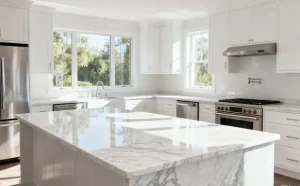
Popular White Granites
Yes. Polished granite has a smooth, reflective surface created by repeated polishing. While visually striking, this finish can become slippery when wet.
This is most noticeable in:
Hotel lobbies
Shopping malls
Bathrooms and kitchens
Entryways with heavy foot traffic
In these settings, a polished granite floor tile may pose a safety risk. That’s why polished granite is more commonly used for granite countertops rather than walking surfaces.
Not all granite surfaces are the same. Finish matters.
| Finish Type | Texture | Slip Resistance |
| Polished | Very smooth | Low |
| Honed granite | Matte, smooth | Medium |
| Flamed granite | Rough, textured | High |
| Textured finish | Structured surface | High |
A honed or textured finish significantly improves slip resistance while keeping a refined look. Flamed granite is especially popular for stone paving, outdoor walkways, and plazas.
As a supplier, we often recommend textured finish granite for public projects where safety is a priority.
Compared with other stones, granite performs well.
Polished marble is often more slippery than granite
Quartz surfaces vary depending on finish
Textured granite is generally less slippery than many alternatives
In outdoor or commercial environments, granite is an excellent balance between strength, aesthetics, and safety when properly finished.
This is why granite remains a popular choice for large-scale projects despite safety concerns.
Texture increases friction between footwear and the stone surface. Rougher surfaces provide more grip, reducing the risk of slipping.
Common methods to add texture include:
Flame treatment
Bush-hammering
Leathered or brushed finishes
These methods create slip-resistant granite surfaces suitable for walkways, ramps, and public plazas. From our experience, textured granite dramatically improves safety without compromising durability.
This is a common misconception.
A sealant is applied to protect granite from stain and moisture penetration. Properly applied, a seal does not significantly reduce slip resistance.
However:
Over-application of sealant can leave residue
Improper sealing may create a slick film
That’s why we always advise properly sealed granite using professional methods. Correct sealing helps protect it from stains while maintaining surface safety.
Yes—when the right finish is used.
In bathroom and kitchen environments, water, oil, and other liquids are common. A polished surface may become slippery, but honed granite or lightly textured granite performs much better.
For kitchens and bathrooms, we typically recommend:
Honed granite for floors
Polished granite for kitchen countertops
Anti-slip treatments in commercial kitchens
This balance preserves both safety and aesthetics.

Granite kitchen countertop
Understanding the pros and cons of granite helps decision-makers choose wisely.
Benefits of Granite
Extremely durable and long-lasting
Heat resistant and scratch resistant
Strong natural beauty
Suitable for heavy foot traffic
Cons of Granite Paving Slabs
Can be slippery if polished
Higher upfront cost than some tiles
Requires professional installation
When used correctly, the benefits of granite far outweigh the risks.
From real project experience, here are proven ways to improve safety:
Choose honed or textured finish granite
Avoid highly polished surfaces in wet areas
Use anti-slip treatments where needed
Maintain regular cleaning to remove residue
Specify the right granite type of granite for each zone
These steps are critical for reducing the risk of slipping in commercial and public projects.
Granite in Large-Scale Projects: A Supplier’s Perspective
In urban infrastructure and commercial developments, granite slabs are widely used for:
Transit stations
Shopping centers
Public squares
Office buildings
We regularly supply granite for projects where slip resistance is tested and certified. Choosing the correct finish early in the design phase prevents issues later during inspection or operation.
Are granite slabs slippery by nature?
No. Granite itself is not slippery. The surface finish determines slip resistance.
Is polished granite safe for floors?
Polished granite can be slippery when wet and is better suited for countertops.
Which granite finish is best for outdoor paving?
Flamed granite or other textured finishes provide excellent slip resistance.
Does sealing granite increase slipperiness?
Proper sealing does not significantly affect slip resistance.
Is granite better than tile for commercial floors?
Granite offers superior durability and longevity when the correct finish is chosen.
Granite slabs are not automatically slippery
Surface finish determines slip resistance
Polished granite is risky in wet areas
Honed or textured granite is safer for floors and paving
Proper specification ensures safety, durability, and beauty
If you’re planning a large-scale project and want reliable granite paving solutions, choosing the right finish—and the right supplier—makes all the difference.

 English
  French
  German
  Russian
  Arabic
