Avoid your inquiry is delay response, please enter your WhatsApp/Skype along with the message, so we can contact you at the very first time.
We will reply you within 24 hours. If for urgent case, please add WhatsApp/WeChat: +8615063007107,. Or call 0086-15063007107 directly.
Choosing a countertop feels simple—until you live with it. Granite can look amazing, but hidden drawbacks can turn into daily annoyances: stains, sealing, surprise costs, and chips. I’ll break down the real cons and show practical fixes so you can buy with confidence.
The main negatives of granite countertops are that they’re porous, so they can stain if not sealed; many installs require professional fabrication; seams and edge details can raise cost; and heavy slabs can crack or chip if poorly handled. Granite also needs periodic sealing and gentle cleaners. If you want a more uniform, lower-maintenance option, quartz is often easier—though it has its own trade-offs.
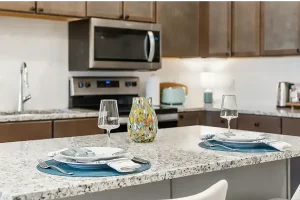
granite tile
Granite countertops:what people love, and what they regret
What are the biggest cons of granite countertops for daily kitchen use?
Does granite need sealing? How often should you seal and why?
Can granite countertops stain from a spill or liquid?
Granite can be expensive:what drives the cost of granite countertops?
Can granite crack or chip? What causes damage—and how to prevent it
Installed by professionals:why granite installation isn’t a DIY job
Quartz vs granite:which countertop material fits your kitchen remodel?
How to choose a slab:color and pattern, veining and color, and the type of granite
Real project lessons + FAQs: what I tell contractors, developers, and importers
I’ve worked with contractors and project developers who specify granite countertops because they want a high-end countertop feel without the fragility of marble. Granite is a natural stone, and every slab is different—clients love that “one-of-one” look.
But I also see repeat issues when buyers treat granite like it’s indestructible. It’s tough, yes, and often heat resistant, but it’s still stone. The most common complaints come from maintenance surprises, schedule pressure, and mismatched expectations between showroom samples and the delivered slab of granite.
If you’re sourcing at scale (multi-unit housing, hotels, commercial property), these regrets become expensive change orders. That’s why I always advise teams to evaluate advantages and disadvantages early—before finalizing the kitchen design package.
Let’s be direct: the cons of granite countertops show up in normal life—cooking, cleaning, and rushing through mornings in the kitchen.
Here are the top “daily-use” negatives I see most often:
Porous material + stain risk: Some granites absorb oils and pigments if sealing is neglected.
Seams and variability: A slab is unique; matching color and pattern across units can be hard.
Weight and complexity: Shipping, handling, and install require planning—especially in high-rise projects.
Maintenance discipline: You’ll need to seal periodically and use the right cleaners.
If you want a popular kitchen countertop material that feels more “set-it-and-forget-it,” engineered stone can be appealing. Still, the pros and cons matter: granite brings natural character and beauty and durability, but it demands respect.
Yes—most granite needs a sealer, because granite is often porous to some degree. The goal of sealing granite countertops is simple: reduce absorption so spills don’t become permanent discoloration.
How often is “often”? Guidance varies because the answer depends on the type of granite, finish, and how the kitchen is used. Many homeowner-oriented guides mention sealing once or twice a year; others say one to five years depending on the slab and use.
My practical rule (used on projects):
Test the surface, decide the schedule, standardize maintenance instructions for the site team.
Simple water test (fast, no tools):
Put a few drops of water on the countertop surface.
Wait ~10 minutes.
If it darkens, you need to seal.
For large developments, we often specify “needs to be sealed regularly” in the handover pack and train the facility team. That avoids confusion and reduces callbacks.
They can—especially from oil, wine, coffee, or sauces. Granite’s structure can allow absorption, and that’s why a single neglected spill can become a stain.
One manufacturer article explains the core issue clearly: granite, being porous, can absorb oil-based products and leave stubborn marks.
Common staining triggers in a kitchen:
Cooking oils and greasy foods
Dark sauces (soy, tomato)
Strong pigments (turmeric, red wine)
Standing liquid around seams or the sink
How to reduce stain risk (contractor-friendly checklist):
Apply a quality sealer and re-check on schedule
Wipe spills quickly (especially oils)
Use pH-neutral stone cleaner
Avoid harsh acids/bleach on the countertop
This is where buyers compare quartz and granite. Quartz is typically less absorbent and easier for busy households. Granite can still perform beautifully—just don’t ignore the reality that it’s a porous material.
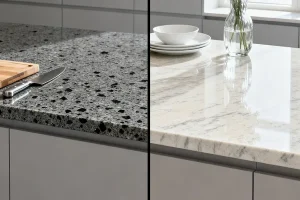
Granite and Quartz Countertops
This is the complaint I hear most in procurement meetings: granite can be expensive. And it’s not just the stone.
A widely cited pricing baseline for the U.S. market puts granite material around $40–$60 per square foot, with total costs influenced by labor, edges, and removals.
(Your market may differ, but the cost drivers are similar globally.)
What pushes cost up?
Exotic granite and rare colors (supply constraints)
Complex cutouts (undermount sinks, cooktops)
Upgraded edges and thicker profiles
Tight installation timelines (overtime crews, rush logistics)
Breakage risk in transport (especially for long islands)
| Cost driver | Why it matters | How to control it |
| Stone selection | Rarity + quarry supply affects price (supply and demand) | Pre-approve 2–3 alternates |
| Fabrication | Cutouts, edges, polishing | Standardize sink/cooktop templates |
| Installation | Heavy slab, leveling, seam work | Use an experienced installer |
| Logistics | Crating, shipping, site access | Plan delivery windows early |
| Maintenance | Sealing + cleaning | Include a care guide at handover |
If you’re fitting a new kitchen across many units, the smartest move is to choose a consistent spec that balances appearance and repeatability—without over-customizing every layout.
Yes, granite can crack—and chips can happen too. Most failures come from stress points, poor support, or impact.
Typical causes:
Unsupported overhangs (especially around bars and islands)
Improper handling during delivery (flexing a slab)
Weak zones near sink cutouts
Dropping a sharp or hard object on an edge
That’s why “crack or chip” is a realistic risk, not a scare tactic. Even the best stone can fail if it’s rushed.
Prevention that actually works on site:
Add proper supports for overhangs
Keep sink cutouts reinforced during handling
Specify professional templating before fabrication
Never let random trades stack materials on the countertop
When builders ask me for a simple rule: treat granite like glass during transport and like steel after it’s installed. It’s strong, but not magical.
Granite is heavy, brittle at the wrong angles, and unforgiving with seams. That’s why it’s typically installed by professionals with requires specialized tools and experience baked into the workflow.
A good install team handles:
Accurate templating (walls are rarely perfectly straight)
Seam placement for strength and appearance
Proper adhesive, leveling, and support
Safe handling of the full-size slab
On large projects, we plan granite installation like a mini-logistics operation: site access, elevator protection, staging areas, and a clean handoff to other trades. That planning is what keeps the schedule intact.
If you’re deciding between full slabs and alternatives, you’ll sometimes hear “use granite tile instead.” It can reduce slab handling, but it introduces visible grout lines, which many commercial buyers don’t want in a premium finish.
This is where the “pros and cons of granite” discussion becomes practical. I’ll compare countertop material options the same way I would in a spec meeting.
| Option | Best for | Main drawback |
| Granite | Natural look, unique patterns and colors | Needs sealing; can stain/chip |
| Quartz countertops | Consistent look, easier maintenance | Less tolerant of high heat than stone (check brand guidelines) |
| Quartzite | Natural stone feel with strong performance | Can be pricey; still needs sealing |
| Tile | Budget + easy replacement | Grout maintenance; visible grout lines |
If your priority is uniformity across units, quartz often wins. If your priority is natural movement—veining and color variation—granite is hard to beat.
For many developers, the best answer is “match material to use.” A showpiece lobby bar can justify premium stone; a high-turnover rental unit might benefit from simpler maintenance.
This is where a professional supplier adds real value—because the wrong selection leads to disputes later.
What I advise in the showroom:
View the full slab, not just a small sample
Check the color and pattern under lighting similar to the site
Confirm whether the stone is more porous (lighter stones often need more sealing attention)
Decide seam strategy early for long runs
Remember: slab is unique. That uniqueness is a selling point, but for bulk procurement it also introduces variability. So on multi-unit programs, we agree on acceptable ranges of patterns and colors, then lock the selection.
If you’re an importer or wholesaler, this is also where packaging and crating standards matter. A great stone ruined by weak crating is a painful loss.

Granite kitchen island counter
Mini case study (real-world pattern, simplified)
A project developer sourced stone for a mixed-use commercial property: retail + serviced apartments. The team wanted a high-end look but had tight delivery windows.
What went wrong at first:
They selected a dramatic stone without approving full slab photos.
Site teams weren’t told it needs to be sealed after install.
A late schedule change forced rushed fabrication and increased seam visibility.
What fixed it:
We standardized the kitchen layouts and sink cutouts.
We pre-approved multiple slabs to keep supply stable.
We wrote a clear care guide: wipe spills, test sealing, reseal on schedule.
Result: fewer punch-list issues, smoother handover, and a finish that stayed premium.
A short quote I use with procurement teams
“Stone doesn’t fail randomly. It fails when expectations, handling, and maintenance aren’t aligned.”
A simple “Should you choose granite?” decision checklist
You want natural variation more than perfect uniformity
You can commit to sealing (or include it in facility maintenance)
You value resale appeal and premium perception
You have access to a skilled installer and good logistics
If that sounds like your project, granite can be a strong choice—just plan it correctly.
Are granite countertops low maintenance?
They can be low maintenance day-to-day (wipe and clean), but only if you keep up with sealing and use the right cleaners. If you skip sealing, you raise the chance of a stain.
How often should I seal granite?
Many guides suggest sealing once or twice a year, while others note it can be one to five years depending on slab porosity and use. The safest approach is to do the water test and set a schedule.
Is granite really heat resistant?
Granite is generally considered heat resistant, but rapid temperature shock can still stress stone. Use trivets when you can—especially with a hot pan—to protect seams and sealers.
Should I choose quartz or granite for a busy kitchen?
If your priority is easy cleaning and uniform looks, quartz often fits busy homes and rentals. If you want natural variation and a premium stone feel, granite is excellent—just accept the sealing routine.
What’s the typical cost of granite countertops?
Cost varies by market and stone grade, but common U.S. references place materials around $40–$60 per square foot, with other factors (labor, edges, removal) influencing totals.
Are granite countertops a radon risk?
The EPA notes there are no regulations specific to radon from granite countertops, and recommends testing homes for radon regardless of countertop choice. If you’re concerned, a radon test is simple and more meaningful than guessing.
Granite is a natural stone with real beauty and durability, but it’s not indestructible.
The biggest negatives are sealing needs, stain risk, chips/cracks from poor handling, and higher install complexity.
Sealing matters because granite can be porous; test and reseal on schedule.
Cost increases come from rarity, fabrication complexity, logistics, and installation planning.
If you want simpler maintenance and uniform appearance, quartz countertops can be easier—compare the full pros and cons before you commit.
For large-scale procurement, choose a supplier who can standardize slabs, packaging, fabrication, and technical support—so your schedule stays safe.

 English
  French
  German
  Russian
  Arabic
