Large stones are foundational elements in landscape design, serving as powerful structural and aesthetic anchors. From massive solitary boulders to strategically placed flagstone, these natural features provide texture, scale, and a sense of permanence that softer landscape elements cannot. Their significance in modern design lies in their ability to create durable, low-maintenance, and visually impactful environments.
This comprehensive guide is designed for homeowners, landscape designers, and contractors. It provides an in-depth look at using large stone for landscaping, moving beyond basic ideas to cover the essential technical knowledge required for a successful project. We will explore the primary types of large stones, their practical applications, critical installation considerations, and a realistic approach to budgeting.
Understanding the Types of Large Landscaping Stones
Selecting the right type of stone is the first step in any hardscaping project. Each category has distinct characteristics that make it suitable for specific applications.
- Landscape Boulders
- Typical Size & Shape: Boulders are large, naturally weathered rocks, typically rounded or irregular in shape. These foundational large landscaping rocks can range from one foot in diameter to massive specimens weighing several tons.
- Common Landscape Applications: Primarily used as natural focal points in garden beds, as anchors for landscape transitions, or grouped to create naturalistic outcroppings. They also function well as informal seating or security barriers.
- Key Considerations: Their immense weight necessitates heavy machinery for placement. The base must be stable, and for a natural look, at least one-third of the boulder should be buried to make it appear grounded.
- Armour Stone
- Typical Size & Shape: Armour stone is quarried rock, characterized by its large, blocky, and angular shape. Pieces often have at least one relatively flat surface, making them suitable for stacking. Sizes range from 2 to 6 feet in length and can weigh 500 to 4,000 pounds or more.
- Common Landscape Applications: The ideal material for constructing large, gravity-based retaining walls. Its mass and angularity allow for secure interlocking without mortar, creating robust structures to manage slopes and create terraces.
- Key Considerations: Stability is paramount. A properly compacted aggregate base is required, and for taller walls, drainage solutions (like gravel backfill and drainpipes) are essential to prevent hydrostatic pressure buildup.
- Flagstone Slabs
- Typical Size & Shape: Flagstone consists of large, flat slabs of sedimentary rock, such as sandstone or slate. They are typically 1 to 3 inches thick with irregular shapes and large surface areas.
- Common Landscape Applications: The premier choice for creating patios, walkways, and stepping stone paths. Their broad, flat surfaces provide a stable and comfortable walking area that integrates naturally into the landscape.
- Key Considerations: Requires a meticulously prepared base of compacted aggregate and a leveling layer of sand to prevent cracking or shifting. Proper spacing and jointing material (sand, gravel, or groundcover) are crucial for drainage and stability.
- Outcropping Stone
- Typical Size & Shape: These are flat, layered stones that are wider than they are tall, designed to mimic natural rock ledges. They have a stratified appearance and are often used to create horizontal lines in a design.
- Common Landscape Applications: Excellent for building low, natural-looking retaining walls and creating tiered garden beds on gentle slopes. They are also the standard for constructing durable, rustic landscape steps.
- Key Considerations: Weight and leverage are key. Each layer must be set back slightly from the one below it (battering) to ensure geotechnical stability. Good drainage behind the structure is necessary to prevent frost heave.
- Feature Stones & Monoliths
- Typical Size & Shape: Selected for their unique character, these stones can be any shape but are often tall and columnar (monoliths) or possess distinct textures, colors, or moss growth.
- Common Landscape Applications: They serve as standalone sculptural elements or the centerpiece of a water feature, such as a bubbling rock. Their purpose is purely aesthetic, acting as a powerful piece of natural art.
- Key Considerations: Due to their often-upright orientation, a stable, deep base is critical to prevent tipping. The specific geology of the stone (e.g., porosity of lava rock) should be considered, especially if used in a water feature.

Landscaping Stones
Practical Applications for Natural Stone Features
Effective use of stone goes beyond simple decoration. It involves leveraging the inherent properties of the material to solve design challenges and enhance the functionality of the landscape.
- Creating Structural Focal Points: A well-placed group of boulders can direct the eye and anchor an entire garden view. This is most effective in open areas or at the end of a sightline, where the mass of the stone provides a natural destination point.
- Building Retaining Walls: Armour stone and outcropping stone are used to manage grade changes. The purpose is to transform a sloped, often unusable area into flat, functional terraces for planting, patios, or lawns, while also preventing soil erosion with materials like durable china black wall stone.
- Defining Entrances and Borders: Large stones placed at a driveway entrance or property corner create a permanent, high-impact statement. This application uses stone elements to establish a sense of arrival and clearly delineate boundaries.
- Designing Rock Gardens: This application groups various sizes of rock to create a planting environment that mimics an alpine or arid landscape. The stones provide structure, retain heat, and create pockets of soil for specialized, often drought-tolerant, plants.
- Constructing Natural Steps and Pathways: On sloped terrain, large, flat outcropping stones or flagstone slabs offer the safest and most durable solution for creating steps. The goal is to provide stable footing while blending seamlessly into the natural grade of the hill.
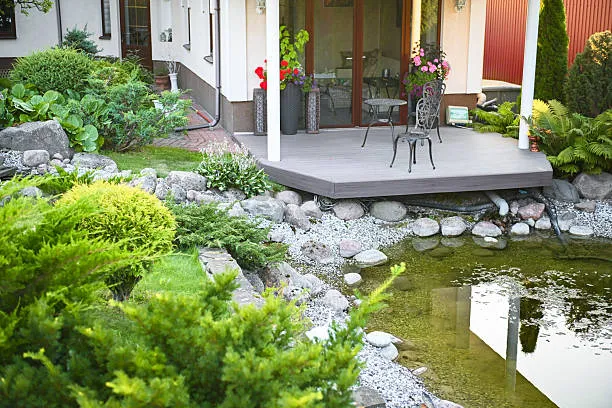
- Enhancing Water Features: Boulders are essential for concealing pumps and liners and for creating naturalistic edges for ponds and waterfalls. Their mass helps to shape the flow of water and contributes to the auditory experience of the feature.
Technical Considerations Before Installing Large Landscape Stones
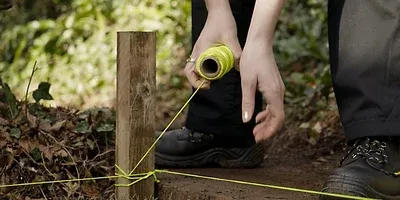
Proper installation is critical for the safety, longevity, and success of any project involving large stone elements. Overlooking these technical details can lead to instability and failure.
- Weight & Equipment Requirements: A cubic foot of granite weighs approximately 170 pounds. A modest 2’x3’x2′ boulder can easily exceed 2,000 pounds. Moving and placing stones of this size requires specialized equipment, such as a skid-steer or an excavator with a rock grapple attachment. Manual methods are unsafe and impractical for anything beyond the smallest decorative rocks.
- Base Preparation & Drainage: All structural stones, especially those used for walls or steps, require a compacted aggregate base. This permeable layer provides a stable footing and allows water to drain away, preventing frost heave and undermining from soil washout.
- Soil Condition & Slope Safety: Before placing heavy stones on a slope, the soil’s stability must be assessed. On steep grades or with unstable soil, a geotechnical engineer may be needed to ensure the added weight will not cause a landslide. The angle of repose—the steepest angle at which a material is stable—is a critical safety factor.
- Long-term Stability & Maintenance: While extremely low-maintenance, stone features should be inspected periodically for signs of shifting, especially after freeze-thaw cycles. For retaining walls, ensure weep holes and drainage channels remain clear to prevent pressure buildup.
- Safety Considerations During Placement: The installation site must be secured. A clear plan for moving the stone from the delivery truck to its final position is essential. The machinery operator must have excellent visibility, and all personnel should maintain a safe distance during lifting and placement operations.
Technical Considerations Before Installing Large Landscape Stones
Understanding the Cost of Large Landscaping Stone
Budgeting for a large stone project involves more than just the material cost. A clear understanding of all contributing expenses is necessary for accurate financial planning.
- Key Factors That Influence Price
- Stone Type: Common fieldstone or sandstone is typically less expensive than granite or unique feature stones.
- Weight/Volume: Almost all bulk stone is sold by the ton. The total weight required is the primary cost driver.
- Sourcing Distance: The farther the stone has to travel from the quarry to the supplier and then to your site, the higher the transportation costs.
- Size and Selection: Hand-selecting specific, very large, or uniquely shaped stones often carries a premium price.
- Budgeting for Delivery and Installation
- Delivery: This is a separate line item. Expect a significant flat fee for a heavy-duty truck capable of hauling several tons of material.
Installation: This is typically an hourly cost for a skilled crew and heavy machinery. An example cost range for a machine and operator might be
100−100-100−
- 200 per hour, but this varies widely by region. A project involving several large boulders could require a half-day or full day of machine time.
Partnering with a Professional Stone Supplier
For landscape contractors, designers, and builders undertaking large-scale projects, sourcing material directly from a specialized manufacturer and supplier offers significant advantages in quality, selection, and logistics.
Tideway is a stone manufacturer specializing in the production and global supply of natural stone products, including granite and landscape stone. With advanced factory capabilities, we manage the entire process from quarry to finished product, ensuring strict quality control. Our services are tailored to B2B clients requiring consistent, high-volume supply for commercial and residential construction and landscaping projects. We provide access to a diverse inventory of stone materials, including a wide range of granite products, processed into slabs, tiles, and custom-cut landscape blocks to meet specific project specifications.
The Ultimate Guide to Large Stone for Landscaping
Large stones are foundational elements in landscape design, serving as powerful structural and aesthetic anchors. From massive solitary boulders to strategically placed flagstone, these natural features provide texture, scale, and a sense of permanence that softer landscape elements cannot. Their significance in modern design lies in their ability to create durable, low-maintenance, and visually impactful environments.
This comprehensive guide is designed for homeowners, landscape designers, and contractors. It provides an in-depth look at using large stone for landscaping, moving beyond basic ideas to cover the essential technical knowledge required for a successful project. We will explore the primary types of large stones, their practical applications, critical installation considerations, and a realistic approach to budgeting.
Understanding the Types of Large Landscaping Stones
Selecting the right type of stone is the first step in any hardscaping project. Each category has distinct characteristics that make it suitable for specific applications.
- Landscape Boulders
- Typical Size & Shape: Boulders are large, naturally weathered rocks, typically rounded or irregular in shape. These foundational large landscaping rocks can range from one foot in diameter to massive specimens weighing several tons.
- Common Landscape Applications: Primarily used as natural focal points in garden beds, as anchors for landscape transitions, or grouped to create naturalistic outcroppings. They also function well as informal seating or security barriers.
- Key Considerations: Their immense weight necessitates heavy machinery for placement. The base must be stable, and for a natural look, at least one-third of the boulder should be buried to make it appear grounded.
- Armour Stone
- Typical Size & Shape: Armour stone is quarried rock, characterized by its large, blocky, and angular shape. Pieces often have at least one relatively flat surface, making them suitable for stacking. Sizes range from 2 to 6 feet in length and can weigh 500 to 4,000 pounds or more.
- Common Landscape Applications: The ideal material for constructing large, gravity-based retaining walls. Its mass and angularity allow for secure interlocking without mortar, creating robust structures to manage slopes and create terraces.
- Key Considerations: Stability is paramount. A properly compacted aggregate base is required, and for taller walls, drainage solutions (like gravel backfill and drainpipes) are essential to prevent hydrostatic pressure buildup.
- Flagstone Slabs
- Typical Size & Shape: Flagstone consists of large, flat slabs of sedimentary rock, such as sandstone or slate. They are typically 1 to 3 inches thick with irregular shapes and large surface areas.
- Common Landscape Applications: The premier choice for creating patios, walkways, and stepping stone paths. Their broad, flat surfaces provide a stable and comfortable walking area that integrates naturally into the landscape.
- Key Considerations: Requires a meticulously prepared base of compacted aggregate and a leveling layer of sand to prevent cracking or shifting. Proper spacing and jointing material (sand, gravel, or groundcover) are crucial for drainage and stability.
- Outcropping Stone
- Typical Size & Shape: These are flat, layered stones that are wider than they are tall, designed to mimic natural rock ledges. They have a stratified appearance and are often used to create horizontal lines in a design.
- Common Landscape Applications: Excellent for building low, natural-looking retaining walls and creating tiered garden beds on gentle slopes. They are also the standard for constructing durable, rustic landscape steps.
- Key Considerations: Weight and leverage are key. Each layer must be set back slightly from the one below it (battering) to ensure geotechnical stability. Good drainage behind the structure is necessary to prevent frost heave.
- Feature Stones & Monoliths
- Typical Size & Shape: Selected for their unique character, these stones can be any shape but are often tall and columnar (monoliths) or possess distinct textures, colors, or moss growth.
- Common Landscape Applications: They serve as standalone sculptural elements or the centerpiece of a water feature, such as a bubbling rock. Their purpose is purely aesthetic, acting as a powerful piece of natural art.
- Key Considerations: Due to their often-upright orientation, a stable, deep base is critical to prevent tipping. The specific geology of the stone (e.g., porosity of lava rock) should be considered, especially if used in a water feature.
Practical Applications for Natural Stone Features
Effective use of stone goes beyond simple decoration. It involves leveraging the inherent properties of the material to solve design challenges and enhance the functionality of the landscape.
- Creating Structural Focal Points: A well-placed group of boulders can direct the eye and anchor an entire garden view. This is most effective in open areas or at the end of a sightline, where the mass of the stone provides a natural destination point.
- Building Retaining Walls: Armour stone and outcropping stone are used to manage grade changes. The purpose is to transform a sloped, often unusable area into flat, functional terraces for planting, patios, or lawns, while also preventing soil erosion with materials like durable china black wall stone.
- Defining Entrances and Borders: Large stones placed at a driveway entrance or property corner create a permanent, high-impact statement. This application uses stone elements to establish a sense of arrival and clearly delineate boundaries.
- Designing Rock Gardens: This application groups various sizes of rock to create a planting environment that mimics an alpine or arid landscape. The stones provide structure, retain heat, and create pockets of soil for specialized, often drought-tolerant, plants.
- Constructing Natural Steps and Pathways: On sloped terrain, large, flat outcropping stones or flagstone slabs offer the safest and most durable solution for creating steps. The goal is to provide stable footing while blending seamlessly into the natural grade of the hill.
- Enhancing Water Features: Boulders are essential for concealing pumps and liners and for creating naturalistic edges for ponds and waterfalls. Their mass helps to shape the flow of water and contributes to the auditory experience of the feature.
Practical Applications for Natural Stone Features
Technical Considerations Before Installing Large Landscape Stones
Proper installation is critical for the safety, longevity, and success of any project involving large stone elements. Overlooking these technical details can lead to instability and failure.
- Weight & Equipment Requirements: A cubic foot of granite weighs approximately 170 pounds. A modest 2’x3’x2′ boulder can easily exceed 2,000 pounds. Moving and placing stones of this size requires specialized equipment, such as a skid-steer or an excavator with a rock grapple attachment. Manual methods are unsafe and impractical for anything beyond the smallest decorative rocks.
- Base Preparation & Drainage: All structural stones, especially those used for walls or steps, require a compacted aggregate base. This permeable layer provides a stable footing and allows water to drain away, preventing frost heave and undermining from soil washout.
- Soil Condition & Slope Safety: Before placing heavy stones on a slope, the soil’s stability must be assessed. On steep grades or with unstable soil, a geotechnical engineer may be needed to ensure the added weight will not cause a landslide. The angle of repose—the steepest angle at which a material is stable—is a critical safety factor.
- Long-term Stability & Maintenance: While extremely low-maintenance, stone features should be inspected periodically for signs of shifting, especially after freeze-thaw cycles. For retaining walls, ensure weep holes and drainage channels remain clear to prevent pressure buildup.
- Safety Considerations During Placement: The installation site must be secured. A clear plan for moving the stone from the delivery truck to its final position is essential. The machinery operator must have excellent visibility, and all personnel should maintain a safe distance during lifting and placement operations.
Understanding the Cost of Large Landscaping Stone
Budgeting for a large stone project involves more than just the material cost. A clear understanding of all contributing expenses is necessary for accurate financial planning.
- Key Factors That Influence Price
- Stone Type: Common fieldstone or sandstone is typically less expensive than granite or unique feature stones.
- Weight/Volume: Almost all bulk stone is sold by the ton. The total weight required is the primary cost driver.
- Sourcing Distance: The farther the stone has to travel from the quarry to the supplier and then to your site, the higher the transportation costs.
- Size and Selection: Hand-selecting specific, very large, or uniquely shaped stones often carries a premium price.
- Budgeting for Delivery and Installation
- Delivery: This is a separate line item. Expect a significant flat fee for a heavy-duty truck capable of hauling several tons of material.
Installation: This is typically an hourly cost for a skilled crew and heavy machinery. An example cost range for a machine and operator might be
100−100-100−
- 200 per hour, but this varies widely by region. A project involving several large boulders could require a half-day or full day of machine time.
Partnering with a Professional Stone Supplier
For landscape contractors, designers, and builders undertaking large-scale projects, sourcing material directly from a specialized manufacturer and supplier offers significant advantages in quality, selection, and logistics.
Tideway is a stone manufacturer specializing in the production and global supply of natural stone products, including granite and landscape stone. With advanced factory capabilities, we manage the entire process from quarry to finished product, ensuring strict quality control. Our services are tailored to B2B clients requiring consistent, high-volume supply for commercial and residential construction and landscaping projects. We provide access to a diverse inventory of stone materials, including a wide range of granite products, processed into slabs, tiles, and custom-cut landscape blocks to meet specific project specifications.

 English
  French
  German
  Russian
  Arabic
