Avoid your inquiry is delay response, please enter your WhatsApp/Skype along with the message, so we can contact you at the very first time.
We will reply you within 24 hours. If for urgent case, please add WhatsApp/WeChat: +8615063007107,. Or call 0086-15063007107 directly.
A beautiful kitchen can still fail a serious cook if the countertop stains, scratches, or cannot handle heat and daily mess. That problem gets worse in busy homes and commercial projects. The best answer is to match the countertop material to how the kitchen will really be used.
Chefs do not all prefer the same countertop. In commercial kitchens, stainless steel is the standard because it is easy to clean and sanitize. In home kitchens, serious cooks often prefer quartz, granite, soapstone, or quartzite, depending on heat resistance, stain control, maintenance, and design goals. Pastry chefs also like cool marble work areas for dough.
Why do chefs and serious cooks care so much about countertops?
Do professional chefs really prefer stainless steel countertops?
Why are quartz countertops such a popular countertop in home kitchens?
Are granite countertops still a top choice for serious cooking?
When do chefs and bakers prefer marble?
Is soapstone a smart countertop material for a hardworking kitchen?
Where does quartzite fit among the best countertops?
Are butcher block, laminate, porcelain, and solid surface practical choices?
Which countertop material works best for different kitchen zones?
How should contractors, developers, and wholesalers choose the right countertop?
A serious cook does not judge countertops only by color. The real question is whether the countertop can handle heat, spills, prep work, cleanup, and daily wear and tear. That is why the best kitchen countertop material is not always the prettiest one in the showroom. It has to work under pressure, stay clean, and hold up to real cooking habits.
In my experience, the more a client cooks, the more practical the conversation becomes. A designer may start with kitchen design mood boards, but a chef, builder, or project buyer will quickly ask about scratch resistance, whether the surface will stain, whether it will need to seal, and how it performs when a hot pan lands on it. Those are the questions that shape the real countertop choice.
That is also why there is no single “perfect” countertop for every kitchen. A restaurant prep zone, a luxury villa, a bakery counter, and a multi-unit apartment project all need different answers. The smart move is to compare different countertop materials by workflow, not by trend alone.
In true commercial kitchens, stainless steel is the clearest answer. WebstaurantStore’s commercial prep and sanitation guides repeatedly describe stainless steel prep tables as easy to clean, built for commercial kitchens, and important to keeping prep areas sanitary and reducing cross-contamination. That is why stainless steel countertops and prep surfaces are so common in professional foodservice spaces.
So, if we are talking about a restaurant chef or institutional kitchen, the default answer is often stainless steel. It is practical, durable, and designed to withstand repeated prep work. It also fits the mindset of commercial cooking, where speed, hygiene, and consistency matter more than decorative elegance. That is an inference from how commercial prep surfaces are specified and maintained.
That does not mean every chef wants a full residential kitchen wrapped in stainless steel. In home projects, many serious cooks want warmer finishes and more visual softness. So while stainless steel countertops remain the obvious choice for chefs in pro kitchens, home kitchens often shift toward quartz, granite, soapstone, or quartzite for a better balance of function and style.
Quartz has become one of the most common answers for a serious home cook because it is non-porous, requires no sealing, and is designed for low day-to-day maintenance. MSI says Q Quartz offers high hardness and requires no sealing, while Cambria says quartz surfaces do not require sealing, polishing, or reconditioning under normal care. That makes quartz countertops very appealing for busy households.
From a practical view, quartz countertops are a strong fit when the owner wants predictable performance. They resist many common stains, look consistent across slabs, and are simple to wipe down after a spill. For families, developers, and many contractors, that convenience is a major reason quartz remains a popular countertop option.
The main caution is heat. Caesarstone notes that quartz has good heat resistance but still recommends protection from prolonged high temperatures, and Cambria makes similar care recommendations. So quartz is a smart kitchen countertop for many cooks, but it is not the surface most people would choose for dropping a scorching-hot pan straight from the stove every day.
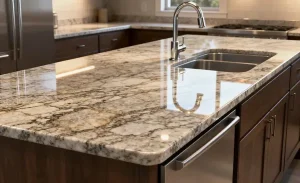
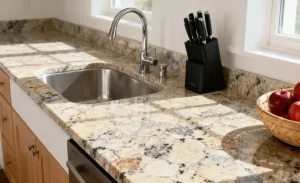
Yes. Granite remains one of the best answers when the buyer wants a durable natural surface with strong heat tolerance and long-term value. MSI’s natural stone guide says granite received the highest overall performance rating as a kitchen countertop material, and the Natural Stone Institute describes granite as strong, abrasion-resistant, and suitable for heavily used surfaces. That is why granite countertops are still a top choice for many serious cooks.
One reason cooks still trust granite is its working feel. It handles a busy kitchen well, offers real natural stone variation, and brings visual depth that engineered surfaces do not fully copy. For buyers who want a surface that feels premium but still practical, granite countertops are hard to dismiss.
As a stone manufacturer and supplier, this is also where internal product education matters. Buyers comparing stone surfaces can naturally move from an article like this to a granite product center, explore golden granite materials, review white granite slabs, or check darker options such as sesame black granite stone. That is often how a general countertop question turns into a real inquiry about material, finish, and fabrication.
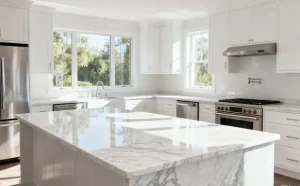
Marble is not always the most forgiving material for a hard-use family kitchen, but it has one very specific advantage that many bakers love: it stays cool. In a Food & Wine piece about pastry tools, the writer notes that pastry chefs swear by marble because it stays cool, feels smooth, and helps with temperature-sensitive doughs. That explains why pastry-focused cooks often like marble work areas.
So when the question becomes “What do pastry chefs prefer?” the answer can shift. A pastry station may favor marble for rolling dough or chocolate work, even if the rest of the kitchen countertops use another material. In that sense, marble is less about general cooking and more about a specialized prep zone.
Still, marble is softer and more reactive than many competing surfaces, so it is rarely the easiest full-kitchen answer for a heavy everyday cook. I usually treat it as a specialty surface, a baking zone, or a luxury design feature rather than the default best countertop for all-purpose kitchen use.
Soapstone is one of the more interesting answers in this category. Soapstone supplier information and geology references describe it as dense, highly heat-resistant, and nonporous or effectively resistant to moisture and many common kitchen substances. Soapstone also has a reputation for handling a hot pan well and developing a patina over time, which some owners love.
That makes soapstone countertops attractive for cooks who care more about performance than shine. Soapstone is softer than granite, so it can scratch, but many owners accept that because the marks blend into the aging character of the surface. For people who want warmth, depth, and a forgiving everyday worktop, soapstone can be a very practical choice.
In other words, soapstone is not the flashiest answer, but it can be a favorite among chefs and serious home cooks who want a natural material that handles heat well, resists many common kitchen problems, and does not demand constant fussing. That is why soapstone countertops keep a loyal following.
Quartzite is a strong option for buyers who want the look of marble with a harder natural stone profile. MSI says natural quartzite is more durable than granite and is known for dramatic veins like marble, while also positioning quartzite as a strong choice for counters and commercial properties. That makes quartzite countertops attractive when the design wants both strength and movement.
For some serious cooks, quartzite solves a design problem that quartz and granite solve differently. Quartz gives low maintenance. Granite gives heat and classic durability. Quartzite gives a high-end natural look with stronger performance than many buyers expect. That is why it increasingly shows up in luxury kitchens and high-end developments.
The main caution is that quartzite is still a stone that may need sealing and careful sourcing. It is not a one-size-fits-all answer. But if a buyer wants a standout slab with real elegance, natural quartzite deserves a place in the shortlist of best kitchen countertops.
Yes, but each one solves a different problem. Butcher block gives warmth and a true prep-table feeling, but wood can stain, scratch, and need periodic maintenance. It remains attractive for certain prep zones, especially where a softer surface is preferred, but it is rarely the lowest-maintenance whole-kitchen answer. This is why many designers use butcher block countertops selectively rather than everywhere.
Laminate has improved a lot and remains a budget-friendly countertop material. Formica says laminate is easy to clean, requires no annual resealing like natural stone or wood, and costs far less per square foot than installed granite in its buyer’s guide. That makes laminate a practical choice when cost control matters most.
Porcelain is also worth attention. Caesarstone says porcelain surfaces have proven heat-resistant capabilities and are designed for high-volume use, while MSI lists porcelain among strong options for kitchen and outdoor counters. Solid surface countertops remain useful too because Wilsonart says solid surface is easy to maintain, stain-resistant, repairable, and can create seamless integrated designs. So these materials may not be every chef’s dream, but they can absolutely be the right countertop in the right project.
The smartest kitchens do not always use one material everywhere. A baker may want a marble prep zone, a busy family may want quartz on the perimeter, and a more aggressive cooking station may work better with granite or stainless steel near high heat. That layered strategy is often stronger than trying to force one surface to do everything.
Here is a practical comparison chart:
| Kitchen zone | Strong material options | Why it works |
|---|---|---|
| Main prep area | Quartz, granite, soapstone | Good balance of cleanup and durability |
| Heavy-duty pro-style prep | Stainless steel | Sanitary, tough, easy to clean |
| Baking / pastry station | Marble | Cool surface for dough work |
| Showpiece island | Quartzite, granite, quartz | Strong visual impact |
| Budget renovation | Laminate, solid surface | Lower cost, easy maintenance |
| Outdoor or heat-heavy zone | Granite, quartzite, porcelain | Better suited to heat and exposure |
This is why I usually say the best countertops depend on the workflow. A home cook who bakes every weekend may value very different features from a line cook, a restaurant operator, or a developer planning many units at once.
For B2B buyers, the real decision is broader than a single material list. Contractors, developers, importers, and wholesalers have to think about sourcing, finish consistency, fabrication, transport, breakage risk, support, and the expectations of the final user. A durable countertop on paper can still become a problem if supply is unstable or the finish is inconsistent across the project. That is why procurement strategy matters as much as the surface itself.
This is also where a trusted stone partner matters. Buyers comparing stone surfaces may want to review about our stone factory and supply background, browse the stone news and finish guides, or move directly into stone categories that fit premium residential and commercial work. Good sourcing is not only about the countertop surface. It is about reliable slabs, careful fabrication, and technical support before and after installation.
For large-scale work, my advice is simple: decide first what the kitchen needs most. If the client wants low-maintenance, quartz often leads. If they want real stone heat performance, granite or soapstone may lead. If the project is commercial food prep, stainless steel often leads. If the look matters most, quartzite or marble may enter the conversation. That is how you move from “nice material” to the right countertop for the actual job.
The countertop chefs prefer most is usually the one that supports the way they actually cook.
What countertops do chefs prefer most?
In professional commercial kitchens, chefs most often work on stainless steel surfaces because they are easy to clean and sanitize. In home kitchens, many serious cooks prefer quartz, granite, soapstone, or quartzite, depending on whether they prioritize low maintenance, heat tolerance, or natural stone beauty.
Are quartz countertops good for serious cooking?
Yes. Quartz countertops are a strong fit for serious home cooking because they are non-porous, easy to clean, and do not need sealing. The main caution is that they should be protected from extreme direct heat.
Are granite countertops better than quartz for cooks?
Sometimes. Granite countertops usually have the edge on natural heat tolerance and traditional stone character, while quartz usually wins on low maintenance and stain resistance. The better material depends on how the kitchen is used.
Why do pastry chefs like marble?
Many pastry-focused cooks like marble because it stays cool, which helps with dough and temperature-sensitive prep. That is why marble often appears in pastry stations even when it is not the main kitchen surface.
Is soapstone a good kitchen countertop material?
Yes. Soapstone is dense, heat-resistant, and low-fuss in daily use, though it is softer than granite and can collect small marks over time. Many owners see that aging as part of its appeal.
What is the best kitchen countertop for a busy family?
For many busy family kitchens, quartz is the most practical answer because it is easy to clean, resistant to common stains, and low-maintenance. But families that cook hard with lots of heat may also prefer granite or soapstone.
In professional prep environments, stainless steel is the clearest chef-focused answer.
In residential kitchens, the best countertops depend on how the owner likes to cook.
Quartz is often the easiest all-around choice for low maintenance.
Granite remains one of the strongest natural stone answers for heat and long-term use.
Soapstone is a great choice for cooks who value heat performance and character over perfect polish.
Marble shines most in pastry or baking zones.
Quartzite is ideal when the project wants dramatic stone beauty with strong performance.
Laminate, solid surface, and porcelain can all be smart in the right budget and use case.
For contractors, developers, importers, and wholesalers, the best material is not just the prettiest one. It is the one that fits the workflow, maintenance expectations, and supply strategy.

 English
  French
  German
  Russian
  Arabic
