Avoid your inquiry is delay response, please enter your WhatsApp/Skype along with the message, so we can contact you at the very first time.
We will reply you within 24 hours. If for urgent case, please add WhatsApp/WeChat: +8615063007107,. Or call 0086-15063007107 directly.
A bathroom can look beautiful on day one and disappointing a year later if the vanity top stains, scratches, or loses its finish. That is why many buyers worry before choosing marble. The good news is simple: marble can work very well in the right bathroom when you pick the right stone, finish, and care plan.
Yes, marble is good for bathroom vanity countertops when you want a premium look, reliable performance, and custom fabrication. It is not the lowest-maintenance option, but a properly selected and sealed marble vanity top can be a practical and elegant choice for bathroom vanities in homes, hotels, and commercial projects.
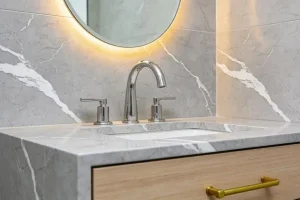
What makes marble a popular choice for bathroom vanities?
Is marble good for bathroom vanity use in real projects?
What are the pros and cons of marble for bathroom countertops?
How does marble compare with quartz for bathroom vanity tops?
Which marble bathroom vanity styles are most popular?
Does Carrara marble work well in a bathroom?
What finish should you choose: polished marble or honed finish?
How do you seal, clean, and protect a marble surface?
What design ideas make marble in the bathroom look better?
How can contractors and importers choose the right stone supplier?
As a professional stone manufacturer and supplier, I work with contractors, project developers, importers, and wholesalers who care about quality, delivery speed, technical support, and repeatable results. In real projects, the question is not only “Is marble good for bathroom use?” The better question is, “Is this the right marble for this bathroom vanity, this budget, and this level of maintenance?”
There is a reason marble has long been associated with premium interiors. It offers natural beauty that man-made materials often try to copy. The biggest visual advantage is its veining, because each slab has its own movement, depth, and character. That one-of-a-kind look gives a room more warmth and value than many standard surfaces.
A marble bathroom also feels timeless. Designers use marble in luxury homes, boutique hotels, spas, and branded commercial properties because it works in both classic and modern spaces. In a traditional bathroom, soft gray lines in white marble can create a calm, upscale feel. In a contemporary bathroom, cleaner cuts and minimal edges make the same material look fresh and modern.
From a supplier’s point of view, marble for bathroom use stays popular because buyers want visual impact. When project teams ask for an ideal choice for bathroom design, they are often balancing appearance, customization, and resale appeal. In many of those cases, marble remains a great choice.
Yes, marble good for bathroom vanity use is not just a design theory. In real projects, it performs well when the stone is properly selected, fabricated, installed, and maintained. A bathroom vanity does not usually face the same abuse as a busy kitchen island, so marble can be a very reasonable option there.
That said, honesty matters. Marble may develop small marks over time. It can etch if strong acids sit on the surface. It can also stain if spills are ignored. But in a bathroom, the risk is often manageable. Toothpaste, soap, hand wash, and water are common, yet daily use can still be controlled with the right seal and a quick wipe after use.
This is why I often tell buyers that marble for your bathroom vanity is a smart choice when appearance matters and the user understands basic care. For premium residential projects, hospitality work, and custom developments, a choice for bathroom vanity like this can add strong design value without becoming overly difficult to manage.
Let’s discover the pros and cons clearly, because this is where real buyers make decisions.
Pros
| Benefit | Why it matters |
|---|---|
| Natural beauty | Every marble slab has unique patterns in marble and natural veining |
| Premium image | Good for luxury homes, hospitality, and commercial interiors |
| Custom fabrication | Easy to shape into vanity tops, backsplashes, and sink cutouts |
| Heat resistance | Strong heat resistance for normal bathroom tools |
| Design range | Wide range of colors and patterns |
The beauty of marble countertops is obvious. The color and pattern variation, soft depth, and natural surface detail create a refined look that synthetic materials rarely match. This is one of the biggest benefits of marble bathroom design.
Cons
Marble requires sealing
It can etch the marble if acidic products sit on it
A neglected spill may cause a stain
Some finishes show water spots more easily
It is not as carefree as quartz
These are the real pros and cons of marble. I always recommend that buyers explore the pros and cons based on end use. If the client wants the easiest possible upkeep, quartz for bathroom use may be more suitable. But if the client wants true natural character, marble is often worth it.
This is one of the most common questions: marble and quartz, which is better? The answer depends on the project goal.
| Feature | Marble | Quartz |
|---|---|---|
| Appearance | Unique natural veining pattern | More uniform look |
| Maintenance | Needs seal and care | Lower maintenance |
| Natural material | Yes, natural stone | Engineered material |
| Custom luxury feel | Strong | Moderate to strong |
| Durability | Good, but depends on care | Very strong |
Quartz is often chosen for users who want easier daily care. It is more resistant to certain stains and surface reactions. But many architects and developers still prefer marble countertop applications for premium spaces because real stone brings authenticity and visual depth.
In practice, using marble is often about design value, while quartz for bathroom use is often about convenience. I do not treat this as a winner-versus-loser decision. It is more about fit. For a high-end hotel suite or a refined private residence, a marble vanity top may be the stronger visual decision. For heavily standardized developments, quartz may be the more practical choice.
The most requested style today is still a light marble bathroom vanity with soft gray movement on a clean base. That is why white marble remains one of the top requests from developers and importers. It looks bright, clean, and high value without feeling too heavy.
Popular styles include:
Minimal floating vanity tops
Full-height backsplash
Integrated sink vanity cutouts
Bookmatched wall accents behind the mirror
Combining a marble top with natural wood cabinetry
I also see strong demand for a bathroom with marble that feels balanced rather than overdone. That means marble tile on one wall, a marble top on the vanity, and maybe a matching marble floor detail instead of using the same stone everywhere. This approach helps the bathroom style stay elegant and controlled.
Yes, Carrara marble is one of the most widely used options for bathroom vanities. It is popular because it combines a classic white base, soft gray movement, and broad design flexibility. For many buyers, it feels like the safest entry point into premium marble projects.
A well-selected carrara marble slab can work beautifully in both residential and commercial bathrooms. Its softer, calmer lines fit modern and traditional interiors alike. When buyers ask me for a specific marble that works across different design programs, this is usually one of the first stones I recommend.
Still, not every slab is the same. Some have bolder veining, some have a softer white background, and some lean cooler or warmer in tone. That is why slab selection matters. The right marble is not just the right species. It is the right lot, tone, finish, and cut for the job.
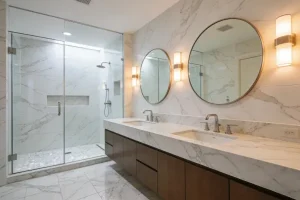
Finish changes both look and performance. Polished marble has a brighter, more reflective surface. It often makes the room feel richer and sharper. It can be an excellent choice in lower-traffic vanity applications where clients want more shine.
A honed finish or honed marble surface is softer and more matte. Many designers prefer it because it feels more natural and less formal. It can also make small marks less obvious over time. That is why a honed finish is increasingly popular in upscale residential projects.
Here is a simple guide:
Choose polished marble for a brighter luxury look
Choose honed finish for a softer, quieter visual
Match the finish to the overall interior design
Ask the fabricator how the finish affects care and sealing
Neither finish is automatically better. For me, the best finish depends on user expectations. If the client wants a high-gloss statement piece, polished works well. If the client wants a calmer and more forgiving look, honed can be the better fit.
This is where long-term success happens. To keep your marble looking good, you need a simple routine, not a complicated one. First, seal the marble properly at installation. A good seal helps reduce the risk of deep moisture penetration and surface stain issues.
Second, use mild cleaners. I strongly recommend a ph-neutral stone cleaner. Avoid anything too acidic or too abrasive, because harsh products can dull or etch the marble. In most bathrooms, a soft cloth and clean water are enough for day-to-day care.
Basic care tips:
Wipe up any spill quickly
Use a quick wipe after use around the sink
Reapply seal as recommended
Avoid strong acid cleaners
Keep products that may etch away from the stone
The good news is that marble surface care is usually easier than people think. In a vanity setting, it is often easy to keep clean when the user follows a few simple steps.
The best marble in your bathroom does not always mean more marble. It means smarter placement. I usually tell clients to create one clear focal point. That focal point may be the marble vanity top, a feature wall, or a shower detail.
Good pairings include:
Soft gray marble with matte black fixtures
Warm-toned marble with brass details
White marble with oak or walnut cabinets
Two marble tones used carefully for contrast
Larger tiles on walls for a cleaner look
A marble shower can also pair beautifully with the vanity if the tones are coordinated. In some projects, a single marble slab backsplash behind the mirror adds more impact than covering every surface. That balance often creates the dream bathroom effect buyers want.
When done well, marble in the bathroom can feel both luxurious and calm. That is why I still consider it a top choice for bathroom design in many custom and premium project settings.
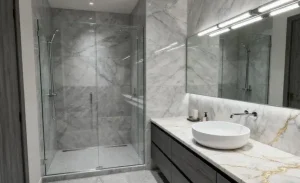
marble for luxurious bathrooms and vanities
For bulk buyers, this part matters just as much as the stone itself. A reliable supplier must offer:
Stable block and slab sourcing
Custom fabrication support
Fast and accurate drawing confirmation
Delivery scheduling you can trust
Technical help during project execution
As a professional stone manufacturer and supplier, I know that contractors and wholesalers do not only buy material. They buy confidence. They want assurance that the stone countertop size will be correct, the edge profile will match, the sink cutout will be accurate, and the shipment will arrive in workable condition.
A strong supplier also helps clients choose marble based on budget, project type, and maintenance expectations. That is important because choice for bathrooms is not just about appearance. It is about long-term performance, claim reduction, and project success. In my experience, the best supply relationship is built on clear communication, technical support, and consistent quality from the first sample to the final container.
One developer compared two marble programs for a hotel renovation. One option had lower upfront pricing but inconsistent tone and weak packaging. The other offered better slab matching, stronger crate protection, and clearer shop drawing support. The second option won because delivery risk was lower. That is exactly how serious buyers should think.
If you want the simplest answer, here it is: yes, marble for your bathroom vanity can be an excellent choice. It is visually rich, widely respected, highly customizable, and suitable for many residential and commercial projects.
But I always advise buyers to make the decision based on the user profile. For a luxury apartment, villa, hotel, or showroom restroom, marble often makes strong sense. For highly price-sensitive, no-maintenance environments, another material may be more practical. That does not make marble wrong. It just means material choice should match real use.
If your priority is a surface that feels elegant and durable, supports custom fabrication, and upgrades the entire room, then marble remains a serious contender. In the right application, it is not only beautiful. It is a smart business decision too.
Is marble a practical choice for bathroom vanity tops?
Yes. In many projects, marble is a practical choice for vanity tops because the area sees lighter use than kitchens. Proper sealing and routine care make a big difference.
Will marble stain in a bathroom?
It can stain if a product sits too long, but a good seal and fast cleanup reduce that risk. Most vanity use is easy to manage with normal care.
Does marble etch easily?
It can etch when exposed to acidic products. That is why I recommend a ph-neutral cleaner and quick cleanup of harsh substances.
Is honed marble better than polished marble for a vanity?
Not always better, but often more forgiving. Honed marble hides small marks more easily, while polished marble gives a brighter look.
Is marble better than quartz for bathroom countertops?
It depends on priorities. Marble and quartz both work well, but marble offers natural uniqueness, while quartz offers lower maintenance.
What is the best color of marble for bathroom vanities?
Many buyers prefer white marble because it feels bright, clean, and timeless. But the best option depends on your personal style, cabinet color, and project design.
Marble can be a strong choice for your bathroom vanity when beauty and customization matter.
The real pros and cons of marble come down to appearance, maintenance, and user expectations.
Carrara marble remains a very popular vanity material for both classic and modern projects.
A good seal and simple daily care help protect the stone.
Honed finish and polished options each have advantages.
Quartz may be easier to maintain, but marble offers a more natural and distinctive look.
The right marble supplier is essential for quality, delivery speed, and technical support.
For premium residential and commercial work, marble is still a great choice.

 English
  French
  German
  Russian
  Arabic
