Avoid your inquiry is delay response, please enter your WhatsApp/Skype along with the message, so we can contact you at the very first time.
We will reply you within 24 hours. If for urgent case, please add WhatsApp/WeChat: +8615063007107,. Or call 0086-15063007107 directly.
Choosing the wrong black stone can make a project look dull, uneven, or too fragile for long-term use. Buyers often confuse black gemstones with construction-grade black stone. The right choice starts with knowing the most common option and its real application value.
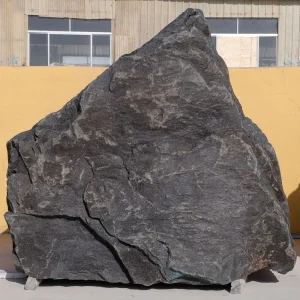
The most common black stone in the gemstone world is usually black onyx, because it has a smooth look, uniform black color, good availability, and wide use in jewelry and decorative pieces. In building and landscaping projects, black granite, basalt, and other durable black stone materials are often more practical for bulk supply and outdoor use.
What is the most common black stone?
Why is black onyx one of the most popular black gemstones?
What are the different types of black gemstones?
Is black diamond a common or rare black gemstone?
How do black opal, black tourmaline, and black spinel compare?
What black stone is best for jewelry and decorative use?
What black stone is best for construction and landscaping?
How should B2B buyers choose black stone for large projects?
What should importers and wholesalers check before bulk procurement?
How can custom fabrication improve black stone project results?
The most common black stone depends on how you use the word “stone.” In black gemstones, black onyx is often the most common black gemstone because it is widely available, has a clean solid black look, and works well in rings, beads, pendants, and decorative items. It is also easier to source than many rare black stones.
In construction and landscaping, the answer is different. Contractors and project developers usually focus on black granite, basalt, slate, and other strong stone materials. These stones are not just beautiful. They are practical. They can be cut into slabs, tiles, steps, paving, kerbs, countertops, wall panels, and outdoor hardscape products.
For large-scale projects, the most important question is not only “Which black gem looks best?” It is also “Which black stone can be supplied in stable quality, suitable size, and consistent finish?” As a professional stone manufacturer and supplier, we often help contractors, importers, and wholesalers choose stone based on use, durability, processing needs, and delivery schedule.
Black onyx is a popular choice because it offers a smooth surface, a refined black tone, and a classic style. Many buyers like black onyx gemstones because they look elegant without being too flashy. A polished black onyx piece can look formal, modern, and timeless.
From a visual point of view, black onyx gives a uniform black color that many people expect when they search for a black gem. This makes it useful for black gemstone jewelry, small decorative objects, and fashion accessories. In simple terms, onyx is the most common answer when people ask about a common black gemstone.
However, black onyx is not the only option. Buyers may also compare black agate, black spinel, black tourmaline, black sapphire, and black obsidian. Each material has a different feel, hardness, shine, and market value.
| Black Stone | Common Use | Appearance | Buyer Note |
|---|---|---|---|
| Black onyx | Jewelry, beads, decoration | Smooth, polished, deep black | Common and easy to match |
| Black agate | Jewelry, carvings | Dark bands or solid black look | Often affordable |
| Black obsidian | Decoration, crafts | Glossy volcanic glass | Sharp edge potential when broken |
| Black spinel | Fine jewelry | Bright sparkle | More premium than onyx |
| Black tourmaline | Crystal market, jewelry | Natural black crystal | Often textured or raw-looking |
There are many different types of black gemstones. Some are naturally black. Some appear black because they are very dark blue, brown, green, or gray. Some are treated to create a more standard black look. That is why buyers should check material identity, finish, and use case before ordering.
Common black gemstones include black diamond, black onyx, black opal, black tourmaline, black pearl, black spinel, black sapphire, black garnet, black chalcedony, black jade, black diopside, black quartz, black moonstone, and black agate. These can be grouped as precious and semi-precious gemstones, organic materials, and decorative stones.
Here is a simple comparison:
| Type of Black Stone | Category | Typical Feature |
|---|---|---|
| Black diamond | Precious gem | Hard, bold, luxury look |
| Black onyx | Chalcedony family | Smooth and common black |
| Black opal | Opal variety | Dark body with color play |
| Black pearl | Organic black material | Soft glow, luxury feel |
| Black obsidian | Volcanic glass | Glossy black appearance |
| Black tourmaline | Mineral gemstones | Raw crystal look |
| Black sapphire | Corundum family | Hard and dark |
| Black spinel | Gemstone | Bright, clean sparkle |
| Black quartz | Quartz family | Dark crystal appearance |
For B2B buyers, the right choice depends on whether the product is for jewelry, decorative retail, architecture, landscaping, or commercial property development.
Black diamond is famous, but it is not usually the most common black stone. It is more premium and often linked with luxury jewelry. Black diamond rings and black diamond jewelry are chosen for bold fashion style, especially when buyers want a strong contrast with white metal, gold, or other stones.
Natural black diamond can be more expensive than many common black gemstones. Treated black diamond is more available in the jewelry market. The important point is simple: black diamond is popular, but it is not the basic everyday black stone for most buyers.
For a stone supplier serving contractors and wholesalers, black diamond is usually not the main material for large-volume building projects. It belongs more to jewelry and luxury accessory markets. For architectural black stone needs, buyers often choose black granite, basalt, slate, or engineered black stone materials instead.
Black opal is one of the most attractive black gemstones because it can show bright colors over a dark base. A black crystal opal may display flashes of blue, green, red, or orange. It does not always look pure black, but its dark background creates strong visual depth.
Black tourmaline is different. It is often used as a black crystal and may have a textured, raw, or column-like structure. Many buyers like it because it feels natural, bold, and earthy. It can work in crystal products, handmade jewelry, and decorative items.
Black spinel is cleaner and more sparkling. A black spinel ring can look bright and polished, while still keeping a dark and elegant style. It is a good alternative for buyers who want a black gemstone with better brilliance than black onyx.
| Gem | Best Visual Feature | Typical Buyer Interest |
|---|---|---|
| Black opal | Dark base with color play | Premium and unique jewelry |
| Black tourmaline | Raw black crystal look | Natural crystal market |
| Black spinel | Sparkle and clean polish | Fine jewelry and rings |
| Black onyx | Smooth deep black color | Common jewelry and decoration |
For jewelry, the best black stone depends on the target market. If buyers want a simple and classic product, black onyx is practical. If they want luxury, black diamond may be better. If they want a unique color play, black opal is attractive. If they want shine at a more accessible level, black spinel is a strong option.
For decorative pieces, black onyx and obsidian are often considered. Natural volcanic glass formed from cooled lava is known as obsidian. In simple terms, it is volcanic glass formed through natural processes. Black obsidian often has a glossy black surface and a strong visual effect.
Some buyers also choose black chalcedony, black jade, black agate, or black quartz for carvings, beads, and craft pieces. Each black mineral has its own texture, hardness, and processing behavior. If a buyer wants a truly black look, black onyx or treated black agate may be easier to match than stones with mixed patterns.
For construction, landscaping, urban infrastructure, and commercial property development, black gemstones are usually not the main material. Buyers need stronger and larger stone products. Black granite, basalt, and dark slate are more practical for bulk orders.
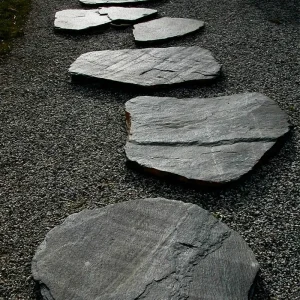
Black granite is widely used for paving, wall cladding, steps, countertops, kerbstones, and exterior projects. It can offer a strong black color, good hardness, and a premium look. Basalt is often linked with volcanic origin and works well in outdoor paving, road projects, and landscape design.
Common project uses include:
| Project Need | Recommended Black Stone Type | Common Product Form |
|---|---|---|
| Commercial paving | Black granite or basalt | Pavers, slabs, kerbs |
| Urban infrastructure | Basalt or granite | Road stone, curbstone |
| Hotel and office interiors | Polished black granite | Tiles, wall panels |
| Garden landscape | Flamed black stone | Steps, edging, paving |
| Large public projects | Durable black stone | Custom-cut stone products |
For contractors and project developers, we recommend reviewing surface finish, thickness, edge processing, packing method, and loading plan before confirming bulk orders. For large projects, stable supply matters as much as the beauty of black stone.
China Black Stepping Stone
B2B buyers should choose black stone based on application first. A hotel lobby needs a polished, elegant surface. A public square needs anti-slip paving. A road kerb needs impact resistance. A garden path needs natural texture. The same black stone cannot meet every project in the same way.
A simple selection process looks like this:
As a professional stone manufacturer and supplier, we support contractors, project developers, importers, and wholesalers with bulk procurement and custom fabrication. Our role is not only to sell stone. We help buyers match the material to the project and reduce risks before mass production.
Importers and wholesalers need more than attractive product photos. They need stable quality, correct size, safe packing, fast production, and reliable communication. Black stone can show scratches, dust, color variation, and surface differences more clearly than lighter materials, so quality control is important.
Before placing an order, buyers should check:
| Checkpoint | Why It Matters |
|---|---|
| Material name | Prevents confusion between different black varieties |
| Surface finish | Affects slip resistance and appearance |
| Thickness tolerance | Important for installation |
| Color consistency | Helps project look uniform |
| Edge processing | Affects safety and final detail |
| Packing method | Reduces breakage during shipping |
| Production capacity | Supports fast delivery |
| Sample approval | Reduces bulk order risk |
For black stone projects, even a small mismatch can affect the full visual result. A deep black slab may not match a lighter black or brownish-black batch. A polished finish may look premium indoors but become slippery outdoors. These details matter.
Custom fabrication helps turn raw stone into project-ready products. For contractors, this saves time on site. For importers and wholesalers, it creates stronger value for clients. Cut-to-size stone, special edges, drilled holes, shaped pieces, steps, coping stones, and wall panels can all be made before shipping.
For black stone, fabrication quality is easy to see. A clean edge, stable thickness, smooth polish, and correct surface treatment can make the project look more professional. Poor cutting or weak packing can ruin even the most stunning black material.
Custom options may include:
For large-scale construction, custom fabrication improves speed, reduces jobsite waste, and helps each black stone piece fit the design plan.
Black pearl is not a mineral stone. It is an organic black material created by mollusks. Tahitian black pearls are well-known, but they may show green, gray, blue, or purple tones instead of simple black. Their beauty comes from soft glow, not hard stone texture.
Black sapphire is a hard gemstone, but truly black sapphires may still show subtle blue or gray under light. Black star sapphire can show a star-like optical effect, making it more distinctive than a plain black stone.
Black moonstone may show a dark body with a soft sheen. It is not always jet black, but its glow gives it a mysterious look. These materials are often chosen when buyers want gems in shades of black, not only a flat dark surface.
Many buyers have questions about black gemstones because the names can be confusing. One seller may describe a stone as black quartz, while another may call a similar-looking product black crystal. Some stones are dyed, treated, coated, or stabilized.
Useful questions include:
A professional supplier should answer clearly. If the stone is black in color but not naturally black, the buyer should know. If the product is for construction, the buyer should ask about strength, finish, size tolerance, and packing. If the product is for jewelry, the buyer should ask about authenticity, treatment, hardness, and shine.
What is the most common black gemstone?
Black onyx is commonly considered one of the most common black gemstones. It is widely used because it has a smooth surface, clean black appearance, and good availability for jewelry and decorative products.
Is black diamond the most common black stone?
No. Black diamond is famous and valuable, but it is not the most common black stone. It is more often used in luxury jewelry, while black onyx is more common for everyday black gemstone use.
What black stone is best for construction?
For construction, black granite and basalt are usually more practical than black gemstones. They can be produced in slabs, tiles, paving stones, steps, kerbs, and wall panels for large projects.
What is the difference between black onyx and black obsidian?
Black onyx is a chalcedony-based stone with a smooth, often uniform black look. Black obsidian is natural volcanic glass formed from lava. Obsidian often has a glossy black appearance.
Are all black gemstones truly black?
No. Many black gemstones may appear black but show dark blue, gray, brown, green, or purple tones under light. Some are naturally black, while others may be treated or dyed.
Can black stone be customized for bulk projects?
Yes. Black stone can be cut, polished, flamed, honed, sandblasted, shaped, drilled, and packed according to project requirements. Custom fabrication is important for contractors, importers, wholesalers, and commercial property developers.
Black onyx is one of the most common black gemstones for jewelry and decoration.
Black diamond is famous but not the most common black stone.
Black opal, black spinel, black sapphire, and black pearl are more specialized options.
For construction and landscaping, black granite and basalt are usually more practical than black gemstones.
A black stone project should be selected based on use, finish, thickness, strength, and supply stability.
Contractors and developers should choose anti-slip finishes for outdoor areas.
Importers and wholesalers should confirm samples, size tolerance, color consistency, packing, and delivery time.
Custom fabrication helps reduce installation problems and improves project results.
A professional stone manufacturer and supplier can support bulk procurement, custom processing, and long-term supply for large construction, landscaping, urban infrastructure, and commercial property projects.

 English
  French
  German
  Russian
  Arabic
