Avoid your inquiry is delay response, please enter your WhatsApp/Skype along with the message, so we can contact you at the very first time.
We will reply you within 24 hours. If for urgent case, please add WhatsApp/WeChat: +8615063007107,. Or call 0086-15063007107 directly.
A bathroom can look beautiful on day one and disappoint later if the wrong stone is used. Some surfaces stain, some get slippery, and some need far more care than expected. The smart fix is to choose the right natural stone for the right bathroom area from the start.
The best natural stone for a bathroom depends on where you use it. Granite and quartzite are strong choices for wet and busy areas, while marble, travertine, and limestone offer a softer, high-end look when properly sealed and maintained. The right stone balances beauty, durability, porosity, finish, and maintenance needs.
Why use natural stone in a bathroom?
What should you check before choosing stone for a bathroom?
What are the 7 best natural stone choices for a bathroom?
Is marble still one of the best natural stone options?
Granite or marble: which is better for a bathroom vanity and floor?
Is travertine a good choice for bathrooms?
What about quartzite, limestone, and basalt?
Where should you use slab, tile, and wall cladding in a bathroom?
How do you seal, clean, and maintain natural stone in wet areas?
How can project buyers choose the right natural stone supplier?
A well-chosen natural stone gives a bathroom a timeless look that many man-made finishes try to copy but rarely match. The texture, veining, tone variation, and distinctive natural character make each project feel more refined. For luxury hotels, villas, apartments, clubs, and commercial washrooms, stone helps create a stronger visual identity.
There is also a practical reason to use natural stone. Many types work well indoors and outdoors, which means the same material family can support a full project concept across lobby floors, spa rooms, shower walls, and external feature areas. That matters for contractors and project developers who want a coherent material story.
From my experience as a professional stone manufacturer and supplier, buyers usually want three things at once: a high-end look, dependable bulk supply, and technical guidance. That is why the right natural stone is not only about color. It is about performance, fabrication, finishing, logistics, and how the stone will look and feel after years of use.
Before you choose the best material, start with location. A bathroom floor, shower wall, bathroom vanity, and bathroom countertop do not face the same conditions. Some areas deal with direct water, some with soap, and some with cosmetics or cleaners. The stone you choose should match the actual exposure.
The next thing to check is porosity. A more porous stone absorbs moisture and stains more easily, so it may need to seal more often. Stones with lower porosity are generally easier to care for in busy bathrooms. This does not mean porous stones are a bad idea. It simply means they need a more careful maintenance plan.
You should also think about finish and safety. A polished slab may look elegant on a wall or vanity top, but a honed or textured surface can be better underfoot. In many projects, anti-slip finish matters just as much as color or veining. Choosing the right finish is part of choosing the right stone.
Main selection factors
| Factor | Why it matters |
|---|---|
| Porosity | Affects water absorption and staining |
| Finish | Changes slip resistance and appearance |
| Durability | Important for heavy-use bathrooms |
| Maintenance | Some stones need a bit more care |
| Budget | Slab and rare stones cost more |
| Fabrication | Edge detail, cut-to-size, and wall panel work matter |
There are many options available, but these are the 7 best and most practical categories for a bathroom project.
These are among the most popular types of natural stone used in bathrooms because they balance style and function in different ways. Some are best for a vanity countertop, some for wall cladding, and some for floor tiles. No single stone is perfect for every project. The goal is to match the material to the application.
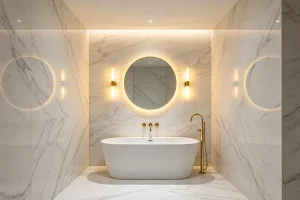
Marble remains one of the most requested stones for premium bathrooms because of its veining, bright tones, and classic appearance. White marble in particular creates a clean, elegant, and high-end look that works in hotels, villas, and luxury residences. That is why marble is one of the first materials many designers consider.
A marble tile or marble slab can work beautifully on walls, vanity areas, and selected floors. It gives a soft, refined style that feels timeless rather than trendy. For buyers focused on brand image or luxury property development, marble in a bathroom often creates stronger visual value than a plain artificial product.
Still, marble needs respect. It can etch when exposed to acidic products, and its relative softness means it may show wear sooner than harder stones. It is not the wrong choice. It simply needs the right finish, the right application, and a clear maintenance plan.
Granite is one of the most durable options for a bathroom project. Many people ask, granite or marble? If your priority is lower upkeep, granite often wins. It is dense, hard-wearing, and usually less reactive than marble in daily use.
This makes granite a smart choice for a bathroom vanity, a vanity countertop, and even a bathroom floor in busy homes or commercial properties. It handles use well and is often easier to clean than softer stones. For many project buyers, granite is one of the most reliable building materials for wet interior spaces.
If you want practical beauty, granite is a strong answer. It may not always have the same dramatic softness as marble, but it offers strong durability and broad design range. In simple words, granite is less demanding for many daily bathroom applications.
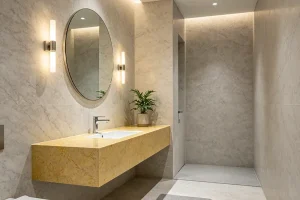
Travertine is loved for its warm color, natural pores, and classic spa-like mood. It brings a softer, earthy feeling to the bathroom and works well in projects aiming for a relaxed or Mediterranean style. Many buyers choose marble and travertine together to balance cool elegance with warmth.
Travertine works especially well for wall surfaces, feature areas, and floors when the finish is chosen carefully. A honed or filled finish can create a calm, elegant look. Because it is a more open and porous material, it should be properly sealed and maintained in wet spaces.
For designers who want a material with a softer natural look rather than a sharp polished shine, travertine is often perfect for a bathroom. It does need a bit more maintenance, but the visual payoff is strong.
Quartzite is becoming more popular because it offers a premium look with excellent hardness. In many cases, it can deliver some of the elegance people want from marble but with stronger wear performance. That makes it a great option for a countertop, bathroom countertops, and even wall features.
For project buyers, quartzite is valuable because it is both attractive and practical. It works well in upscale residential and commercial bathrooms where the stone surface must look refined but also stand up to real use. It is also a strong choice when the project needs a luxury appearance with better toughness.
If you need a stone that feels premium and performs well, quartzite is one of the most balanced options in the current market.
Limestone is also a favorite in many calm, warm bathroom designs. It creates a quiet, natural atmosphere and pairs well with wood, brass, and matte finishes. In terms of mood, limestone is one of the most elegant materials for understated interiors.
Still, limestone is also softer and more sensitive than granite or quartzite. That means it works best in carefully designed spaces with good sealing and proper cleaning. A soft, neutral limestone wall or vanity can look wonderful, but it is not usually the first choice for the hardest-wearing wet zones.
For projects that value subtle texture and a calm luxury feeling, limestone can be an excellent material when applied with care.
Basalt is a smart option when the design calls for a darker, modern, architectural finish. It often has a uniform look and works well in luxury contemporary bathrooms. If you want a clean, minimal feel, basalt deserves attention.
It is also a strong material for wall cladding and feature applications where a darker stone surface can create contrast. In some cases, a sandblasted or textured finish can improve slip resistance and make basalt suitable for selected floor areas too.
For commercial property developers looking for a bold yet professional look, basalt is one of the most underrated bathroom stone options.
The final group includes dense dark stones and regionally available materials that may not be as globally famous as marble or granite but still perform very well. These can be excellent for anti-slip floor tiles, shower zones, and outdoor-to-indoor transitions.
The benefit here is flexibility. A skilled supplier can often recommend local or export-ready alternatives that fit the same design goal but better match budget, lead time, or usage conditions. For large projects, that can make a major difference.
This is why working with a capable manufacturer matters. The best answer is not always the most famous stone. Sometimes it is the stone that best balances performance, fabrication, delivery, and cost.
Yes, absolutely. Marble countertops, wall panels, vanity slabs, and feature walls still define the premium bathroom market. The key is to use marble in the right places and with the right expectations. It gives a timeless look, a premium image, and a highly desirable look and feel.
At the same time, buyers should be realistic. Marble needs sealing, careful cleaner selection, and protection from harsh acidic products. If your client wants total convenience, another stone may fit better. If your client wants luxury and accepts routine care, marble remains one of the best natural stone choices available.
That is why many projects still use marble heavily—just with smarter detailing and better maintenance planning.
This is one of the most common questions. Granite or marble? For a bathroom vanity and heavy-use floor, granite is usually the safer and easier option. It is dense, one of the most durable natural materials, and easier to care for in daily use.
Marble, however, brings unmatched softness and prestige. For a boutique hotel, a luxury apartment, or a showpiece master bath, marble may be worth the added care. The answer depends on the client’s priorities: lower maintenance or higher visual impact.
A simple rule helps:
A slab is often best for a vanity top, feature wall, or shower wall because it reduces grout lines and creates a cleaner, more premium look. A slab can also make the space feel larger and more seamless.
Tile works well for floors, shower bases, and curved or modular layouts. Smaller stone tiles can also improve grip and allow better drainage in shower areas. When using grout, it is important to choose the right color and maintenance plan because grout lines affect both look and upkeep.
Wall cladding and wall panels are ideal for projects that want a dramatic stone look with faster visual impact. Large-format stone on walls is especially popular in high-end residential and hospitality projects.
Most natural stone tile used in bathrooms should be sealed based on the stone type and finish. To seal the material is to help reduce water and stain absorption. This is especially important in wet areas, shower zones, vanity tops, and porous materials like travertine and limestone.
Cleaning matters just as much. Use a stone-safe cleaner and avoid acidic products that can damage the surface. This is especially true for marble and limestone. Good maintenance is not complicated, but it must be consistent.
Basic care guide
With the right care, even stones that need more attention can stay beautiful for many years.
For contractors, importers, wholesalers, and property developers, stone selection is not only about color. It is about supply stability, cut-to-size accuracy, packaging, lead time, and technical support. That is why choosing the right supplier matters as much as choosing the right material.
A strong supplier should offer a wide range of materials, slab and tile production, custom fabrication, and practical advice on finish and installation. For large-scale work, buyers also need dependable delivery speed and consistent color control across batches.
As a professional stone manufacturer and supplier, I see the same question again and again: “Can you support my project, not just sell me stone?” The right answer is yes. A good partner helps you select the best material, fabricate it correctly, and deliver it on time for a smooth remodel or new-build schedule.
| Stone | Best area | Main strength | Main caution |
|---|---|---|---|
| Marble | Vanity, wall, feature floor | Luxury, veining, timeless look | Can etch, softer |
| Granite | Vanity, floor | Strong, low maintenance | Heavier visual feel |
| Travertine | Floor, wall | Warm natural character | More porous |
| Quartzite | Countertop, wall, floor | Strong and elegant | Higher cost |
| Limestone | Wall, low-stress floor | Soft, calm appearance | More sensitive |
| Basalt | Floor, wall | Modern, durable look | Dark tone may show residue |
What is the best stone for a bathroom?
The best stone depends on the area. Granite and quartzite are strong for busy surfaces, while marble is ideal for a high-end look when properly maintained.
Is marble good for a bathroom floor?
Yes, but it needs the right finish and sealing. A honed finish can be better than a high-polish finish for floor use in some bathrooms.
Is granite better than marble in a bathroom?
For easier maintenance, yes. For luxury appearance, many buyers still prefer marble. The better choice depends on project priorities.
Is travertine too porous for a bathroom?
Not if it is properly sealed and maintained. Travertine can work very well in bathrooms, especially on walls and selected floors.
What stone is easiest to clean in a bathroom?
Dense stones like granite and many quartzite surfaces are often easier to clean and maintain than softer, more porous stones.
Can natural stone be used in shower floors and walls?
Yes. It is widely used in bathrooms, including shower walls and floors, as long as the finish, sealing, and slip resistance are appropriate.
The best natural stone for a bathroom depends on where and how it will be used.
Marble offers a timeless and high-end look.
Granite is one of the most durable and practical choices.
Travertine, limestone, and basalt each bring distinct design value.
Finish and porosity matter as much as stone type.
A slab works well for vanity and wall areas, while tile fits floors and shower zones.
Proper sealing and the right cleaner are essential in wet spaces.
Anti-slip finish is important for bathroom floor safety.
Project buyers should choose stone based on performance, appearance, and supply reliability.
A strong supplier helps with material choice, custom fabrication, and long-term project success.

 English
  French
  German
  Russian
  Arabic
