You stand in front of rows of bags and pallets. Gravel. Pebbles. Rock. So many colors and names.you just want to know which stone works best – and which one people trust most – without wasting money or redoing the yard later.
If you guess wrong, paths can sink, mud can come back, and the yard may still look flat and dull. That’s the pain: extra work, extra cost, and still not the look you had in mind.
The solution is to step back and look at facts: what homeowners buy most, what contractors use on real jobs, and how different stones behave over time. In this guide we’ll do exactly that, in plain, practical language.
1. Quick Answer: Which Stone Is Most Popular?
Across home centers, landscape yards, and how-to guides, one material keeps showing up at the top:
Pea gravel is the most commonly used all-round landscape stone in residential yards.
Many professional guides describe pea gravel as “one of the most common stone products used in landscaping.”
Recent overviews of gravel types also put pea gravel near the top of their “best gravel for landscaping” lists, alongside decomposed granite, crushed stone, and river rock.
Why? Because pea gravel is:
- widely available in almost every region
- easy to install with basic tools
- comfortable to walk on
- good for drainage
- budget-friendly compared to concrete or paversThat doesn’t mean pea gravel is the best material for every job. It just means that, when you look at many different projects – paths, sitting areas, play spaces, and light ground cover – pea gravel is the stone that appears most often.
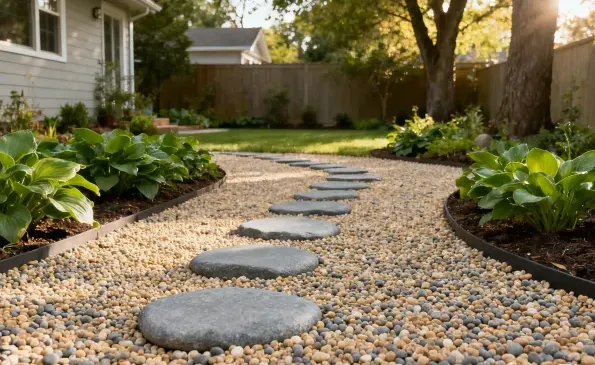
Pea gravel
2. The Other Big Players: River Rock, DG, and Crushed Stone
While pea gravel is the general-purpose favorite, three other stones are “most popular” in their own roles:
- River rock – a top pick for dry creek beds, downspouts, and decorative borders
- Decomposed granite (DG) – widely used for paths, patios, and low-water landscapes
- Crushed stone (#57 and similar) – the workhorse base under pavers, driveways, and parking areas
So a simple way to think about popularity is:
- Pea gravel – most popular all-round landscape stone
- River rock – most popular for water-inspired features and bold edging
- Decomposed granite – most popular for firm, natural-looking paths
- Crushed stone – most popular hidden layer under hard surfaces
The rest of this article explains how these materials behave, where they come from, and how to choose between them.
3. What Makes a Stone “Good” for Landscaping?
Before we compare stones, it helps to know what makes any landscape stone successful. In practice, designers and contractors look at a few simple traits:
3.1 Size
- Fine to small (sand, screenings, small gravel)
- Fills gaps, compacts well
- Good for base layers and firm paths
- Medium (pea gravel, ¾” gravel, small river rock)
- Easy to walk on
- Good for paths, beds, and general ground cover
- Large (big river rock, cobbles, boulders)
- Used as accents, erosion control, and borders
3.2 Shape
- Rounded stones (like pea gravel or river rock)
- Feel better underfoot
- Roll more easily, so they need edging
- Angular stones (like crushed stone and many DG products)
- Lock together when compacted
- Better for driveways and base layers
3.3 Surface and color
- Light colors reflect heat and brighten shady areas.
- Dark colors absorb heat and give a stronger, more modern look.
- Rough surfaces give grip underfoot; very smooth surfaces may be slippery when wet.
When you understand size, shape, and surface, the different names on the bag start to make sense.
4. The Big Four: How Each Stone Actually Performs
4.1 Pea Gravel: The All-Round Favorite
Pea gravel is a small, rounded stone, usually ¼–⅜ inch across. It often comes from natural stone such as limestone, granite, or basalt and ranges from gray and brown to beige and rust.
What it does well
- Makes soft but stable paths and sitting areas
- Works as a mulch alternative in garden beds
- Handles drainage better than compacted soil or mulch
- Stays fairly cool in summer if you pick a lighter color
Many landscaping guides mention that pea gravel is used for garden beds, around pavers, and as a base for driveways and paths.
Where it struggles
- It can migrate without good edging.
- It’s not ideal for steep slopes.
- Snow shovels and leaf blowers can move it around.
Because pea gravel is cheap, easy to find, and fits many roles, it naturally becomes the first choice for many DIY and small professional projects. That is a big reason it shows up as “most common” in many sources.
4.2 River Rock: The Decorative Workhorse
River rock is larger, rounded stone that looks like it has come straight from a stream bed. It is very popular in decorative designs. Many guides list it among the top types of decorative landscape rock, often just after pea gravel, decomposed granite, and crushed rock.
Strengths
- Excellent for dry creek beds and downspout outlets
- Resists movement in heavy rain better than fine gravel
- Adds a natural, “river-like” appearance to yards
- Works well in combination with plants, boulders, and wood
Limitations
- Not comfortable for bare feet or play areas
- Can be harder to rake or clean
- More expensive per ton than many gravels in some regions
If you want to see how river rock and similar materials look in real retaining walls and garden edges, you can look at examples of black landscape stone used as wall cladding and edging in projects like China black wall stone on this landscape stone case study.
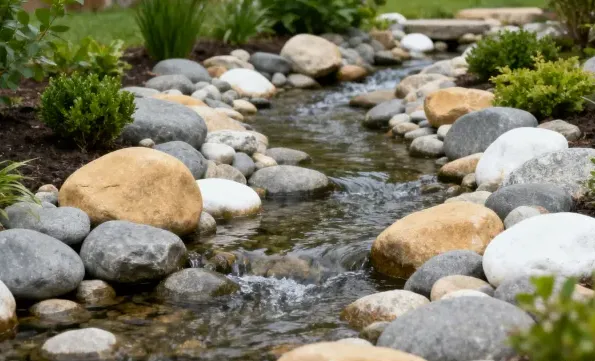
River rock
4.3 Decomposed Granite (DG): Firm Paths and Natural Patios
Decomposed granite is granite that has broken down into small pieces and fines. It is often used where you want something that feels like a natural dirt path but holds together better.
Landscape rock guides describe decomposed granite as a popular option for paths, driveways, and ground cover because it is budget-friendly, provides good drainage, and fits well into low-water garden designs. Strengths
- Packs into a smooth, firm surface when installed correctly
- Good for garden paths, casual patios, and courtyards
- Works very well in dry or semi-arid climates
- Can blend nicely with natural stone walls and stepping stones
If you look at actual stone products like Linshu blue stone used as flamed or litchi-surface pavers, you can see how a DG path can lead into denser stone areas such as garden paving stone and stepping stones to create a varied but coherent yard.
Limitations
- Needs proper installation and sometimes a stabilizer to avoid dust
- Not the best choice for very steep slopes
- In wet climates, heavy rain can wash fines away if there is no edging
4.4 Crushed Stone: The Structural Base
Crushed stone is angular rock made by mechanically breaking larger stone into smaller pieces. Different sizes have different codes; #57 stone is a very common one.
Drainage and driveway guides often point out that #57 stone and similar crushed rock mixes are among the most common choices for base and drainage layers, because the angular pieces interlock while still letting water pass through.
Strengths
- Essential under pavers, concrete, and many patios
- Good for driveways and parking pads
- Works very well in French drains and other drainage systems
Limitations
- Not comfortable for bare feet or play areas
- Not usually used as a decorative surface on its own
You usually don’t see crushed stone, but many successful landscapes would fail without it. It is the hidden layer that keeps visible materials in place.
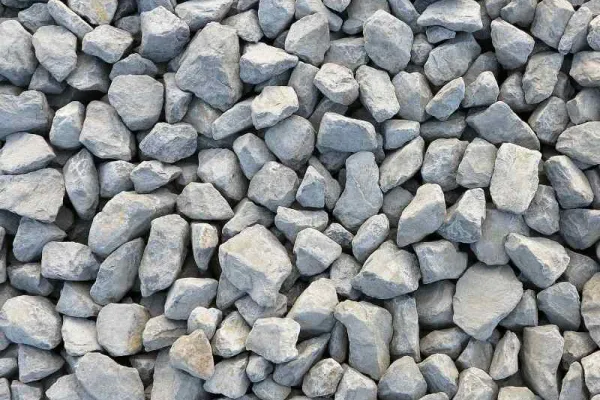
#57 stone
5. Where Landscape Stone Comes From: A Real-World Example
So far we have talked about how stones behave in the yard. But how do they get from rock to finished product?
A good example is a modern stone manufacturer in northern China, such as Qingdao Tideway Stone Co., Ltd. This type of company shows what happens behind the scenes when natural stone is turned into building facades, indoor floors, and landscape products.
Key points from this kind of operation:
- Scale and capacity
- A plant may cover around 40,000 m²
- Daily output can exceed 2,000 m² of finished stone
- Equipment
- Large gang saws for cutting blocks into slabs
- Infrared bridge saws and CNC profiling machines for precise shapes
- Wire saws and lathes for special pieces
- Products
- Granite slabs and tiles for floors and facades
- Luxury marble for interiors
- Landscape stone for walls, steps, and garden paving
If you look through their project-style pages, you can see many of these stones in use:
Inside such a plant, stone moves through a clear sequence: block cutting, grinding, polishing (or texturing), inspection, and packing. This industrial side is why you can buy consistent slabs, tiles, and landscaping blocks that match in color and thickness, even though they come from natural rock.
6. How to Choose the Right Stone for Your Project
“Most popular” is a helpful clue, but it should not be the only factor. A better way to decide is to match the stone to the job.
6.1 Start with the function
Ask one question first: What must this stone do?
- Support a car?
- Handle constant foot traffic?
- Let water drain away?
- Just look good and cover bare soil?
Then choose:
- Paths and casual seating areas
- Pea gravel or decomposed granite
- Use edging to keep material in place
- Driveways and heavy traffic
- Crushed stone (base)
- Possibly DG or gravel as surface if you want a natural look
- Drainage and erosion control
- Pea gravel or crushed stone in drains
- River rock or larger stone on slopes
- Decorative borders and dry creek beds
- River rock, marble chips, or other decorative stone
6.2 Think about comfort and use
- If children play barefoot, choose rounded materials like pea gravel or smooth pebbles.
- For wheelchairs or narrow heels, use compacted DG or pavers rather than loose gravel.
- For areas that must stay tidy and easy to sweep, a firm surface is better than loose stone.
6.3 Consider climate
- In hot, sunny climates, light stone stays cooler.
- In freeze–thaw regions, non-porous stone and proper base layers help prevent heaving.
- In very wet climates, drainage and slope matter more than exact stone type.
6.4 Don’t ignore maintenance
Every material needs some care. A realistic plan might include:
- Raking pea gravel back into place once or twice a season
- Checking DG paths after heavy storms and topping up if needed
- Pulling or blocking weeds at the edges of stone beds
In return, stone can save water, remove mowing, and keep the yard more stable.
7. Simple Examples of Good Stone Choices
Here are a few typical scenarios and what many designers or contractors would suggest.
7.1 Muddy side yard with light foot traffic
- Main problem: mud and poor drainage
- Likely choice: pea gravel over a simple crushed stone base, with fabric underlay
- Reason: good drainage, comfortable walking, easy install
7.2 Front path you want to look “finished” but still natural
- Main problem: want structure plus a soft feel
- Likely choice: decomposed granite path leading to a landing or step built from slabs or stepping stones, similar to the way garden paving stone and slab paths are used in many blue and black stone projects.
- Reason: DG gives a smooth, earthy walk surface; stone slabs give firm footing at doors.
7.3 Downspout area where water pools near the house
- Main problem: water sitting near foundation
- Likely choice: crushed stone or pea gravel in a drain trench, then river rock at the surface for appearance
- Reason: angular stone for hidden drainage, rounded river rock for visible area
7.4 Low-water front yard with shrubs and a few trees
- Main problem: reduce irrigation, still look neat
- Likely choice: mix of decomposed granite, larger decorative stones, and perhaps some white or yellow landscape stone used as accent near entry paths
- Reason: very low maintenance, strong visual contrast, good weed control with fabric
8. FAQ: Short Answers to Common Questions
Q1. Is pea gravel always the best choice?
No. Pea gravel is the most popular general-purpose landscape stone because it is cheap, flexible, and widely available. For driveways, steep slopes, or wheelchair-friendly paths, another material such as decomposed granite or compacted crushed stone may be better.
Q2. Is river rock better than pea gravel?
It depends on the job:
- For dry creek beds, heavier river rock usually stays in place better.
- For everyday paths and play areas, pea gravel is more comfortable to walk on.
They are both widely used; they just shine in different spots.
Q3. Do I always need a crushed stone base?
Not always, but a base layer is a good idea where:
- soil is soft or clay-heavy
- the area gets repeated foot or vehicle traffic
- you want to avoid settling and ruts
Even under decorative stone, a few centimeters of compacted crushed rock can make the surface last longer.
Q4. How do I avoid my gravel washing away?
- Use edging to contain the stone.
- Choose larger or more angular stone on slopes.
- Make sure water has a clear path to move away, for example through a drain trench or dry creek bed.
Q5. Can decorative stone really replace mulch?
In many cases, yes. Pea gravel, small river rock, and other small stones can act as a long-lasting alternative to bark mulch. They do not break down, and they help reduce weeds when combined with fabric. They will not add organic matter to the soil, so some gardeners still mix in compost or organic mulch near plant roots.
9. Putting It All Together
When you ask, “What is the most popular landscape stone?”, the honest, data-driven answer is:
- Pea gravel is the most common choice across many home landscapes, thanks to its low cost, wide availability, and flexible use.
But that is only part of the story. River rock, decomposed granite, and crushed stone are each “most popular” in their own niches. Professional stone plants and quarries supply not only these bulk materials but also more refined products – from garden paving stone and wall blocks to luxury marble for interiors – which you can see in real projects like landscape stone walls and decorative garden stone paths.
If you:
- Define what the stone must do,
- Consider comfort, climate, and maintenance, and
- Use popular materials where they fit best,
you will end up with a yard that drains well, feels good to walk in, and still looks like the images you had in mind when you first stood in that aisle full of stone.

 English
  French
  German
  Russian
  Arabic
