Avoid your inquiry is delay response, please enter your WhatsApp/Skype along with the message, so we can contact you at the very first time.
We will reply you within 24 hours. If for urgent case, please add WhatsApp/WeChat: +8615063007107,. Or call 0086-15063007107 directly.
Choosing the wrong stone can create delays, extra maintenance, and unhappy clients. Marble looks stunning, but the wrong use in the wrong space can lead to etching, staining, and callbacks. The solution is simple: match the right marble to the right project, finish, and performance need.
Marble is best for feature walls, bathroom vanities, wall cladding, fireplace surrounds, elegant flooring, and selected kitchen and commercial applications where design impact matters most. Because marble is a metamorphic stone made mainly from recrystallized calcium carbonate, it offers timeless beauty and unique veining, but it also needs correct selection, sealing, and maintenance in higher-risk areas like kitchens and heavy-use floors.
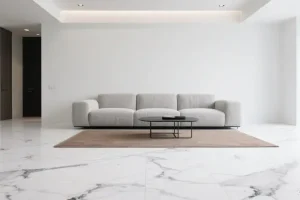
Marble floor
As a professional stone manufacturer and supplier, we look at marble from both a design angle and a project-supply angle. Contractors, developers, importers, and wholesalers do not just ask whether a stone looks beautiful. They ask whether it suits traffic, delivery schedules, fabrication needs, long-term maintenance, and the technical realities of large commercial or infrastructure work.
What is marble, exactly?
Why has marble remained a timeless material?
What is marble best for in modern projects?
Is white marble the best option for premium interiors?
Is marble floor a smart choice for large spaces?
Can marble work in the bathroom and kitchen?
What are the real pros and cons of marble?
How do marble slab and marble tile applications differ?
Which types of marble suit contractors and developers best?
How can buyers reduce risk when using marble at scale?
Marble is a metamorphic rock formed when limestone is changed by intense pressure and heat. The U.S. Geological Survey explains that limestone is sedimentary, while marble forms after that original rock is heated and recrystallized.
Most marble is rich in calcium carbonate, which is one reason it reacts to acids and can etch more easily than harder silicate stones. Some USGS references describe high-purity marble as being composed mostly of calcite, a crystalline form of calcium carbonate. That basic chemistry helps explain both the beauty and the maintenance profile of the stone.
What really makes marble stone stand out is its structure and veining. During metamorphism, the stone recrystallizes and develops the flowing lines, clouds, and movement that many buyers associate with premium design. This is why marble has long been used in monuments, interior finishes, buildings and homes where visual impact matters.
The answer starts with appearance. The beauty of marble comes from its natural variation, soft depth, and visible vein structure. No two slabs are exactly alike. That gives marble a timeless beauty that works in both classic and modern projects.
It also offers design flexibility. Marble comes in many colors, finishes, and patterns, from quiet gray carrara looks to bold calacatta styles with dramatic veining. Because of that range, it can complement various design styles, from luxury residential interiors to hotel lobbies and premium retail spaces.
From our supply side, this is why marble remains a popular choice for contractors and developers. It gives a project instant identity. A polished lobby wall, a reception desk, or large-format slab installation can add a touch of elegance and create a sense of elegance and sophistication that engineered materials often struggle to match.
Marble is best where visual impact matters most and the designer wants a luxurious natural finish. That includes reception desks, feature walls, column cladding, fireplace surrounds, vanity tops, and high-end commercial interiors. These are all areas where the look of marble delivers value immediately.
It also performs well in vertical uses. Accent walls, bathroom walls, lobby panels, and decorative facades are often safer applications than heavy-duty worktops because the stone gets less direct abrasion and less food-acid exposure. In these uses, marble can enhance the aesthetic appeal of a project while reducing some maintenance risks.
For project buyers, the most reliable uses are often:
interior wall cladding
vanity tops in hospitality projects
decorative columns and feature panels
selected marble floor areas with proper specification
luxury staircases and foyers
statement furniture tops and reception counters
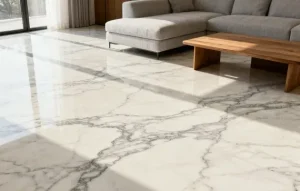
In many premium interiors, yes. White marble remains the first reference point for luxury because it reflects light well, feels clean, and creates a calm visual base. It is widely used in hotels, villas, offices, and commercial showrooms where brightness and elegance are priorities.
Among the best-known options are carrara marble and calacatta marble. Carrara typically shows softer gray tones and more blended movement, while calacatta often features bolder contrast and more dramatic veining. Both can be excellent, but they send different visual messages. Carrara often feels quieter and more architectural. Calacatta often feels more premium and expressive.
For many buyers, white marble is also easier to coordinate with metal, glass, wood, and neutral palettes. That is why it is becoming increasingly popular in commercial interiors where designers want a bright yet natural finish.
A marble floor can be a strong choice in lobbies, foyers, luxury retail areas, and ceremonial spaces, especially when the design goal is prestige. Natural Stone Institute project examples show marble floors being used effectively in elegant public interiors.
That said, specification matters. A polished floor finish may look stunning, but slip resistance, finish wear, traffic patterns, and maintenance routines all need attention. In large spaces, many teams now compare polished, honed, or textured finishes depending on use. The durability of a marble installation depends not just on the stone itself, but also on traffic type, finish choice, and maintenance plan.
For a large commercial floor, ask these questions first:
| Question | Why it matters |
|---|---|
| What is the traffic level? | Heavy foot traffic changes finish choice |
| Is the area dry or wet? | Wet areas need more surface planning |
| Is the design polished or honed? | Finish affects maintenance and safety |
| Are you using marble floor tiles or slab sections? | Format affects installation and look |
| How fast is replacement lead time? | Important for long-term facility upkeep |
In short, marble floor tiles and large slab flooring can work beautifully, but they need more planning than a simple low-cost surface material.
Yes, but the answers are different for each space. In the bathroom, marble is often an excellent choice. It is commonly used for vanity tops, wall cladding, bath surrounds, and shower walls. Natural Stone Institute wet-area guidance shows that stone is widely used in these spaces, but correct detailing, slope, waterproofing, and stone suitability matter.
Marble in the bathroom also supports a spa-like feel. It can add a touch of softness and luxury, especially when used across vanity walls, bench seats, tub decks, and larger-format panels. Because many bathroom uses are vertical or lower-abrasion, the stone often performs better there than in highly aggressive food-prep zones.
The kitchen is more nuanced. Marble remains a popular choice for kitchen countertops, baking stations, islands, and statement backsplashes because of its beauty, cool touch, and premium image. But the stone is porous, can stain, and can etch when acids contact the surface of the marble. Natural Stone Institute care guidance specifically notes that acids can leave etch marks and that spills should be handled quickly.
So yes, marble countertops and kitchen countertops can work, but only when the client understands maintenance and the stone is properly sealed. For many commercial buyers, the better strategy is to use marble in the kitchen for statement islands, backsplashes, and service zones rather than the heaviest prep areas.
The real pros and cons of marble are easier to understand when you stop seeing it as just a pretty surface and start seeing it as a technical natural material.
strong visual identity
timeless appearance
natural pattern and beauty and unique character
wide design flexibility
ability to add value to your home or project image
premium perception for buyers and tenants
| Factor | Advantages of marble | Main caution |
|---|---|---|
| Appearance | Elegant, luxurious, expressive | Variation must be approved carefully |
| Finish | Polished or honed options | Some finishes show wear faster |
| Use range | Floors, walls, vanities, decorative countertops | Not ideal for every heavy-use zone |
| Branding value | Adds a touch of luxury | Premium look often needs premium care |
| Maintenance | Can be restored by polishing | Acid etching and stain risk |
The biggest risk is chemical sensitivity. Because of the nature of marble and the calcium carbonate in marble, acidic liquids can mark the surface. That does not always leave a colored stain, but it can dull the polish. The stone can also absorb certain oils or pigments if not maintained well.
So the full advantages and disadvantages picture is simple: marble looks exceptional, but buyers must match it to the right application and support it with sealing and maintenance.
A marble slab is best when you want visual continuity, fewer joints, and stronger design impact. Slabs are ideal for reception counters, vanity tops, feature walls, stair landings, and cut-to-size architectural panels. Large format also helps showcase the natural movement and veining in a way smaller pieces cannot.
A marble tile is better when installation flexibility, smaller modules, or budget control matters. Tiles work well on bathroom walls, some floors, backsplashes, and repeating design layouts. Because tiles are easier to distribute and replace in sections, they can suit many commercial projects with modular planning needs.
Here is a simple comparison:
| Format | Best for | Main benefit |
|---|---|---|
| Marble slab | Counters, vanities, feature walls | Bigger visual impact |
| Marble tile | Walls, selected floors, bathrooms | Easier layout control |
| Cut-to-size slab | Commercial projects | Faster site coordination |
The best types of marble depend on the project goal, not just the stone name. Quiet gray-white materials like carrara suit large developments where consistency and calm elegance matter. Bolder stones like calacatta suit signature areas where the developer wants a more premium visual story.
For commercial buyers, the usual decision factors are:
visual consistency across lots
block availability
speed of fabrication
slab size and yield
delivery schedule
technical support for detailing
This is why marble varieties should be discussed early, especially on bulk orders. A project team should not only choose a beautiful sample. It should confirm volume, repeatability, finish, reinforcement needs, and site schedule. That is where a professional manufacturer and supplier becomes valuable.
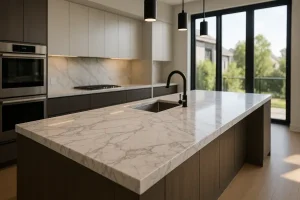
Marble kitchen island countertop
The first step is application matching. Use marble where it performs best. Do not force it into every surface just because it looks good in a sample room. Good project teams match marble used on walls, vanities, and premium focal areas while selecting more resilient materials where harsh chemical or mechanical stress is constant.
The second step is technical coordination. Before fabrication, confirm:
finish type
edge details
thickness
reinforcement method
sealing plan
installation area
maintenance expectations
The third step is supplier partnership. Contractors and wholesalers need a partner who can support sample approval, cut-to-size production, packing, container loading, and schedule consistency. In large projects, that support can matter as much as stone color.
Outdoor marble can be used, but it is a more selective choice. Weathering, temperature changes, moisture, and surface wear all matter more outside. In many climates, marble is better protected in covered exterior features, wall cladding, or lower-risk decorative zones than in highly exposed paving.
This does not mean it should never be used outdoors. It means buyers should treat it as a technical decision, not only a visual one. Climate, finish, slip resistance, and long-term maintenance must be considered carefully. For many landscape or infrastructure buyers, a different stone may be a stronger fit for open exterior paving, while marble stays in prestige-facing design areas.
From our experience as a stone manufacturer and supplier, the best-value marble applications are often the ones that combine visual impact with controlled exposure. That includes:
hotel lobbies
elevator surrounds
reception desks
vanity tops
bathroom wall cladding
feature stairs
premium retail displays
In these spaces, marble can create a stunning first impression, enhance the overall look, and support the project’s premium image. That is why it remains the choice for many homeowners and commercial teams who are looking to add a touch of distinction.
The lesson is simple. The best answer to “What is marble best for?” is not “everywhere.” It is “the places where beauty, branding, and technical fit meet.”
Is marble good for kitchen countertops?
It can be, especially in lower-acid or design-focused areas, but buyers should know that acids can etch and some spills can stain. It is best used with realistic maintenance expectations and proper sealing.
Is marble better for bathrooms than kitchens?
Often yes. The bathroom is usually a friendlier environment for marble because many applications are vertical or lower-abrasion, such as vanity walls and shower walls, while the kitchen has more acid and food-contact risk.
What is the difference between Carrara and Calacatta marble?
Both are premium white-based marbles, but carrara marble usually has softer gray movement, while calacatta marble often has bolder, more dramatic veining and a more statement-driven look.
Is marble porous?
Yes. Marble is generally considered porous, which is why sealing and spill management matter, especially in kitchens and other stain-prone areas.
Can marble be used on floors?
Yes. A marble floor is widely used in premium interiors, but finish selection, traffic level, and maintenance planning are important for good long-term performance.
Is marble easy to maintain?
Marble is easy to love visually, but maintenance needs are real. It should be cleaned with stone-safe products, protected from acids, and resealed when required. Etches and stains may need professional restoration or repolishing.
Marble is best for premium visual applications where design impact matters.
It performs especially well in feature walls, vanity tops, lobby finishes, and selected flooring.
White marble remains a top option for bright, elegant interiors.
The biggest pros and cons of marble come from its beauty versus its sensitivity to etching and staining.
A marble slab gives stronger visual continuity; marble tile offers more modular flexibility.
The best project results come from matching the right stone to the right application, finish, and maintenance plan.
Large-scale buyers should work with suppliers who can support fabrication, consistency, packaging, and delivery at project scale.

 English
  French
  German
  Russian
  Arabic
